
Basement Flooding Prevention in Ontario
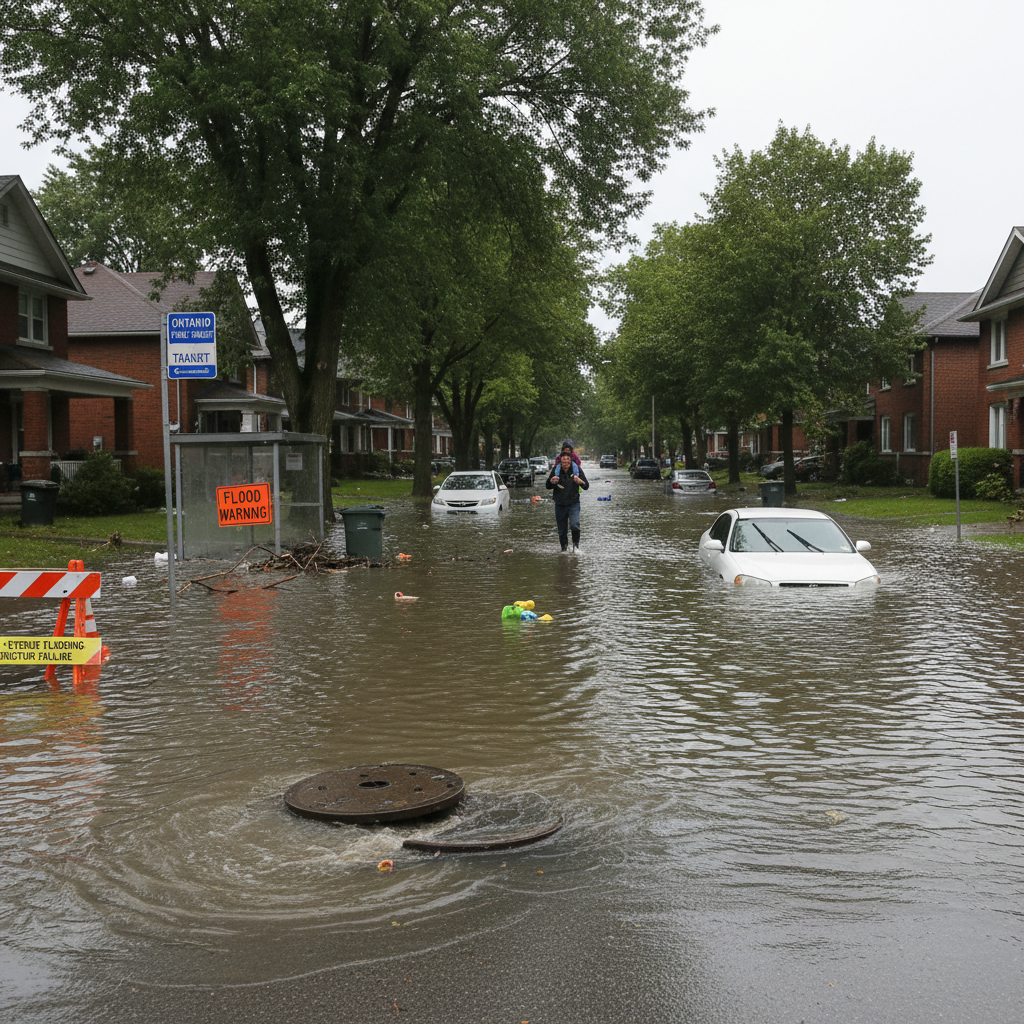
Basement flooding is one of the most common and costly property problems in Ontario. Insurance claims for water damage now exceed those for fire and theft combined across the province. A flooded basement is not just expensive to repair. It disrupts daily life, damages irreplaceable belongings, and can create long-term mould and air quality problems that affect the health of everyone in the household.
The good news is that most basement flooding is preventable. The causes are well understood, and the solutions range from free adjustments you can make this weekend to professional installations that pay for themselves after a single avoided flood. Understanding your risk and acting on it is one of the most important things you can do as an Ontario homeowner.
Why Ontario Basements Flood
Basement flooding in Ontario typically comes from one of three sources: surface water entering through foundation walls or windows, sewer backup through floor drains, or groundwater seeping up through the basement floor. Each has different causes and different solutions, and many homes are vulnerable to more than one.
Surface water problems often begin outside the house. If the ground around your foundation slopes toward the building rather than away from it, rain and snowmelt collect against the walls. Over time, this water finds its way through cracks, gaps around pipes, and deteriorating waterproofing. Window wells without proper drainage are another common entry point.
Sewer backup happens when the municipal storm or sanitary sewer system becomes overwhelmed during heavy rainfall. Water backs up through the sewer lateral that connects your house to the municipal system and emerges through basement floor drains, toilets, and sinks. This is the most unpleasant type of flooding because it often involves sewage.
Groundwater intrusion occurs when the water table rises above the level of your basement floor, typically during spring thaw or extended wet periods. Hydrostatic pressure forces water up through floor cracks and the joint where the floor meets the wall. Homes built in low-lying areas or near water features are most susceptible.
Start Outside: Grading, Gutters, and Downspouts
The most effective flood prevention starts with the simplest interventions. Walk around your house and look at the ground against your foundation. The soil should slope away from the building at a rate of about 2.5 centimetres per 30 centimetres for at least the first two metres. If you see pooling water, damp patches, or soil that has settled and created a reverse slope, adding clean fill to restore proper grading is often the single most impactful thing you can do.
Gutters and downspouts are the next priority. Clogged gutters overflow and dump water directly against the foundation. Downspouts that discharge at the base of the wall do the same thing, just more efficiently. Every downspout should discharge at least two metres away from the foundation, and ideally onto a surface that carries water further away. Downspout extensions are inexpensive and take minutes to install.
If your property has hard surfaces like driveways or patios that slope toward the house, they are funnelling water to exactly the wrong place. Regrading, adding a drainage channel, or redirecting runoff with a shallow swale can make a significant difference. Even small changes to surface drainage can prevent thousands of litres of water from reaching your foundation during a storm.
The Backwater Valve
For sewer backup prevention, a backwater valve is the standard solution and one of the most worthwhile investments an Ontario homeowner can make. This device installs on your sewer lateral, usually in the basement floor near where the drain line exits the house. During normal conditions, it allows wastewater to flow freely to the municipal system. When the system backs up, a flap closes automatically to prevent sewage from entering your home.
Professional installation typically costs between $2,000 and $5,000 depending on the complexity of the work and local conditions. Many Ontario municipalities offer subsidy programs that cover a significant portion of this cost. The Ontario government's basement flooding prevention page lists resources and links to municipal programs. Toronto, Ottawa, Hamilton, London, and many smaller municipalities have active rebate programs.
A backwater valve does require periodic maintenance. The flap mechanism should be inspected annually to ensure it moves freely and is not obstructed by debris. Some homeowners install a clear cleanout cover so they can visually check the valve without opening it. Your plumber can show you how to inspect and clean the valve when it is installed.
Sump Pumps and Battery Backups
If your home has a sump pit, the pump inside it is your primary defence against groundwater flooding. The sump collects water from the weeping tile system around your foundation and pumps it away from the house. When the pump fails, water rises in the pit and eventually overflows onto the basement floor.
Sump pump failure during a storm is more common than people expect. The most frequent cause is power outage. Heavy storms that produce the most groundwater also tend to knock out electrical service. A battery backup sump pump is essential insurance. These systems kick in automatically when the primary pump loses power and can run for several hours on a fully charged battery.
Test your sump pump at least twice a year by pouring a bucket of water into the pit and confirming that the pump activates and discharges properly. Check that the discharge pipe is not blocked, frozen, or disconnected. Replace the pump proactively every seven to ten years rather than waiting for it to fail during a flood event.

Foundation and Waterproofing
Older Ontario homes often have foundation waterproofing that has deteriorated over decades. Parging cracks, membrane failures, and degraded weeping tile allow water through the walls and under the floor. If you are experiencing chronic dampness or recurring leaks through the foundation, exterior waterproofing may be necessary.
This is a major project. It involves excavating around the foundation, repairing or replacing the waterproofing membrane, and often replacing the weeping tile system. Costs typically range from $10,000 to $30,000 or more depending on the extent of work. It is not a DIY job. But for homes with persistent water intrusion, it can be the only lasting solution.
Interior waterproofing systems, which involve installing drainage channels inside the basement perimeter and routing water to a sump pit, offer a less invasive alternative. They do not stop water from entering the foundation, but they manage it before it reaches the living space. For many homes, this is a practical and cost-effective approach.
What Your Municipality Can Tell You
Your local municipality holds information that can help you understand your flood risk. Many Ontario towns have completed flood risk mapping and stormwater master plans that identify areas prone to surface flooding and sewer capacity issues. Some publish this information online. Others will share it if you call the engineering or public works department.
Ask whether your area has combined sewers, which carry both stormwater and sanitary sewage in the same pipe. Combined sewer areas are more prone to backup during heavy rain. Many municipalities are gradually separating these systems, but the work takes decades and the transition creates its own complications.
Conservation authorities also play a role in flood management. Understanding how Ontario conservation authorities regulate development and manage floodplains can help you evaluate the long-term flood risk of a property, especially if you are considering a purchase near a watercourse.
Insurance Considerations
Standard homeowner insurance in Ontario traditionally did not cover overland flooding. That has changed in recent years, with most major insurers now offering overland water coverage as an add-on. If you do not have this coverage, ask your broker about it. The additional premium is typically modest compared to the cost of a single flood event.
Sewer backup coverage is more widely available but not always included in basic policies. Review your policy carefully. Know what is covered, what is excluded, and what your deductible is. Document your basement contents with photos and keep receipts for valuable items. If the worst happens, you will be glad you did.
Taking preventive steps can also reduce your insurance premiums. Installing a backwater valve, a sump pump with battery backup, and maintaining proper grading are all measures that insurers recognize and sometimes reward with lower rates. Ask your broker whether your prevention efforts qualify for a discount.
Building Long-Term Resilience
Climate data shows that intense rainfall events are becoming more frequent across Ontario. The storms that once occurred every 100 years are now happening more often, and municipal infrastructure designed for historical rainfall patterns is increasingly overwhelmed. This means that stormwater design at both the community and household level is becoming more important, not less.
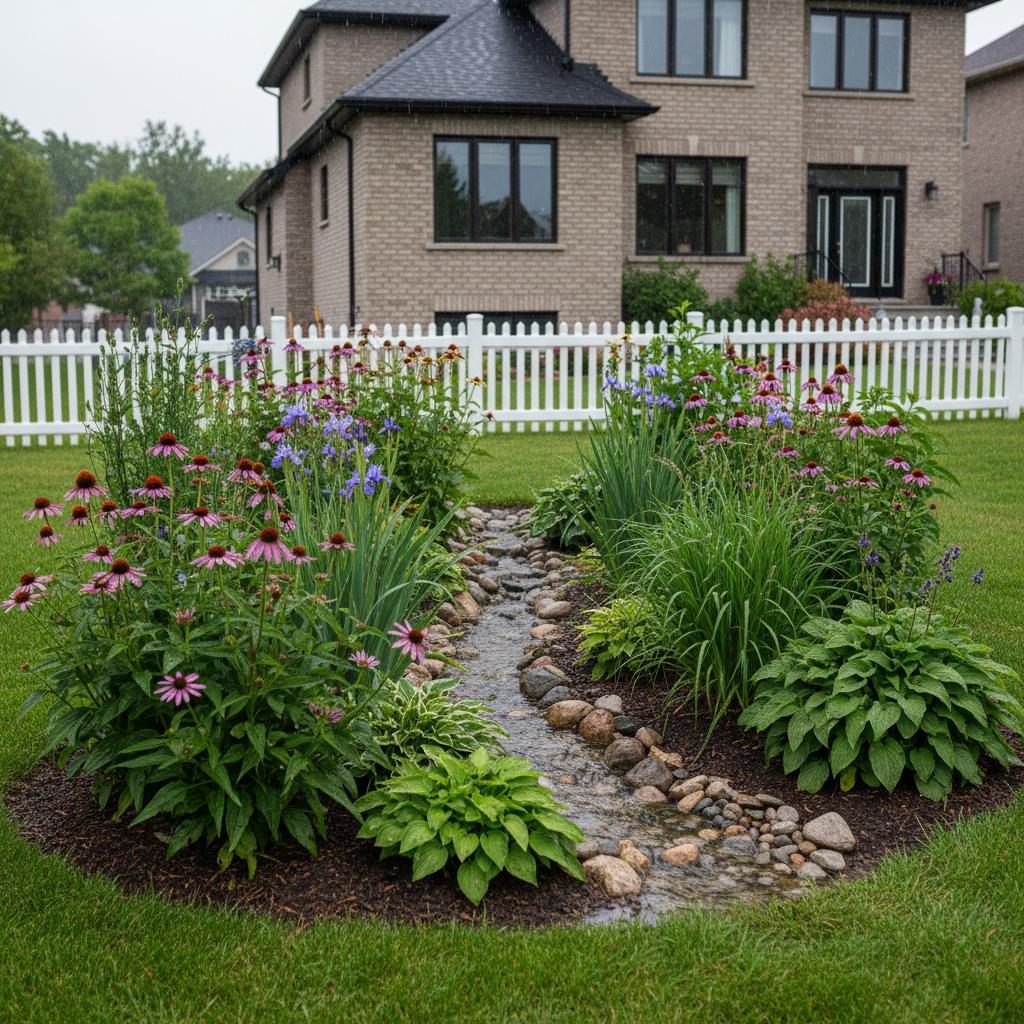
At the property level, consider how your landscaping manages water. Permeable surfaces, rain gardens, and strategic grading all reduce the volume of water that reaches your foundation and the municipal system. These measures help your property and your neighbours. Healthy communities manage water collectively, and every property that handles its own runoff responsibly reduces the burden on shared infrastructure.
Basement flooding prevention is not glamorous work. It involves crawling around foundations, cleaning gutters, and spending money on things you will never see. But it is among the most practical investments you can make in your home and your community's water resilience. The best time to address it is before the next major storm, not after.