
Water, Flooding, and Drainage

Water touches nearly every aspect of community health, from the quality of what comes out of your tap to the effectiveness of the systems that handle rainfall and prevent flooding. In Ontario, water infrastructure is generally strong, but the challenges are real and growing. Climate change is increasing the intensity of rainfall events. Aging infrastructure in some municipalities is struggling to keep up. And for the significant number of Ontario residents who rely on private wells, water quality is an ongoing personal responsibility.
Ontario's municipal drinking water systems are among the most rigorously regulated in North America. This was not always the case. The Walkerton tragedy of 2000, in which contaminated drinking water killed seven people and sickened thousands, led to a fundamental overhaul of the province's water quality framework. The Safe Drinking Water Act, the Clean Water Act, and a comprehensive inspection and testing regime followed. Today, Ontario municipalities are required to test their water frequently, publish annual reports, and meet standards that are in many cases stricter than federal guidelines.
For most residents on municipal water, the system works well and the water is safe. But understanding your water report is still worthwhile. Reports can reveal trends in water quality, upcoming infrastructure investments, and the specific treatment processes used in your area. Different source waters, whether drawn from the Great Lakes, inland lakes, rivers, or groundwater, present different treatment challenges. Knowing what your system handles and how it handles it gives you a more informed picture of your drinking water.
The picture is more complicated for residents on private wells. Ontario has roughly 500,000 private wells, serving about 1.5 million people. These wells are not covered by the same regulatory framework as municipal systems. Homeowners are responsible for their own testing and maintenance. The province recommends testing for bacteria at least three times a year, but compliance varies. Beyond bacteria, well water can contain naturally occurring minerals, agricultural contaminants, and in some regions elevated levels of substances like arsenic, fluoride, or uranium. A comprehensive water test when buying a property with a well is essential, and ongoing testing is the homeowner's responsibility.
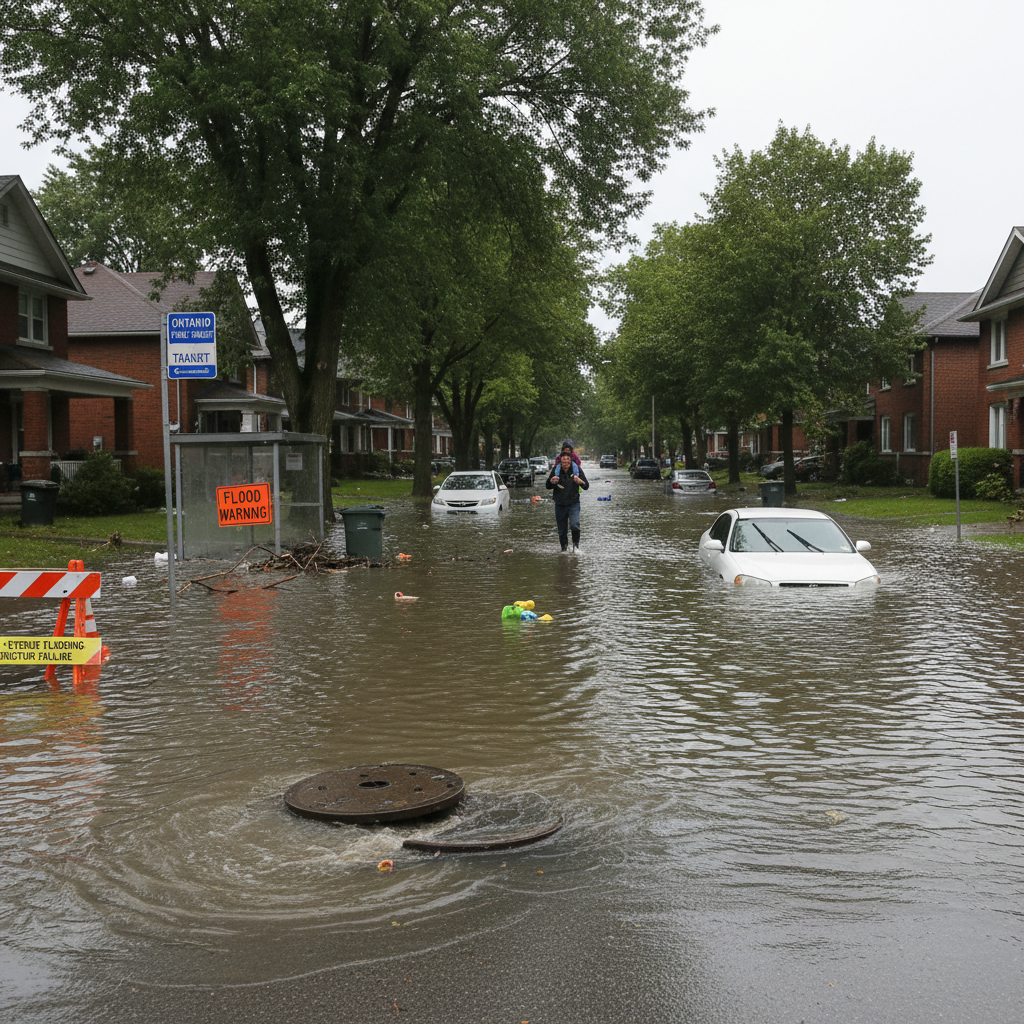
Basement flooding has become one of the most common and costly property damage issues in Ontario. As climate patterns shift, the province is experiencing more intense rainfall events that overwhelm stormwater systems designed for historical conditions. Older combined sewer systems, which carry both sewage and stormwater in the same pipes, are especially vulnerable to overloading during heavy rain. Even newer separated systems can be overwhelmed when rainfall exceeds design capacity.
Preventing basement flooding involves understanding both the public infrastructure and your own property. On the public side, municipalities are investing in system upgrades, but these take time and money. On the private side, homeowners can take meaningful steps: ensuring proper grading away from the foundation, disconnecting downspouts from the sanitary sewer, installing backwater valves, maintaining weeping tile, and avoiding paving over permeable surfaces. Many Ontario municipalities now offer subsidy programs for backwater valve installation.
Stormwater management is the broader infrastructure challenge that connects water quality, flooding, and neighbourhood design. Traditional approaches relied on pipes and ponds to move water away quickly. Modern approaches increasingly use green infrastructure: rain gardens, permeable pavement, bioswales, and constructed wetlands that slow water down, filter it, and let it soak into the ground. These approaches often provide additional benefits including green space, habitat, and neighbourhood amenity. Some newer Ontario subdivisions incorporate these features, but retrofitting older areas is expensive and slow.
The articles in this section cover the full range of water-related topics relevant to Ontario residents. Whether you are trying to understand your municipal water report, evaluating well water on a property you are considering, looking to reduce your basement flooding risk, or interested in how stormwater management is evolving, you will find practical and Ontario-specific information here.