
Air Quality Near Highways in Ontario

Ontario is home to some of Canada's busiest highway corridors. The 401 through the Greater Toronto and Hamilton Area carries upwards of 400,000 vehicles per day on its busiest stretches. Highways 400, 403, 404, and the QEW connect cities and towns across the southern part of the province. As housing development pushes outward from urban centres, more homes are being built close to these corridors, and the air quality implications deserve serious attention.
Traffic-related air pollution, often abbreviated as TRAP, is a well-studied public health concern. The pollutants generated by motor vehicles include nitrogen dioxide, fine particulate matter (PM2.5), ultrafine particles, carbon monoxide, volatile organic compounds, and ground-level ozone. These pollutants are most concentrated near the source and decline with distance, but research shows that elevated levels can extend 300 to 500 metres from a major highway.
What the Research Shows
Decades of health research have established clear links between living near high-traffic roads and a range of adverse health outcomes. A landmark 2010 study by Health Canada found that Canadians living within 100 metres of a highway or 50 metres of a major urban road had significantly higher exposure to nitrogen dioxide and ultrafine particles than those living further away.
The health effects are not subtle. Children living near highways have higher rates of asthma and reduced lung function. Adults face increased risk of cardiovascular disease, stroke, and lung cancer. Emerging research suggests links to cognitive decline in older adults and developmental effects in children. A 2020 study published in Environmental Health Perspectives found that proximity to major roads was associated with increased dementia risk, even after controlling for other factors.
These are not obscure risks affecting only the most heavily exposed populations. In Ontario, an estimated one in three people lives within 250 metres of a major road. In the Greater Toronto Area, that proportion is even higher. The concentration of population along highway corridors makes this a significant public health issue for the province.

Distance Matters
The most important factor in highway-related air quality exposure is distance. Pollution concentrations drop sharply in the first 100 to 200 metres from the road edge and approach background levels somewhere between 300 and 500 metres, depending on the pollutant, traffic volume, and local conditions.
Health Canada and the Canadian Medical Association have both suggested that residential development, schools, daycares, and hospitals should ideally be set back at least 150 metres from major highways. Some provinces and municipalities have adopted formal setback guidelines. In Ontario, the D-6 Guidelines from the Ministry of the Environment provide direction on land use compatibility near highways, but enforcement is inconsistent and many existing homes predate these recommendations.
Wind direction and terrain also influence exposure. A home downwind of a highway will experience higher pollution levels than one upwind at the same distance. Homes in valleys or low-lying areas near highways may trap pollution that would otherwise disperse. Conversely, elevated terrain or buildings between a home and the highway can provide some shielding.
Noise and the Highway Corridor
Air quality is not the only health concern near highways. Noise pollution follows a similar distance gradient and has its own well-documented health effects, including sleep disruption, cardiovascular stress, and reduced cognitive performance. When evaluating a property near a highway, air quality and noise should be considered together as part of the overall environmental health picture.
Sound barriers can reduce noise exposure but do little for air quality. In fact, some research suggests that sound barriers can trap or redirect pollutants in ways that increase concentrations in certain areas. A noise barrier should not be taken as evidence that air quality on the residential side is acceptable.
What You Can Do
If you are choosing a home, distance from major highways is one of the most impactful environmental health decisions you can make. When possible, look for homes at least 300 metres from a highway with more than 50,000 vehicles per day, and at least 150 metres from roads with 20,000 to 50,000 daily vehicles. These are rough guidelines, not precise thresholds, because local conditions vary.
If you already live near a highway, several strategies can reduce your indoor exposure. Keep windows facing the highway closed, especially during peak traffic hours. Use a HEPA air purifier in bedrooms and living areas. Ensure your HVAC system has a good-quality filter rated MERV 13 or higher. Seal gaps around windows and doors to reduce infiltration of outdoor air.
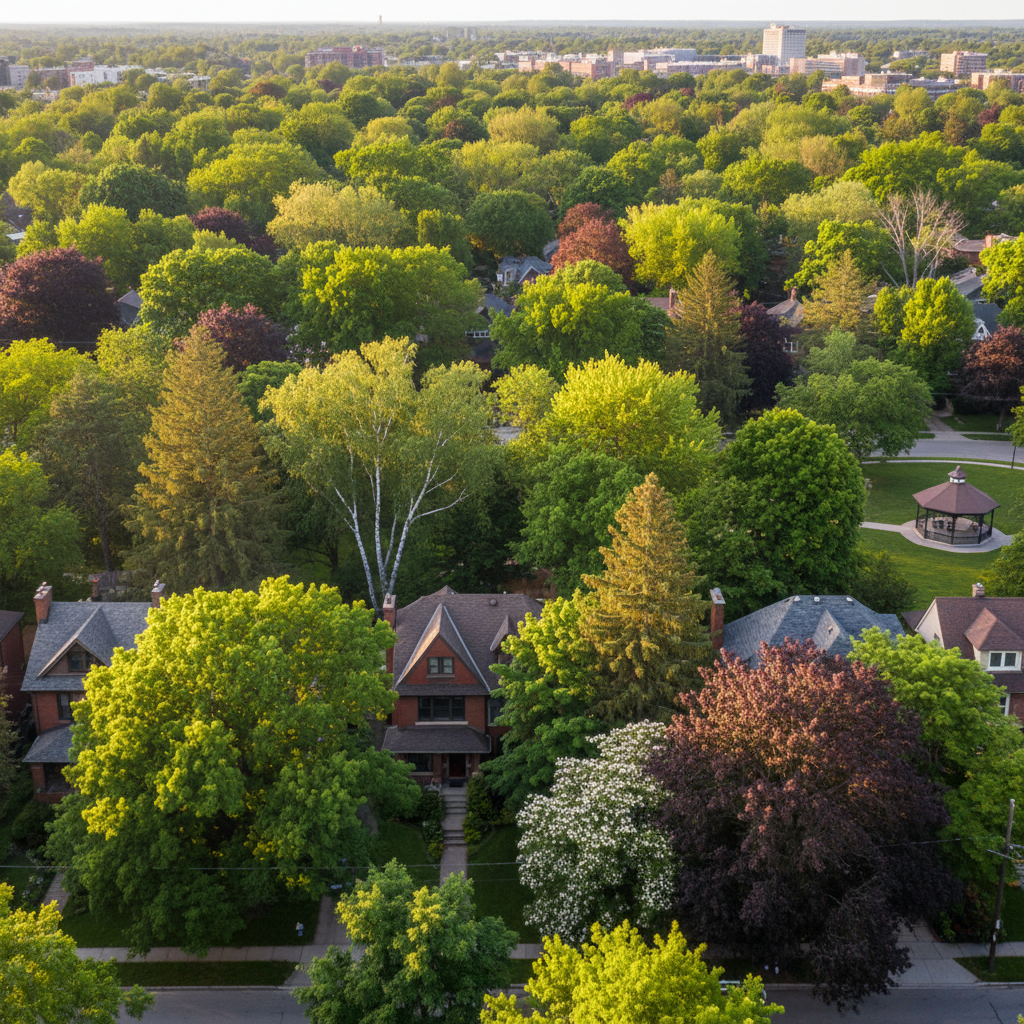
Vegetation buffers can help, though their effectiveness is debated. A dense row of evergreen trees between your home and the highway can capture some particulate matter and provide a psychological benefit. Research from the US Forest Service suggests that substantial tree buffers can reduce particulate concentrations by 10 to 30 percent. Trees are not a substitute for distance, but they contribute positively along with their many other benefits.
Planning and Development Considerations
Ontario's planning framework could do more to protect residents from highway-related pollution. While the Provincial Policy Statement acknowledges land use compatibility, specific setback requirements for residential development near highways are not consistently applied. Some municipalities have adopted their own guidelines, but they are the exception rather than the rule.
When reviewing development proposals or municipal plans, residents and community groups can advocate for adequate setbacks, vegetation buffers, and building design standards that reduce indoor pollution exposure in highway-adjacent developments. The Ontario Ministry of the Environment's D-6 Guidelines provide a framework, but local implementation determines how effectively they protect health.
Schools and daycares near highways deserve particular scrutiny. Children are more vulnerable to air pollution than adults because they breathe faster relative to their body weight, their lungs are still developing, and they spend more time being physically active outdoors. School zone safety should encompass air quality alongside traffic management.
Monitoring Air Quality in Your Area
Ontario's Air Quality Health Index (AQHI) provides real-time information about outdoor air quality in communities across the province. While the AQHI measures general ambient air quality rather than localized highway exposure, it is a useful tool for understanding day-to-day variation and identifying high-risk days when outdoor activity should be limited.
Personal air quality monitors have become more affordable and accessible. While consumer-grade monitors are less precise than regulatory instruments, they can help you understand the air quality patterns around your home and identify times of day when exposure is highest. This information can guide practical decisions about when to ventilate your home and when to exercise outdoors.
If you are evaluating a property for purchase, consider visiting at different times of day and in different weather conditions. Stand outside and notice what you smell, hear, and see. Morning rush hour on a calm day will give you a very different experience than a breezy Saturday afternoon. Both are part of the reality of living near a highway.
A Health-Informed Choice
Highway proximity is just one factor in choosing where to live, and for many people, affordability, commute distance, and other priorities will weigh heavily. But understanding the health implications allows you to make an informed decision and take steps to protect yourself and your family regardless of where you end up.
As Ontario's communities grow and housing development continues, the relationship between transportation infrastructure and residential health will only become more important. Healthy streets and thoughtful land use planning can reduce the health burden of traffic pollution for current and future residents. Individuals can advocate for better planning, and in the meantime, the practical steps outlined here can meaningfully reduce exposure for those living near Ontario's busiest roads.
Air quality is invisible but not unimportant. For a broader look at environmental factors that affect daily health, the guide to evaluating environmental quality covers the full picture of what to consider when choosing a community in Ontario.