
Why Trees Matter More Than You Think for Ontario Communities
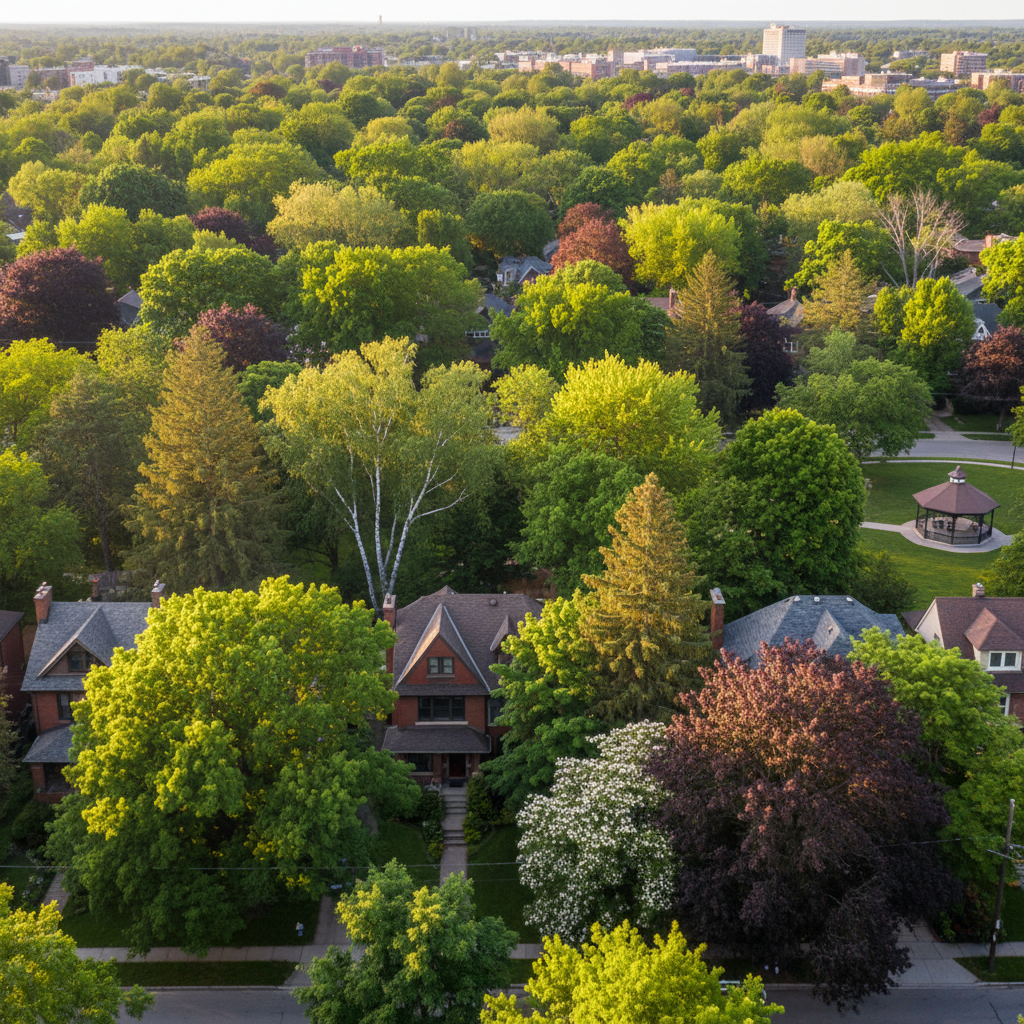
Most people appreciate trees for their beauty. Fewer understand just how many measurable, practical benefits trees deliver to the communities that grow them. In Ontario, where extreme heat events are increasing, stormwater systems are under pressure, and air quality concerns affect millions of residents, trees are not decorative additions to the landscape. They are critical infrastructure.
Air Filtration at the Neighbourhood Scale
Trees clean the air. This is not a vague claim. It is a quantifiable process. Leaves capture airborne particulate matter on their surfaces, removing fine particles (PM2.5) and coarser dust from the air column. Trees also absorb gaseous pollutants, including nitrogen dioxide, sulfur dioxide, and ground-level ozone, through their stomata during photosynthesis.
The scale of this filtration is significant. Studies using the i-Tree model developed by the United States Forest Service have estimated that urban trees in Canadian cities remove thousands of tonnes of air pollutants annually. At the neighbourhood level, a street lined with mature deciduous trees has measurably better air quality than a comparable street without canopy, particularly during summer when leaf surface area is at its maximum and ozone levels are highest.
For residents living near busy roads, trees provide an important buffer. Research from multiple countries has shown that vegetated barriers between roadways and homes reduce indoor exposure to traffic-related pollutants. This is especially relevant in Ontario communities where residential development sits close to provincial highways or major arterial roads. The air quality implications of highway proximity are worth understanding for anyone in this situation.
Cooling and Heat Mitigation
Ontario's summers are getting hotter. The number of days above 30 degrees Celsius has increased notably over the past twenty years, and extreme heat events are projected to become more frequent and more intense. Trees are the single most effective tool for cooling neighbourhoods at scale.
Trees cool through two mechanisms. First, their canopy provides shade, blocking solar radiation from reaching surfaces below. A shaded sidewalk can be 15 to 25 degrees cooler than an unshaded one. Second, trees cool the air through evapotranspiration, the process by which water drawn from the soil is released as vapour through leaves. A single large tree can transpire hundreds of litres of water per day, providing a cooling effect equivalent to several room-sized air conditioning units.
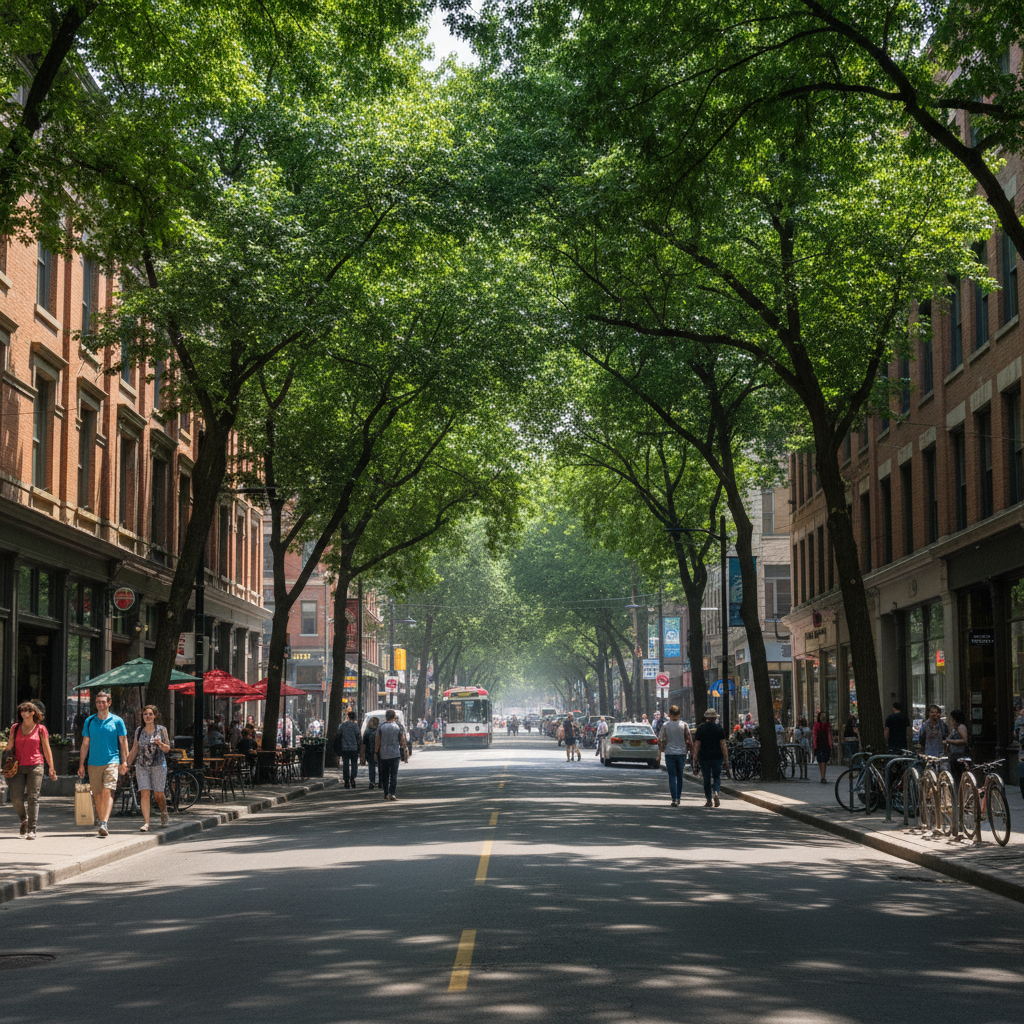
The difference in temperature between a tree-lined neighbourhood and a treeless one is not subtle. During heat events, areas with less than 10 percent canopy coverage can be 5 to 10 degrees hotter than those with 30 percent or more. For vulnerable populations, including seniors living alone, children, and people with cardiovascular or respiratory conditions, this temperature difference can be the margin between discomfort and a medical emergency. Understanding the dynamics of urban heat islands in Ontario helps put tree canopy in perspective as a public health intervention.
Stormwater Management
Every tree is a stormwater management device. Tree canopies intercept rainfall, holding water on leaves, branches, and bark. A portion of this water evaporates directly, never reaching the ground. The rest drips down gradually, slowing the rate at which rain reaches the soil surface. Below ground, tree root systems create channels that improve soil infiltration, allowing more water to soak in rather than running off into storm drains.
A mature deciduous tree can intercept 10,000 to 15,000 litres of rainfall per year. In a neighbourhood with healthy canopy, the collective effect of hundreds or thousands of trees significantly reduces the peak volume of stormwater entering the municipal drainage system during storms. This means less basement flooding, less combined sewer overflow, and less polluted runoff reaching local waterways.
The connection between tree canopy and stormwater capacity is one reason that communities with mature trees tend to have fewer drainage problems than newly developed areas where trees were removed and replaced with young saplings that will take decades to reach functional maturity.
Mental Health and Wellbeing
The mental health benefits of tree exposure are among the most consistent findings in environmental health research. People who live on tree-lined streets report lower levels of stress, anxiety, and depression compared to those on streets without canopy. Hospital patients with views of trees recover faster and require less pain medication. Children with more tree cover near their schools perform better on attention and memory tasks.
These effects are not explained by wealth alone. Controlled studies that account for income, education, and other demographic factors still find an independent positive effect of tree canopy on mental health. There appears to be something fundamentally restorative about the presence of trees in the everyday environment, whether viewed from a window, walked beneath on the way to work, or experienced in a park.
For families, trees contribute to the kind of neighbourhood environment that supports healthy child development. Residential streets with mature canopy are more likely to see children playing outside, neighbours interacting, and families walking together. Trees create the setting that makes outdoor family life appealing and comfortable.
Property Values and Economic Benefits
The economic benefits of trees are well documented. Multiple studies across North American cities have found that mature street trees increase residential property values by 3 to 15 percent, depending on the number, species, and condition of the trees. Homes on tree-lined streets sell faster and for higher prices than comparable homes on treeless streets.
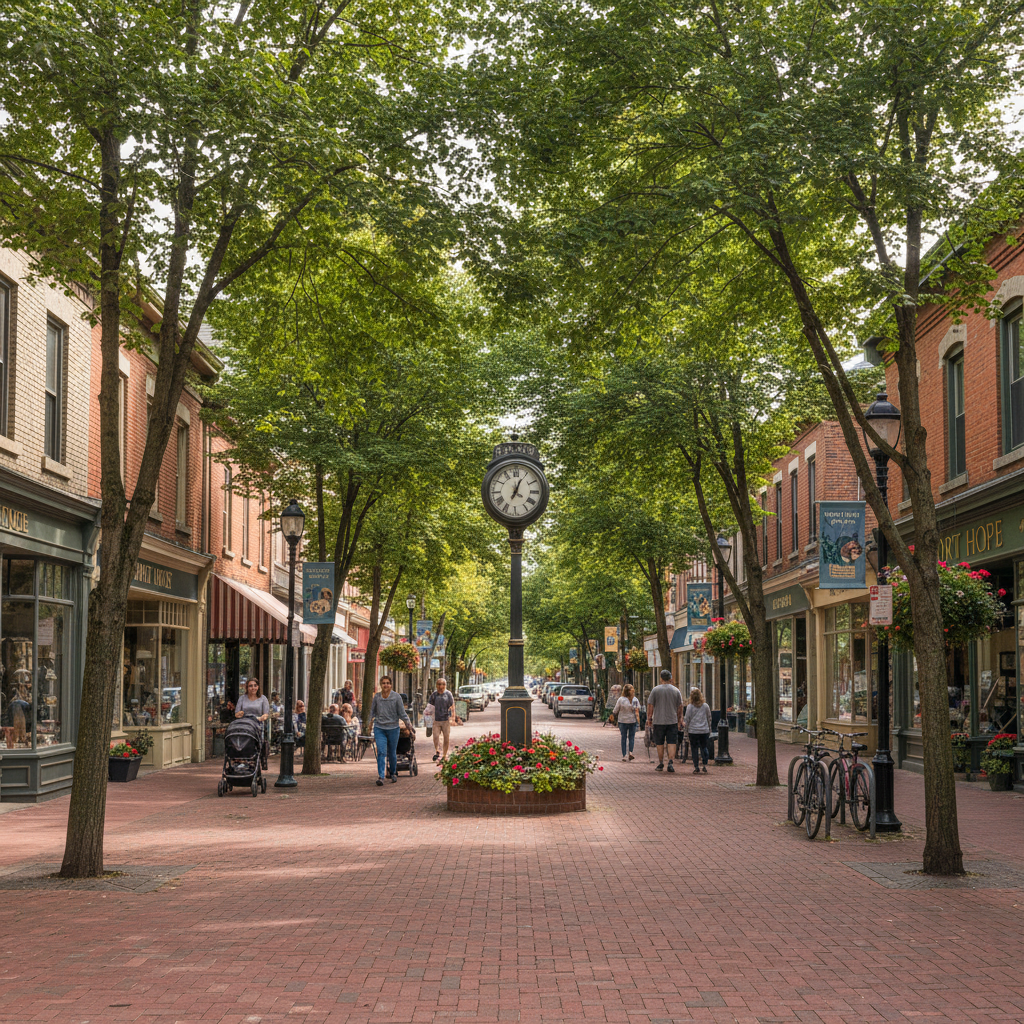
Commercial districts with tree canopy also perform better economically. Shoppers spend more time and money in tree-shaded commercial areas. Restaurants with patio seating under trees attract more customers. The visual appeal of trees draws foot traffic that benefits local businesses. Ontario towns that have invested in main street tree planting as part of downtown revitalization efforts frequently report increased commercial activity.
At the municipal level, trees reduce infrastructure costs. Their shade reduces peak energy demand for air conditioning, lowering strain on the electrical grid. Their stormwater management function reduces the required capacity of grey infrastructure like pipes and detention ponds. Their air filtration reduces health care costs associated with respiratory and cardiovascular disease. Analyses by organizations like the i-Tree project allow municipalities to estimate these economic benefits in dollar terms.
Threats to Ontario's Urban Trees
Despite these benefits, Ontario's urban tree canopy faces serious threats. Development pressure drives tree removal on private and public land. Invasive pests, including the emerald ash borer, which has devastated ash tree populations across the province, continue to spread. Climate stress, including drought, ice storms, and wind events, weakens and kills trees. Inadequate municipal funding for tree planting and maintenance means that many communities are losing canopy faster than they are replacing it.
Salt damage from winter road maintenance is a significant issue in Ontario. Trees planted close to heavily salted roads suffer disproportionately, and species selection that accounts for salt tolerance is essential for long-term canopy survival. Compacted soil in new developments limits root growth and tree establishment, contributing to high mortality rates among newly planted trees.
What Residents and Communities Can Do
Protecting and expanding tree canopy requires action at both the individual and municipal level. Homeowners can plant appropriate species on their property, protect existing mature trees during renovations, and properly maintain the trees they have. Selecting native or well-adapted species suited to local soil and climate conditions improves survival rates and ecological value.
At the community level, residents can advocate for tree protection bylaws that regulate or prevent the removal of significant trees on private property. Many Ontario municipalities have such bylaws, but enforcement varies widely. Supporting municipal urban forestry budgets, participating in community tree planting events, and objecting to development proposals that require unnecessary canopy removal all contribute to long-term tree cover.
Trees planted today will not reach their full potential for twenty to forty years. That long timeline makes current planting decisions profoundly important. Every tree that survives to maturity will deliver decades of air filtration, cooling, stormwater management, mental health benefits, and economic value. In a province facing the intertwined challenges of heat, flooding, and air quality, there are few investments that deliver as many returns as a well-planted, well-maintained tree.