
Ontario Environmental Regulations for Homeowners

Ontario has a layered system of environmental regulations that affect what homeowners can and cannot do on their own property. Some of these rules are obvious, like building permits and zoning bylaws. Others are less well known and catch homeowners by surprise, particularly those moving from other provinces or from urban areas to rural properties. Understanding which regulations apply to your property before you start a project can save you from fines, stop-work orders, and the expense of undoing work that did not comply.
This guide covers the major categories of environmental regulation that Ontario homeowners are most likely to encounter. It is not a substitute for legal advice or a permit application, but it will help you know which questions to ask and where to direct them.
Tree Protection Bylaws
Many Ontario municipalities have tree protection bylaws that regulate the removal of trees on private property. These bylaws vary significantly from one municipality to the next. In some communities, you need a permit to remove any tree above a certain trunk diameter, typically 20 to 30 centimetres measured at breast height. In others, tree protection applies only in specific zones or to designated heritage trees.
Penalties for unauthorized tree removal can be substantial. Some municipalities impose fines of several thousand dollars per tree and may require replacement plantings at a ratio of two or three new trees for every one removed. Before hiring a contractor to take down a tree, check with your municipal planning or forestry department about whether a permit is required. Even dead or hazardous trees may require documentation before removal in some jurisdictions.
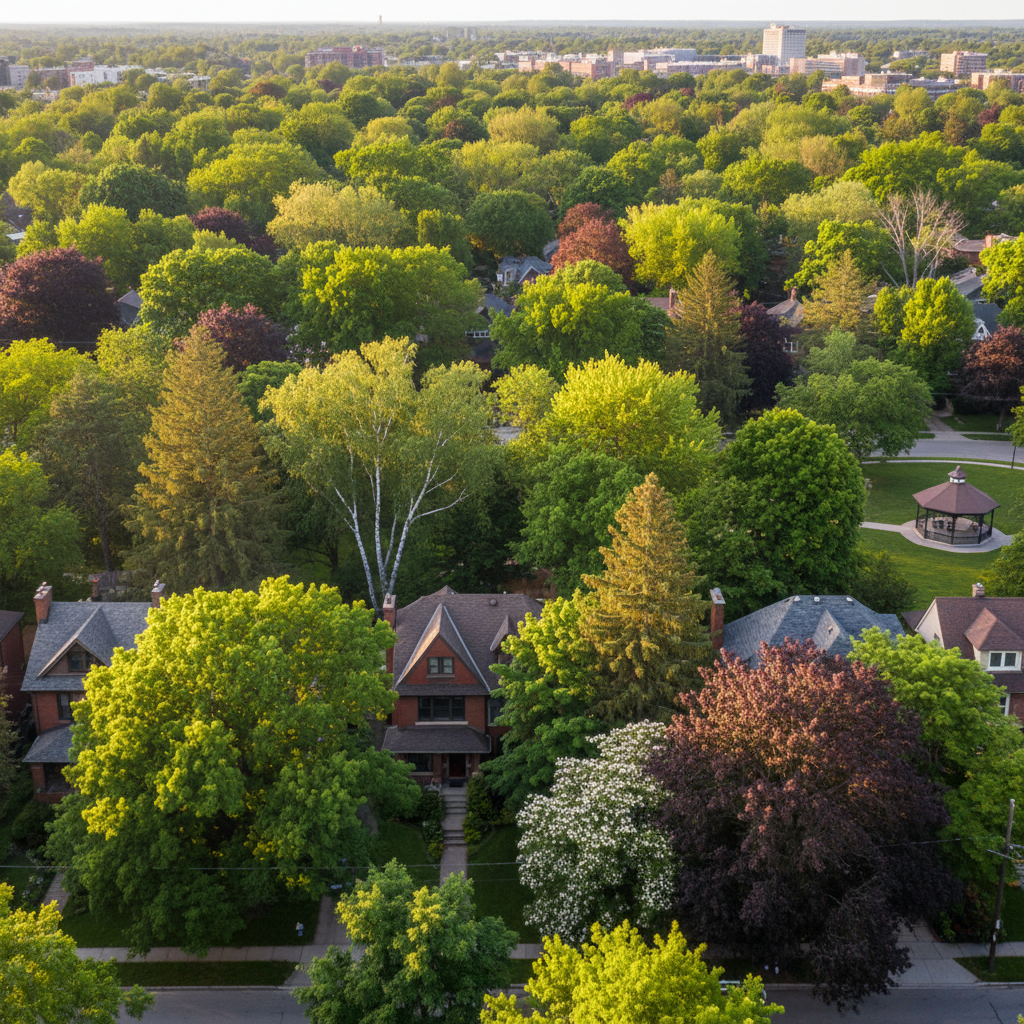
Tree protection bylaws exist because urban tree canopy provides measurable benefits to the entire neighbourhood, from cooling and stormwater management to air quality improvement. Losing mature trees from a streetscape affects not just the property owner but the surrounding community.
Conservation Authority Regulations
Ontario's 36 conservation authorities regulate development and site alteration within their jurisdictions, which cover most of the province's populated areas. Under Section 28 of the Conservation Authorities Act, a permit is required for development, interference with wetlands, or alteration to shorelines and watercourses within regulated areas. "Development" is defined broadly and can include grading, filling, building structures, and even some landscaping activities.
Regulated areas typically include land within the floodplain of any watercourse, wetlands and their buffer zones, areas of steep slope or erosion hazard, and the shorelines of lakes and rivers. If your property is near any of these features, there is a good chance that at least part of it falls within a conservation authority's regulated area. Many conservation authorities provide online mapping tools that let you check whether your property is affected.
The permit process is separate from and in addition to any municipal building permits you may need. Starting work in a regulated area without a conservation authority permit can result in stop-work orders and orders to restore the site to its previous condition, which can be extremely expensive. Our detailed guide on conservation authorities explains how the system works and how to navigate the permit process.
Septic Systems
If your property is not connected to a municipal sewer system, it relies on a private septic system, and Ontario regulates these systems through the Ontario Building Code. The installation, modification, and repair of septic systems require a permit from the local municipality or, in some areas, the health unit. Systems must meet minimum standards for design, setback distances from wells and watercourses, and soil suitability.
Homeowners are responsible for maintaining their septic systems, which includes regular pumping (typically every three to five years), avoiding overloading the system, and not putting anything into the system that could disrupt the biological treatment process. A failing septic system can contaminate groundwater, surface water, and neighbouring properties, which creates both environmental harm and legal liability.
If you are buying a property with a septic system, have the system inspected before closing. The inspection should include the tank, the distribution system, and the leaching bed. Some municipalities now require septic inspections as a condition of property transfer. For more on this topic, see our article on septic systems and environmental health.
Well Water Regulations
Private wells in Ontario are regulated under the Ontario Water Resources Act and Ontario Regulation 903, which sets standards for well construction, maintenance, and abandonment. Wells must be constructed by licensed well contractors, and records of well construction must be submitted to the Ministry of the Environment, Conservation and Parks. When a well is no longer in use, it must be properly decommissioned to prevent it from becoming a pathway for contamination to reach the aquifer.
As a homeowner with a private well, you are responsible for the quality of your own drinking water. The province recommends testing well water at least three times per year for bacteria, and more comprehensive testing periodically for chemical parameters. Municipal water systems are tested continuously and must meet standards enforced by the Ministry. Private wells do not have the same oversight, which means the responsibility falls entirely on you. Our guide on rural well water safety covers the practical steps for keeping your well water safe.

Shoreline and Waterfront Regulations
If your property borders a lake, river, or stream, additional regulations apply. Beyond the conservation authority permit requirements described above, the federal Fisheries Act prohibits the harmful alteration, disruption, or destruction of fish habitat, which can include shoreline areas, nearshore waters, and the riparian zone. Provincial regulations under the Endangered Species Act may also apply if the waterway supports species at risk.
Common waterfront activities that require permits or approvals include building or modifying docks, retaining walls, and boathouses; filling or dredging along the shoreline; removing aquatic vegetation; and altering the natural drainage patterns on the property. Even seemingly minor projects like placing rocks along the shore to prevent erosion can trigger regulatory requirements.
The Ontario environmental permissions portal provides information on which approvals are needed for various types of waterfront work. Getting the right permits before you start protects both you and the natural environment that makes waterfront properties desirable in the first place.
Pesticide Restrictions
Ontario's Cosmetic Pesticides Ban Act restricts the use of most chemical pesticides for purely aesthetic purposes on lawns and gardens. This is a province-wide rule, and some municipalities have additional local bylaws that are even stricter. The ban includes exceptions for health and safety situations, agriculture, and certain approved lower-risk products. Violations can result in fines of up to $20,000 for individuals. For a full explanation of what is and is not permitted, see our article on pesticide bylaws in Ontario communities.
Stormwater and Grading
How water drains across your property is not just your concern. Ontario municipalities regulate lot grading to ensure that stormwater flows as intended and does not cause problems for neighbouring properties. If you alter the grading of your lot, whether through landscaping, adding a patio, or building an addition, you may need a grading permit. The general rule is that water from your property must not be redirected onto neighbouring lots, and the overall drainage pattern established by the original lot grading plan must be maintained.
Many newer subdivisions also have stormwater management features like swales, rain gardens, or rear-yard catchbasins that are part of the engineered drainage system. Interfering with these features, even inadvertently, can cause drainage problems that affect multiple properties. If your property includes any of these features, check with the municipality before making changes.
Building Code and Energy Efficiency
The Ontario Building Code sets minimum standards for new construction and renovations, including energy efficiency requirements that have become progressively more stringent. If you are undertaking a renovation that requires a building permit, the work must meet current code requirements for insulation, air sealing, and mechanical systems. This is generally a good thing for homeowners, since code-minimum efficiency is significantly better than what was standard even 20 years ago. Our guide on home energy efficiency provides practical information on upgrades and available rebate programs.
Environmental Assessment for Larger Projects
Most routine home improvement projects do not require an environmental assessment, but larger projects, particularly those involving significant site alteration, removal of natural features, or work near environmentally sensitive areas, may trigger additional review requirements. The municipality's planning department can tell you whether your project requires any additional environmental studies or approvals.
Knowing Who to Call
One of the challenges of Ontario's environmental regulatory system is that multiple agencies may have jurisdiction over the same property. Your municipality handles building permits, zoning, tree bylaws, and local stormwater management. The local conservation authority regulates development near watercourses, wetlands, and hazard lands. The Ministry of the Environment, Conservation and Parks oversees wells, septic systems, and provincial environmental standards. The Ministry of the Environment website provides contact information and guidance on its areas of jurisdiction.
When in doubt, start with your municipality's planning department. They can usually tell you which other agencies need to be involved and can provide the contact information you need. Taking the time to make a few phone calls before starting a project is vastly preferable to dealing with enforcement actions after the fact. The regulations exist to protect shared environmental resources, including the community health factors that make Ontario neighbourhoods desirable places to live.