
Finding Healthy Neighbourhoods in Ontario

Most homebuyers focus on square footage, school rankings, and commute times. These are important, but they leave out a category of factors that will shape your family's health and quality of life every single day: the environmental and physical characteristics of the neighbourhood itself. How a neighbourhood is designed, maintained, and governed affects everything from how much your family walks to the air you breathe to how well you sleep at night.
Finding a genuinely healthy neighbourhood takes more effort than browsing online listings, but the information is available if you know where to look. This guide walks through the key indicators of neighbourhood health in the Ontario context and explains how to evaluate them before you buy.
Start with the Street
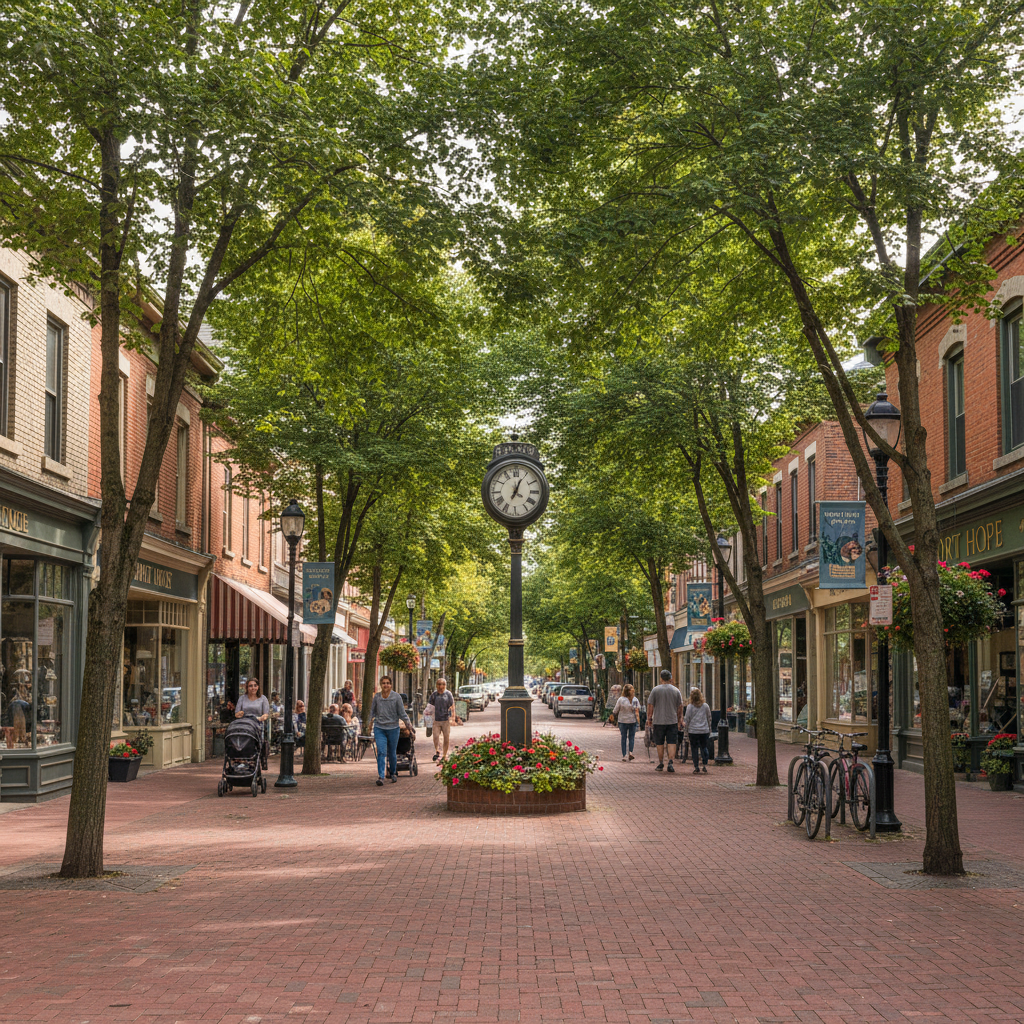
The characteristics of the street outside your front door have an outsized effect on daily life. A healthy street has sidewalks on both sides, a mature tree canopy that provides shade in summer, moderate traffic volumes, and a design that encourages drivers to move at safe speeds. These features correlate with higher levels of walking and cycling, lower rates of pedestrian injury, reduced noise exposure, and cooler summer temperatures.
When visiting a potential neighbourhood, walk the streets rather than just driving through. Note whether the sidewalks are continuous and in good repair. Look at the tree canopy. Are there mature shade trees along the street, or is the streetscape dominated by young, recently planted saplings that will take decades to provide meaningful canopy? Streets with established trees tend to be 3 to 5 degrees cooler in summer than comparable streets without them, which is a real quality-of-life difference during Ontario's increasingly hot summers.
Traffic volume and speed matter more than most people realize. Research consistently links living on or near high-traffic streets with increased rates of respiratory illness, cardiovascular disease, and sleep disruption. If a street carries significant through traffic, even a charming house on that street may not be the healthy choice it appears to be. For more on this topic, see our article on shade, sidewalks, and quiet streets.
Green Space Access and Quality
The health benefits of nearby green space are supported by a substantial body of research. People who live within a short walk of parks, trails, or natural areas tend to be more physically active, report lower stress levels, and show better mental health outcomes. In children, regular access to natural environments has been associated with improved attention, reduced symptoms of ADHD, and better overall development.
When evaluating green space, look beyond the simple presence of a park on the map. Consider the quality of the space. Is it well-maintained? Does it offer varied features like walking paths, open areas, playgrounds, and naturalized sections? Is it connected to a broader trail network, or is it an isolated patch of mowed grass? Connectivity matters because it determines whether green space is something you pass through as part of daily life or something you have to make a special trip to visit.
Ontario municipalities vary widely in their investment in parks and green infrastructure. Some maintain extensive trail networks, naturalized stormwater areas, and community gardens. Others allocate minimal resources to parks beyond basic mowing. The municipality's parks master plan, if one exists, can tell you a lot about the community's long-term commitment to green space. Our article on green space and family health covers the research behind these benefits in more detail.
Water Quality
Drinking water quality is one of the most concrete environmental health factors you can evaluate, and Ontario makes it relatively straightforward to do so. Every municipal water system publishes an annual water quality report that includes test results for key parameters like bacteria, lead, trihalomethanes, and dozens of other contaminants. Request and read this report before committing to a neighbourhood. Our guide on understanding your municipal water report explains how to interpret the numbers.
If you are considering a property with private well water, the evaluation is different and arguably more important, since you will be responsible for the quality and maintenance of the system yourself. Well water should be tested before purchase for bacteria, nitrates, and any locally relevant contaminants. The age and condition of the well, the depth of the aquifer, and the surrounding land use all affect long-term water quality.
Air Quality
Outdoor air quality in Ontario is generally good, but meaningful differences exist at the neighbourhood level. The biggest local air quality factors are proximity to highways, proximity to industrial facilities, and the density of local traffic. Health Canada research has found that concentrations of traffic-related air pollutants like nitrogen dioxide and ultrafine particulate matter are significantly elevated within 150 to 500 metres of major highways.
When evaluating a neighbourhood, note its relationship to major roads and industrial areas. A quiet residential street that happens to be 200 metres downwind of a four-lane arterial road may have meaningfully worse air quality than a street in the same neighbourhood that is farther away. The Ontario Air Quality Index provides real-time and historical monitoring data that can help you assess regional air quality, though neighbourhood-level variations require on-the-ground observation.
Noise Environment
Chronic noise exposure is one of the most underrated environmental health risks. The World Health Organization has identified transportation noise as the second most significant environmental cause of ill health in Europe, after air pollution. In Ontario, the primary noise sources in residential areas are road traffic, rail lines, and in some communities, industrial or commercial operations.
Visit the neighbourhood at different times of day and on different days of the week. Morning rush hour, evening hours, and late night give you three very different noise profiles. Pay attention not just to loudness but to the character of the noise. Intermittent loud events, like trucks jake-braking on a nearby highway or freight trains, are often more disruptive to sleep than a constant low hum. Properties near rail corridors should be evaluated carefully, as vibration is an additional concern that is difficult and expensive to mitigate.

Walkability That Actually Works
Online walkability scores are a useful starting point, but they have significant limitations. They measure proximity to destinations using mapping data, but they cannot tell you whether the walking experience is safe, comfortable, and pleasant. A neighbourhood might score well on walkability metrics while having broken sidewalks, no shade, dangerous crossings, and zero winter maintenance.
True walkability combines proximity with quality. Can you walk to a grocery store, and is the route along a safe, well-lit, shaded pathway? Can children walk to school without crossing a high-speed arterial road? Are sidewalks cleared of snow in winter, or do they become impassable for months? Ontario's climate means that winter walkability deserves as much attention as summer conditions, since a neighbourhood that is walkable only six months of the year is effectively unwalkable for a substantial portion of your life there.
Municipal Governance and Environmental Commitment
The municipality's approach to environmental governance provides important clues about the long-term trajectory of a neighbourhood. Communities with strong tree protection bylaws, active conservation authority partnerships, modern stormwater management infrastructure, and robust environmental policies in their official plans tend to maintain and improve neighbourhood quality over time. Communities without these frameworks are more vulnerable to the kind of development decisions that degrade environmental quality.
Look at the municipality's official plan, which is the primary land-use planning document. Does it include policies on natural heritage protection, urban tree canopy targets, and environmental impact assessment for new development? Are there designated natural heritage areas, greenbelts, or corridor protections? These policies do not guarantee outcomes, but they establish a framework that shapes how the community evolves. For background on one of the most important players in Ontario's environmental governance, see our explanation of conservation authorities.
Infrastructure Age and Investment
The age and condition of underground infrastructure, including water mains, sanitary sewers, and storm sewers, affects both the risk of service disruptions and the long-term financial health of the municipality. Older infrastructure requires more maintenance and is more vulnerable to failure. Municipalities that have deferred infrastructure investment may face significant rate increases or special levies in the future as they catch up on maintenance.
Most Ontario municipalities publish asset management plans that describe the condition and replacement timelines for their infrastructure. These documents can be dry reading, but they tell you something important about whether the community is maintaining its systems or accumulating a deficit that future residents will pay for. A municipality that invests proactively in infrastructure is one that is likely to maintain the neighbourhood quality you are buying into.
Bringing It Together
No neighbourhood is perfect across every dimension, and the relative importance of these factors depends on your family's specific circumstances. A family with young children might weight walkability to schools and green space access most heavily. Someone with asthma might prioritize distance from highways. A retiree might focus on noise levels and trail access.
The point is not to find a neighbourhood that checks every box, but to make an informed decision with your eyes open. The environmental characteristics of your neighbourhood will affect your health, your comfort, and your quality of life for years. Taking the time to evaluate them before you buy is one of the best investments you can make. For a structured approach to this process, see our Public Health Ontario resource hub and our healthy community checklist for homebuyers.