Pollinator Pathways and Urban Biodiversity
Healthy Landscapes Ontario | February 20, 2026
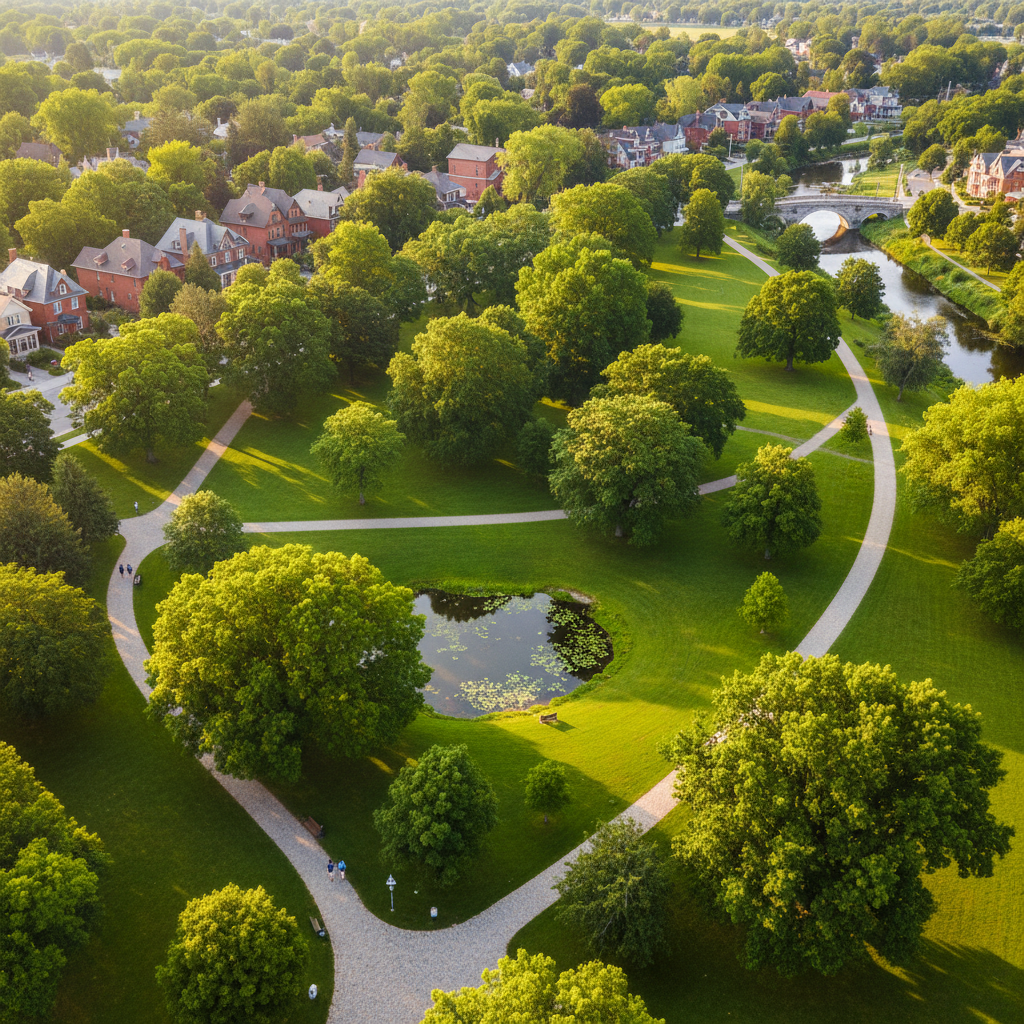
Native pollinators like bumble bees, sweat bees, and mining bees depend on connected habitat patches for foraging and nesting across urban landscapes.
There are over 400 species of native bees in Ontario. Most of them are not the honeybees people picture when they think about pollination. They are solitary bees, bumble bees, sweat bees, and mason bees that nest in the ground, in hollow stems, in dead wood, and in the crevices of old buildings. They pollinate the province's wildflowers, crops, and garden plants with quiet, anonymous efficiency. And in many parts of urban and suburban Ontario, they are declining.
The reasons are familiar: habitat loss, pesticide exposure, and the replacement of diverse native landscapes with monoculture lawns and ornamental plantings that offer little food or shelter. An Ontario subdivision with thousands of homes but no native flowering plants is a food desert for pollinators. They may pass through, but they cannot sustain populations there.
Pollinator pathways are an attempt to address this problem at the landscape scale. Rather than creating isolated pollinator gardens, the pathway approach connects habitat patches across a community, providing a continuous corridor of food, nesting sites, and shelter that pollinators can follow through the built environment. The concept draws on ecological corridor theory but adapts it for the small scale and mixed ownership patterns of urban and suburban settings.
How Pollinator Pathways Work
A pollinator pathway is a connected series of habitat patches, spaced closely enough that pollinators can move between them. For most native bees, this means patches within 200 to 500 metres of each other, since many species forage within a few hundred metres of their nesting sites. For butterflies, the distances can be somewhat greater, but connectivity is still essential for maintaining populations.
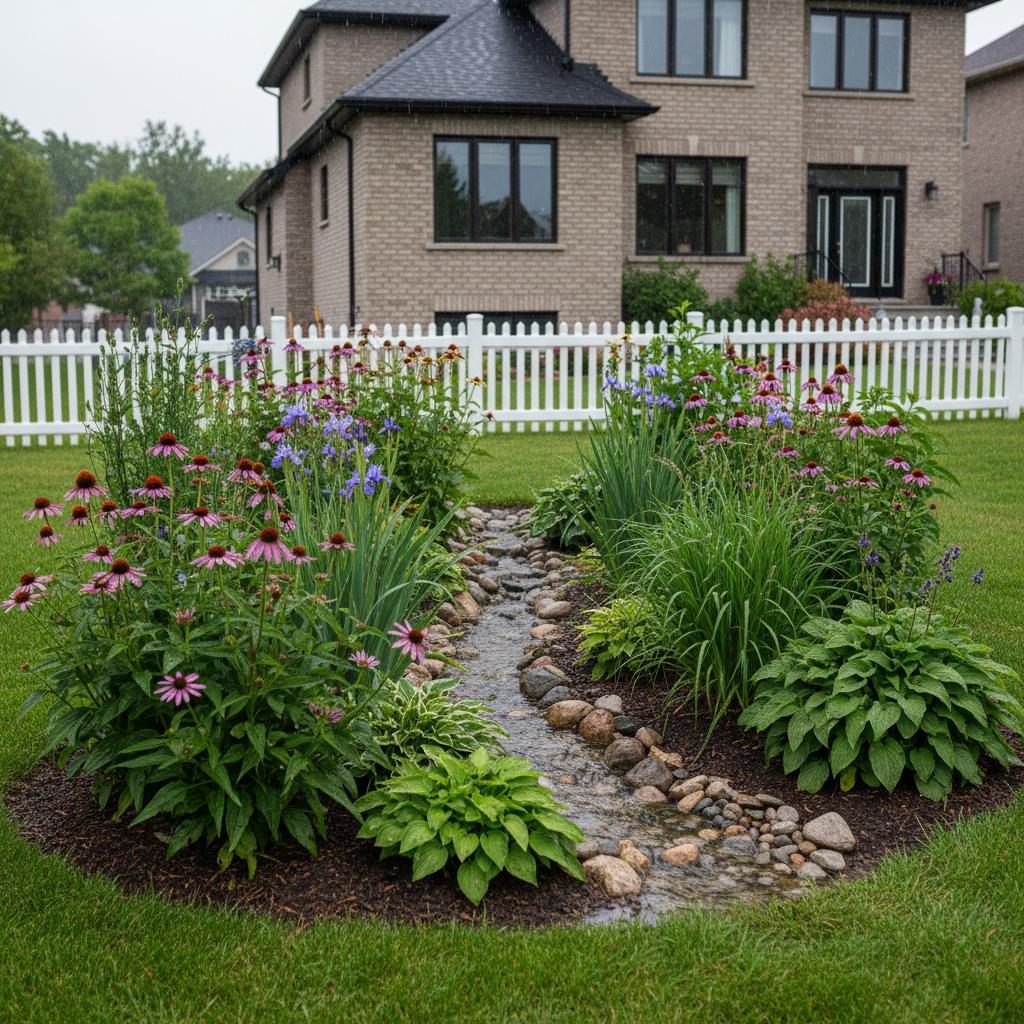
The patches themselves can take many forms: residential gardens planted with native species, municipal boulevard plantings, rain gardens, churchyard meadows, school pollinator gardens, commercial property landscaping, and unmowed strips along trails and roads. No single patch needs to be large. What matters is that together they form a continuous network with enough floral resources to sustain pollinator populations through the entire growing season, from early spring to late fall.
The seasonal dimension is important. Many pollinator gardens in Ontario bloom heavily in July and August but offer little in May or October. A well-designed pathway includes early-season plants like willows, serviceberry, and Virginia bluebells alongside mid-season species like wild bergamot, milkweed, and coneflowers and late-season plants like goldenrod, aster, and Joe-Pye weed. This seasonal continuity ensures that pollinators have food from emergence to dormancy.
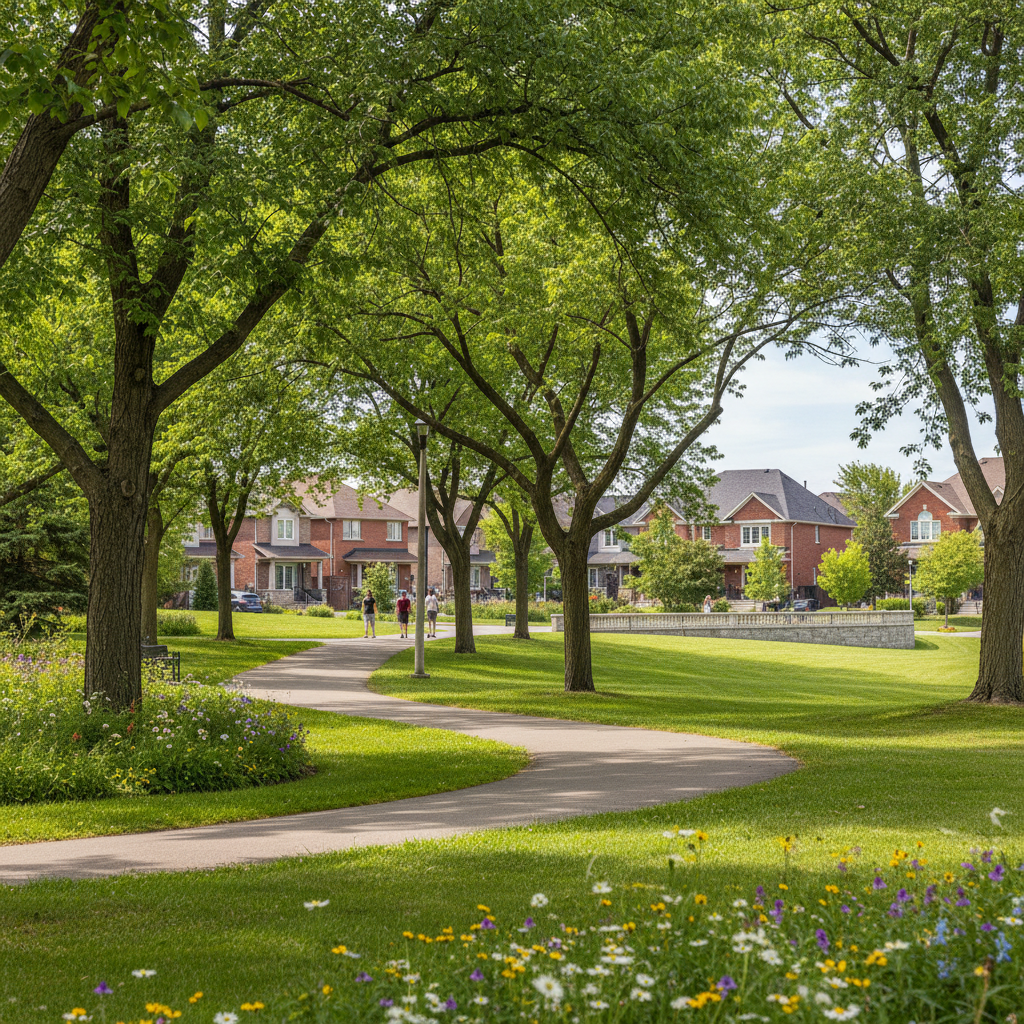
Late-season blooms like goldenrod and asters provide critical food for pollinators building energy reserves before winter dormancy.
The Guelph Pollinator Pathway
Guelph has developed one of Ontario's most organized pollinator pathway initiatives, coordinated by a local environmental non-profit in partnership with the city, the University of Guelph, and dozens of community organizations and residents. The pathway runs roughly north-south through the city, following a combination of the Speed River valley, hydro corridors, and participating residential properties.
The initiative does not own or control the land along the pathway. Instead, it recruits property owners to convert a portion of their land to pollinator-friendly plantings using native species. Participants receive guidance on plant selection, site preparation, and maintenance, along with a simple sign identifying their property as part of the pathway network. The result is a patchwork of private and public habitat patches that together form a functional corridor.
After four years of operation, the Guelph pathway includes over 200 participating properties, ranging from small residential front gardens to large institutional grounds. Monitoring by University of Guelph researchers has documented higher pollinator abundance and diversity along the pathway corridor compared to similar areas without the connected habitat patches. Several species that had not been recorded in the city in recent years were detected during pathway surveys, suggesting that improved habitat is allowing recolonization.
The initiative has also produced social benefits that were not part of the original plan. Participants report a stronger sense of connection to their neighbourhood and to the natural world. The simple act of planting native flowers and then watching pollinators use them creates an engagement with local ecology that is different from anything that happens in a mowed lawn. Neighbours who participate often share plants, seeds, and observations, building social networks alongside ecological ones.
Municipal Pollinator Programs
Several Ontario municipalities have incorporated pollinator habitat into their official land management practices. This represents a significant shift from the traditional approach, which prioritized uniformity, tidiness, and intensive mowing above all other considerations.
The City of London's "Bee City" designation, obtained through the international Bee City Canada program, commits the municipality to specific actions including reduced pesticide use, native plant incorporation in municipal landscaping, and public education about pollinator conservation. Practical changes include converting selected municipal properties from mowed turf to native meadow, adjusting mowing schedules to allow roadside wildflowers to bloom and set seed, and incorporating pollinator-friendly plants into green corridor and trail plantings.
Brantford has taken a similar approach, designating several municipal properties as pollinator demonstration sites and modifying its mowing practices to leave unmowed strips along trails and in park areas where wildflowers are establishing. The city's parks department initially received complaints about the less-manicured appearance, but signage explaining the purpose of the unmowed areas, combined with the visible presence of butterflies and bees in the flowers, converted most skeptics within a single growing season.
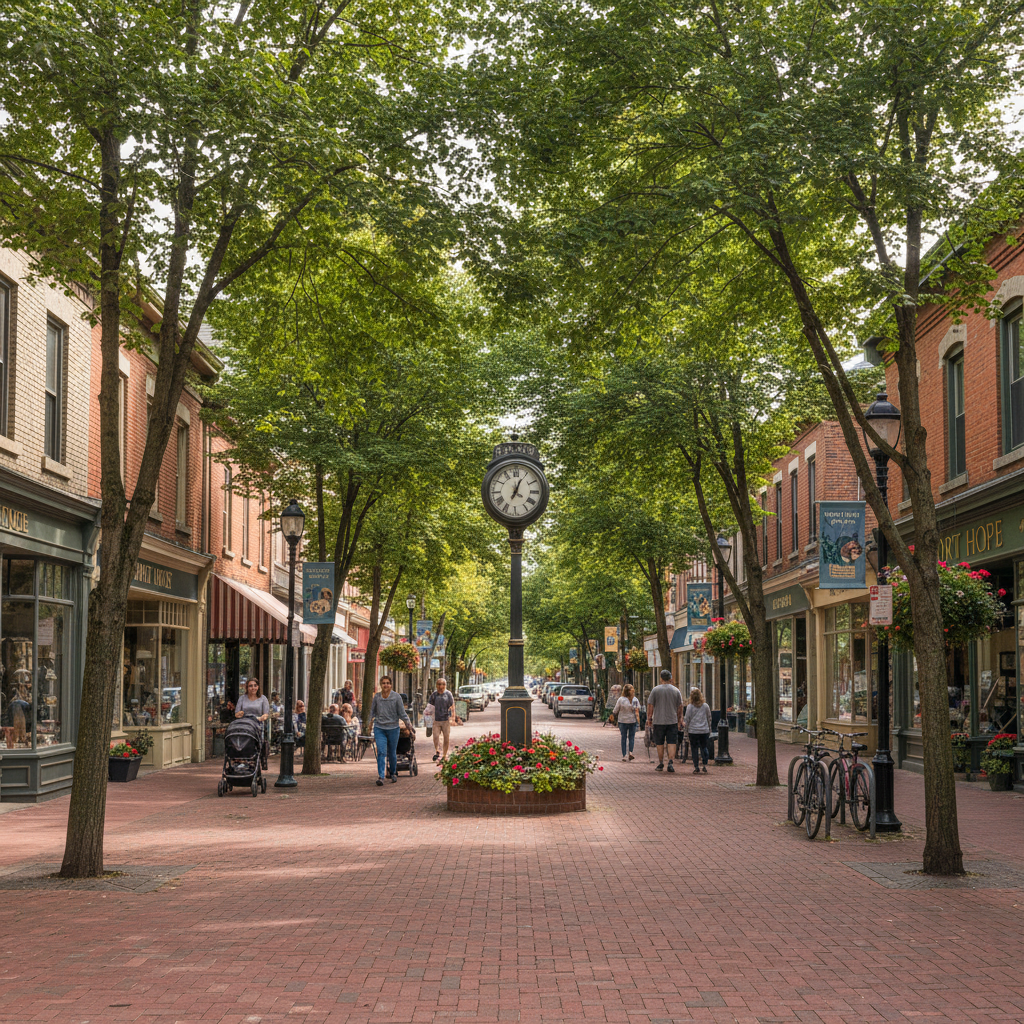
The key insight from these municipal programs is that pollinator habitat does not require new land. It requires different management of existing land. Every mowed boulevard, every park margin, every institutional property with turf grass represents potential habitat that can be converted at low cost by changing the mowing regime and introducing native seeds.
Residential Gardens as Habitat
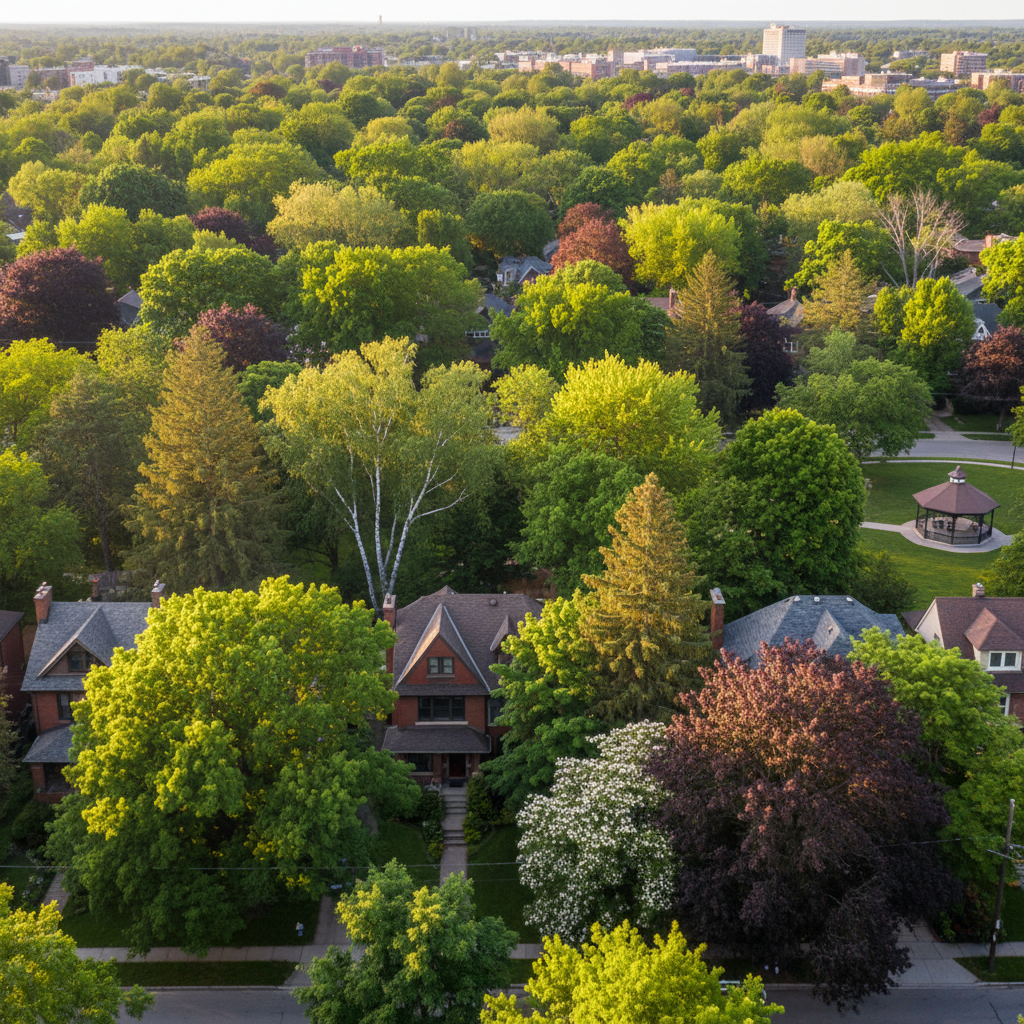
Ontario's residential properties represent an enormous collective area. In a typical suburban neighbourhood, front and back yards account for 40 to 60 percent of the total land area. If even a fraction of this private land were converted from turf grass and ornamental plantings to native, pollinator-friendly gardens, the impact on local biodiversity would be substantial.
Naturalized stream banks and waterway edges provide natural corridors that pollinators and other wildlife use to move through urban areas.
The barrier is not cost or difficulty. Native plant gardens are generally less expensive to establish than traditional ornamental gardens and require less maintenance once established, since native species are adapted to local soil and climate conditions. The barrier is cultural: the expectation that a yard should be a uniform green lawn, and the social pressure from neighbours, homeowners associations, and sometimes municipal property standards bylaws that enforce that expectation.
This cultural barrier is eroding. Organizations like the Ontario Native Plant Society and the Canadian Wildlife Federation's garden habitat program have seen rapidly growing interest in native plant gardening over the past decade. Plant nurseries specializing in Ontario native species report increasing demand, and some conventional garden centres are now stocking native plants in response to customer requests.
Several Ontario municipalities have updated their property standards bylaws to explicitly permit naturalized gardens, addressing one of the most common barriers to residential pollinator habitat. These bylaw updates typically define standards that distinguish a managed native garden from neglected property, allowing homeowners to grow native plants without fear of bylaw complaints while still maintaining standards against genuinely neglected properties.
Monitoring and Learning
One of the strengths of the pollinator pathway model is that it lends itself to community-based monitoring. Participants in pathway programs often become observers as well as gardeners, documenting which pollinators visit their gardens, which plants are most heavily used, and how activity changes through the season. Several Ontario pathways use iNaturalist or similar platforms to aggregate these observations into useful datasets.
This citizen science component serves multiple purposes. It provides data that professional researchers cannot collect alone, since the scale of observation across hundreds of properties far exceeds what any research team could cover. It deepens participants' engagement with the project by connecting their planting efforts to visible outcomes. And it creates a feedback loop where observations inform planting recommendations for new participants.
The University of Guelph's School of Environmental Sciences has partnered with several Ontario pollinator pathways to provide scientific rigor to community monitoring efforts. Graduate students assist with survey design, species identification training, and data analysis, while pathway participants provide the observation network. The partnership produces better science and better community understanding of local ecology simultaneously.
Lessons for Ontario Communities
Pollinator pathways work because they address a landscape-scale problem through distributed, community-level action. No single garden, park, or institution can sustain pollinator populations alone. But hundreds of small habitat patches, connected across a community and managed with a shared understanding of what pollinators need, can create a functional habitat network within the urban environment.
The communities doing this well in Ontario share a few characteristics. They have a coordinating organization that provides guidance, materials, and social connection among participants. They use native plants suited to local conditions rather than generic "wildflower mixes" that may include non-native or even invasive species. They plan for seasonal continuity, ensuring that something is blooming from April through October. And they incorporate nesting habitat, not just food sources, since pollinators need bare soil, dead wood, and hollow stems as much as they need flowers.
Ontario's pollinators evolved alongside the province's native plant communities over thousands of years. Restoring even a small fraction of that relationship within our built landscapes is both achievable and profoundly worthwhile. Every native garden planted, every mowing regime changed, every boulevard converted from turf to flowers adds a piece to a network that makes the whole landscape more alive.