Case Study

Tree Canopy and Summer Heat Relief

Healthy Landscapes Ontario | November 5, 2025

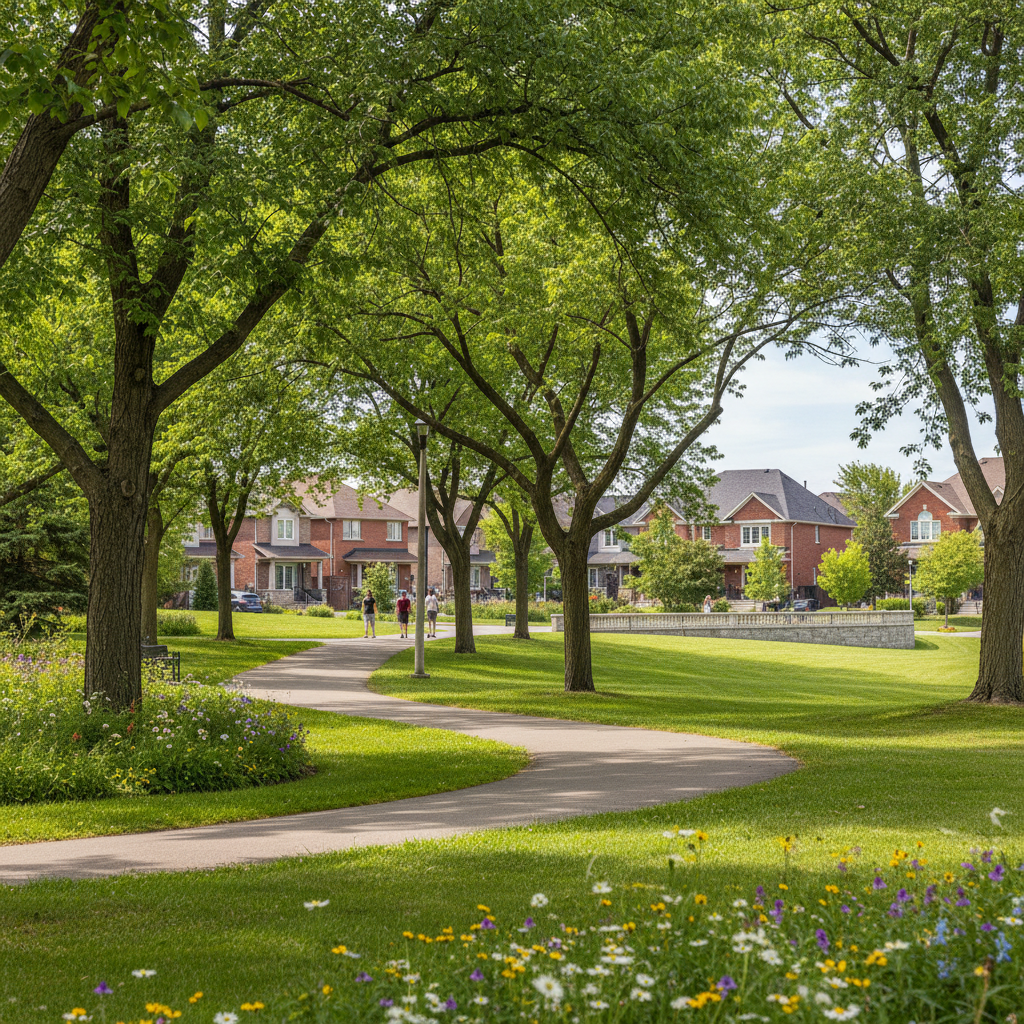
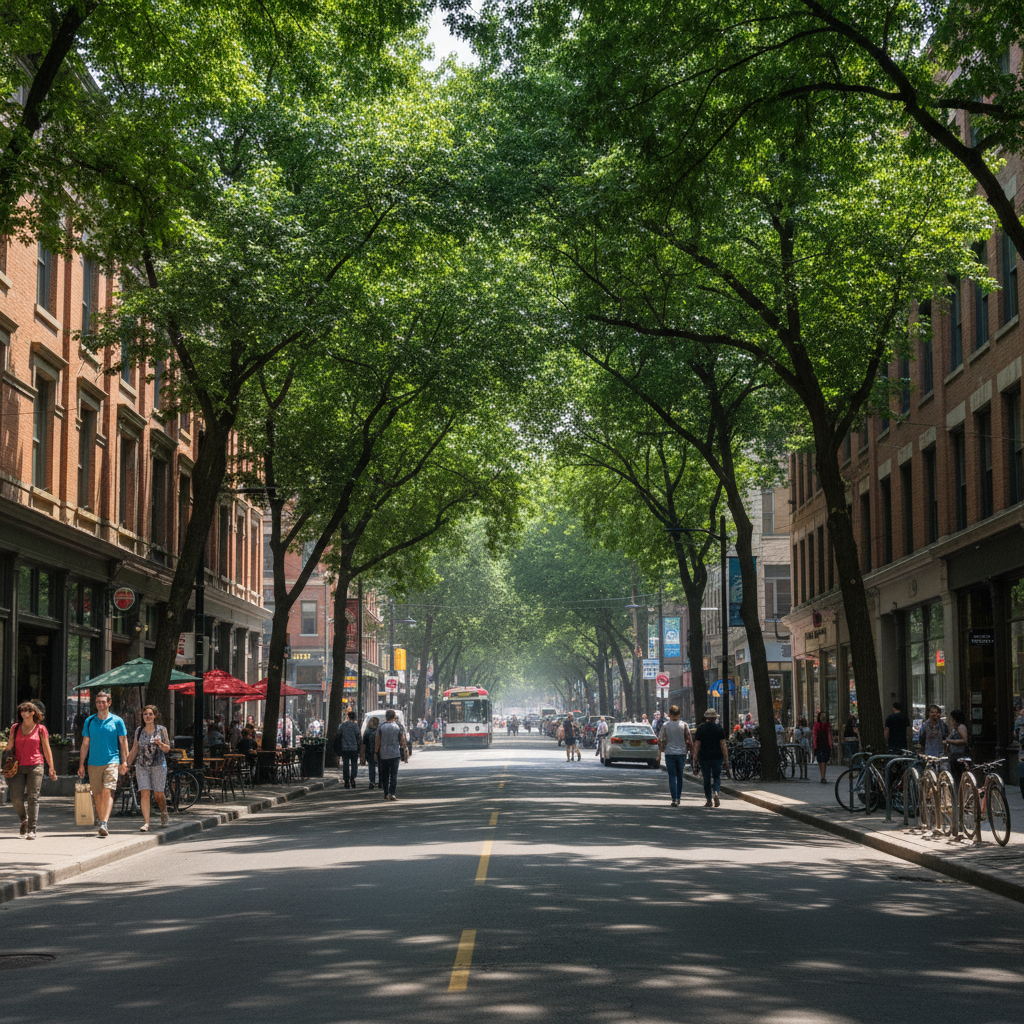
A dense tree canopy shading a residential street in an Ontario neighbourhood

Mature tree canopy on residential streets can lower surface temperatures by 10 to 15 degrees Celsius on summer afternoons.

On a July afternoon in Brampton, the temperature on a newly built suburban street with no mature trees can reach 45 degrees Celsius at the pavement surface. Drive five minutes to an older neighbourhood in the same city, where maples and oaks planted 60 years ago arch over the road, and the surface temperature drops by 10 to 15 degrees. The air feels different. People are outside. Children are playing. The street is livable in a way the treeless one is not.

This is the urban heat island effect in miniature, and it plays out across virtually every Ontario city and town. Areas with high tree canopy coverage are measurably cooler, healthier, and more comfortable than areas without. The difference is not abstract. It shows up in hospital admission rates during heat waves, in energy bills, and in whether people actually use their outdoor spaces during the hottest months of the year.

Mapping the Heat Gap in Ontario Cities

Several Ontario municipalities have conducted thermal mapping studies in recent years, using satellite imagery and ground-level sensors to identify the hottest and coolest areas within their boundaries. The results consistently show the same pattern: the hottest areas overlap with the lowest tree canopy, the most pavement, and often the lowest household incomes.

In Hamilton, thermal mapping revealed temperature differences of up to 12 degrees Celsius between heavily treed neighbourhoods on the mountain and industrial or commercial areas in the lower city. The City of Hamilton's Urban Forest Strategy used this data to prioritize planting in the areas that needed it most, rather than distributing trees evenly across all wards.

Toronto's tree canopy analysis found that the city's overall canopy coverage sits around 28 percent, but with enormous variation between neighbourhoods. Older neighbourhoods in midtown and the Annex have canopy coverage above 40 percent. Parts of Scarborough and North Etobicoke, built in the 1970s and 1980s with wide roads and small lots, sit below 15 percent. These low-canopy areas are also where some of the city's most heat-vulnerable populations live.

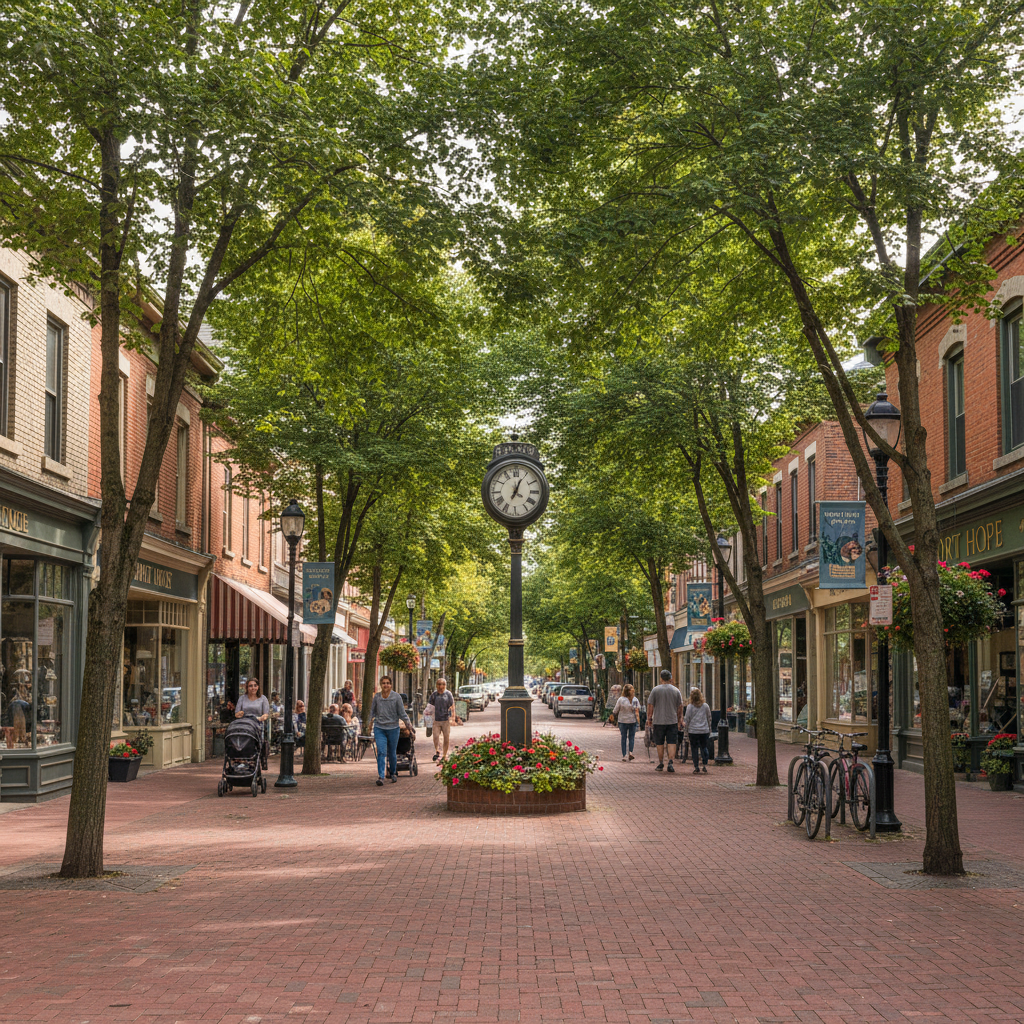
Newly planted shade trees along a sidewalk in a commercial area with protective tree guards

Strategic shade tree planting along commercial corridors provides relief for pedestrians and reduces building cooling costs.

The Peel Region Approach

Peel Region, which includes Brampton, Mississauga, and Caledon, has taken one of Ontario's most systematic approaches to addressing the heat-canopy gap. The region's rapid growth over the past 30 years has produced vast areas of suburban development where tree canopy is minimal and heat exposure is high.

Starting in 2018, the region partnered with local conservation authorities and the non-profit organization LEAF (Local Enhancement and Appreciation of Forests) to launch a targeted planting program focused on the hottest, lowest-canopy neighbourhoods. The program provides subsidized trees to homeowners, plants large-caliper trees on public boulevards, and works with school boards to add canopy to schoolyard properties.

The program's site selection is data-driven. Using thermal imagery overlaid with canopy coverage maps and demographic data, planners identify specific streets and blocks where planting will have the greatest impact on heat reduction and the greatest benefit for vulnerable residents. This is a departure from traditional municipal planting programs, which often respond to resident requests or follow a ward-by-ward rotation regardless of need.

After five years of targeted planting, the program has added over 30,000 trees to priority areas across Peel Region. The trees are still young, and the full canopy benefits will take another 15 to 20 years to materialize. But ground-level temperature monitoring at some of the earliest planting sites is already showing measurable cooling effects, particularly where clusters of trees have been planted together rather than spread thinly across a wide area.

Why Species Selection Matters

Not all trees provide the same degree of heat relief. Species with broad, dense canopies and large leaf surface areas deliver significantly more cooling than narrow or open-crowned species. In Ontario's climate, native species like red oak, sugar maple, and basswood are among the best performers for urban shade, but they also require adequate soil volume and growing space that many streetscapes do not provide.

The emerald ash borer crisis, which has killed millions of ash trees across Ontario since the mid-2000s, illustrated the danger of over-reliance on a single species. Many streets that lost their ash canopy went from fully shaded to fully exposed within just a few years. The replacement plantings, typically young trees of mixed species, will take decades to restore the canopy those streets once had.

Current best practice in Ontario urban forestry emphasizes species diversity. No single species should make up more than 10 percent of the urban canopy. This reduces vulnerability to future pest and disease outbreaks while still providing the large-canopy species needed for meaningful heat reduction. Municipalities are also experimenting with species that tolerate the hotter, drier conditions projected for southern Ontario under climate change scenarios, including some species at the northern edge of their current range that may become well-suited to Ontario's future climate.

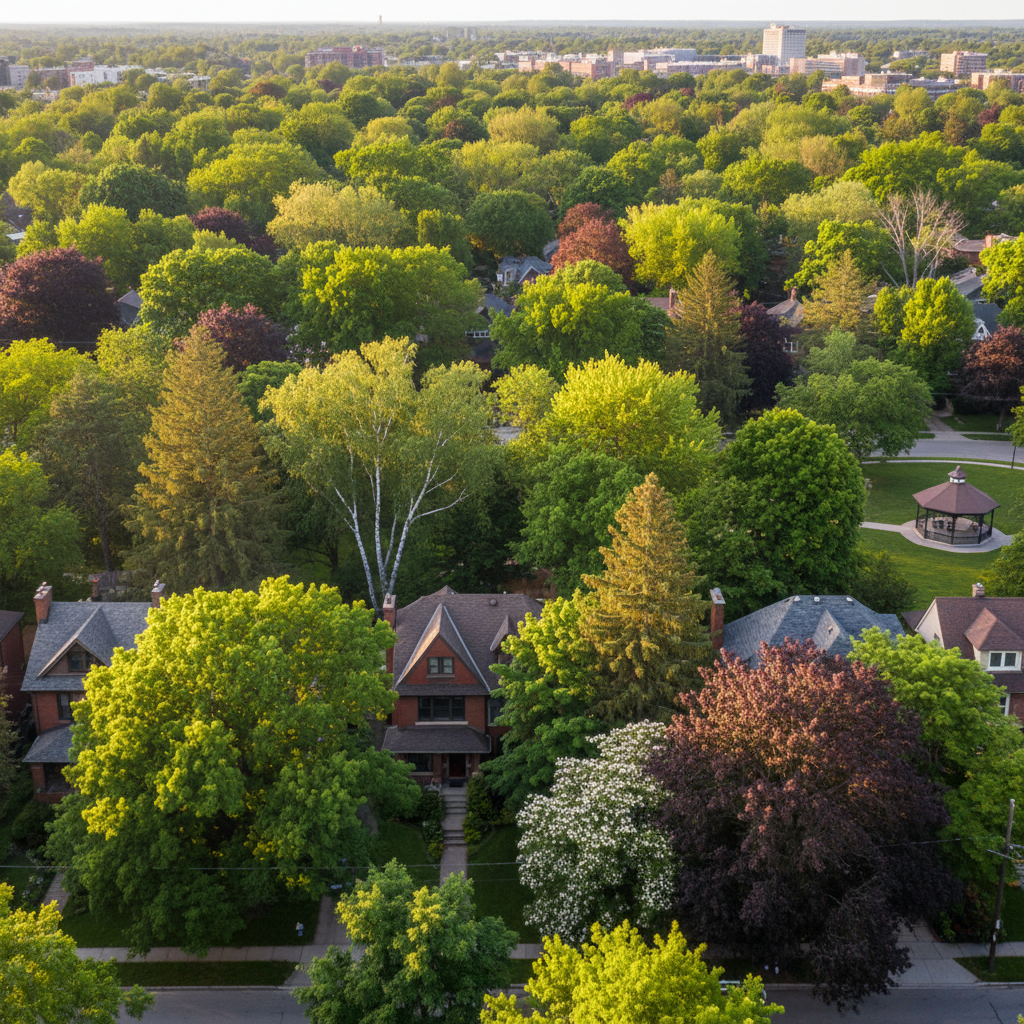
A mature mixed-species tree canopy viewed from below showing overlapping branches and leaves

Species diversity in the urban canopy protects against catastrophic losses and provides a range of ecological benefits.

Canopy as Health Infrastructure

The health case for tree canopy is increasingly well documented. Heat-related illness and death in Ontario is rising as summers become hotter and heat waves become more frequent. Public Health Ontario data shows that extreme heat events now cause more weather-related deaths in the province than any other hazard, including winter storms and flooding.

Tree canopy reduces heat exposure in two ways. It blocks direct solar radiation, which lowers surface temperatures and reduces the radiant heat that people absorb while outdoors. And through evapotranspiration, the process by which trees release water vapour through their leaves, it cools the surrounding air. A single mature tree can transpire hundreds of litres of water per day, producing a cooling effect equivalent to several residential air conditioners.

This cooling effect matters most for people who spend time outdoors by necessity rather than choice: outdoor workers, people without air conditioning, transit users waiting at stops, and children at schools and daycares. For these populations, the presence or absence of tree canopy directly affects their heat exposure on the hottest days of the year.

Several Ontario public health units have begun incorporating tree canopy data into their heat vulnerability assessments. The idea is straightforward: if you know which areas are hot and which populations are vulnerable, you can target both short-term interventions like cooling centres and long-term solutions like green corridor development to where they will do the most good.

The Long Time Horizon

The fundamental challenge with tree canopy as heat relief is time. A tree planted today will not provide meaningful shade for 10 to 20 years, depending on species and growing conditions. This means that the canopy Ontario needs for the heat waves of the 2040s needs to be planted now. Waiting until heat impacts become severe enough to drive action will guarantee a decades-long gap between the problem and the solution.

This time horizon is poorly suited to typical municipal budget and election cycles. Planting programs that span 20 or 30 years require sustained political commitment and stable funding, which are both difficult to maintain in Ontario's current municipal governance environment.

The municipalities that have managed this best have embedded canopy targets into official plans, tree protection bylaws, and development standards that persist across political cycles. When canopy coverage targets are legally binding rather than aspirational, they create a floor below which the canopy cannot fall, even during periods of fiscal pressure or political indifference.

The trees that will make Ontario's cities livable in 2050 need to go in the ground in the mid-2020s. Every year of delay is a year of lost growing time that cannot be recovered. The thermal maps are clear. The health data is clear. What remains is the decision to act on a timeline that matches the biology rather than the budget cycle.