Research Note

Tree Equity in Ontario Communities

Healthy Landscapes Ontario | February 8, 2026

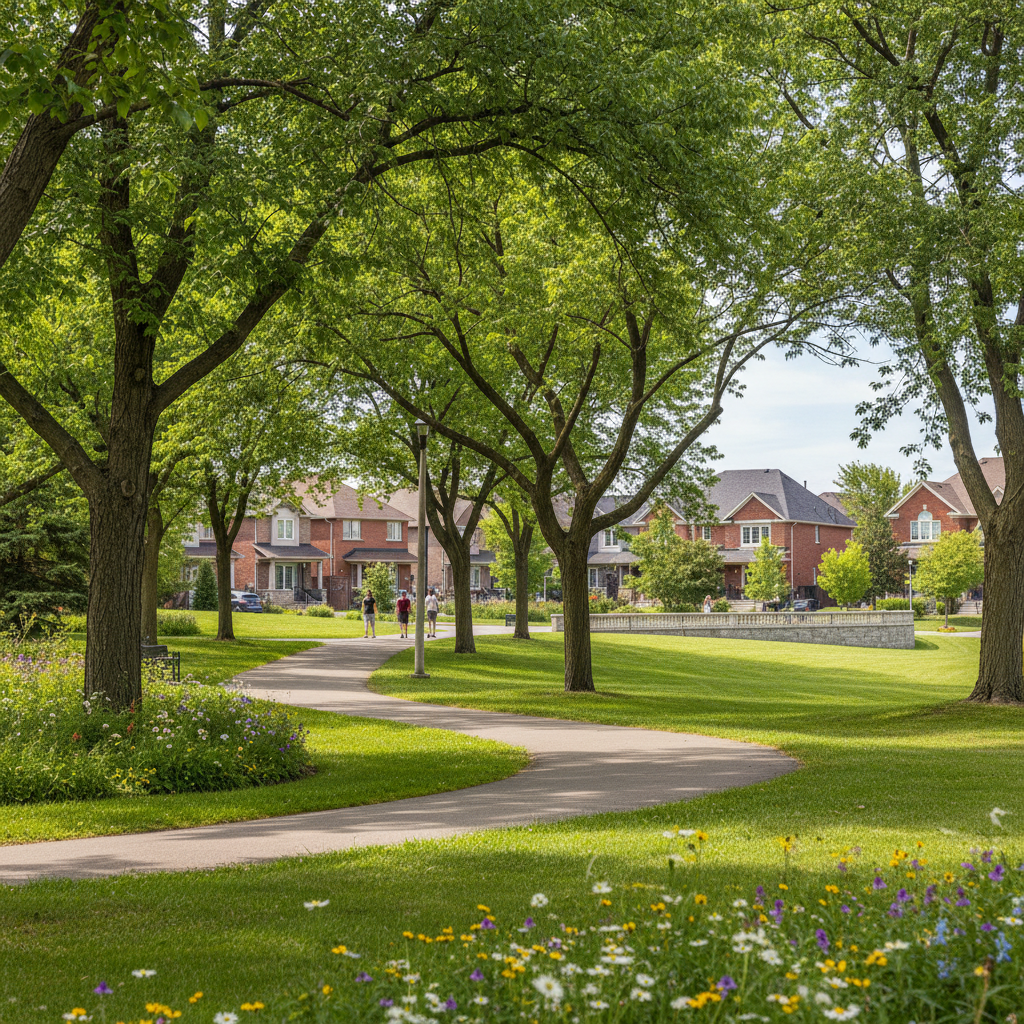
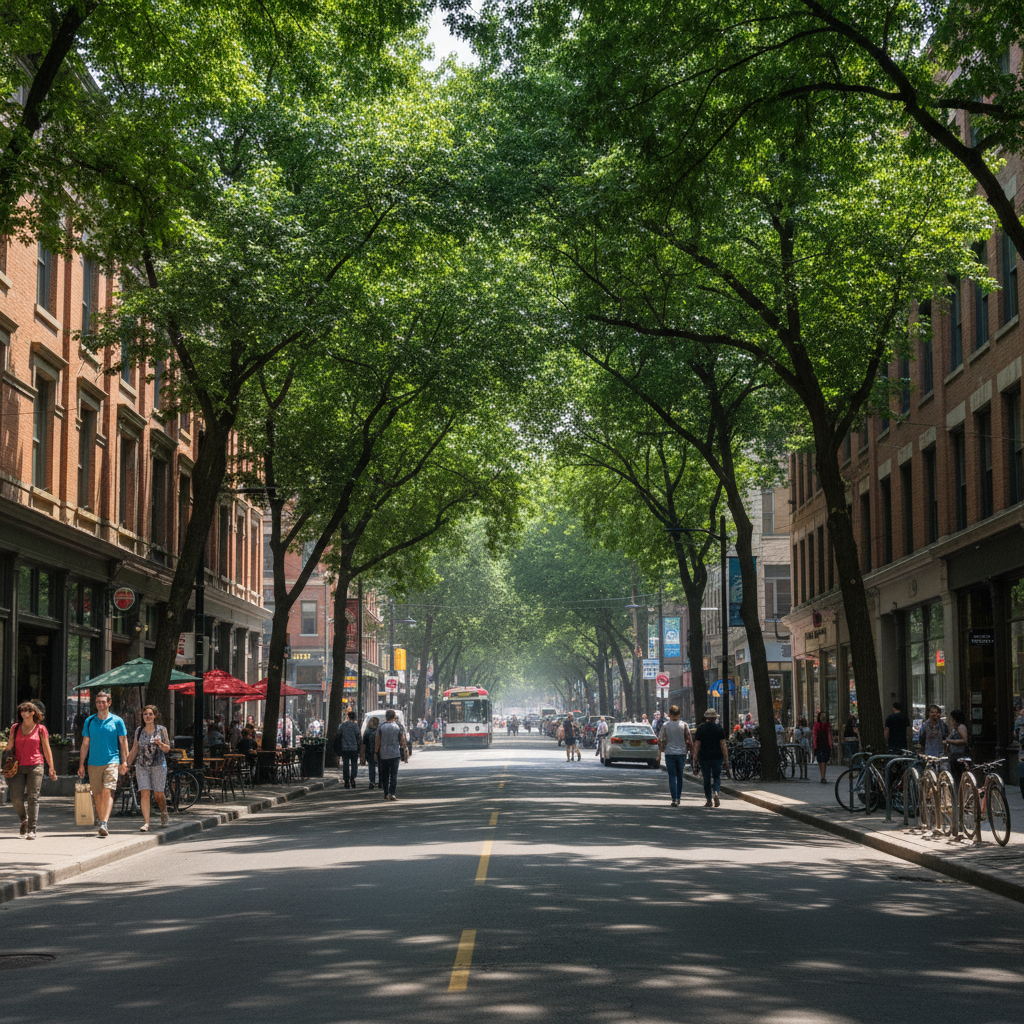
Dense tree canopy in a mature Ontario neighbourhood with dappled light filtering through leaves

In Ottawa, every $10,000 drop in neighbourhood median income correlates with a four percent decline in tree canopy cover. That is not a rough estimate. It comes from the city's 2017 tree canopy assessment, and it puts a precise number on something that most Ontario residents can observe by driving from one part of their city to another: the neighbourhoods with money have trees, and the neighbourhoods without money do not have nearly as many.

This pattern repeats across every major Ontario city where the data has been collected. In Toronto, Hamilton, Ottawa, and the suburban municipalities of the GTA, tree cover is not distributed based on ecological need or population density. It is distributed along lines that track closely with income, race, and housing age. The consequences are not aesthetic. They are measurable in emergency room visits, energy bills, and mental health outcomes.

The Numbers in Toronto

Toronto defines low canopy cover as anything below its citywide average of 26.9 percent. Of the city's 33 designated Neighbourhood Improvement Areas, 23 fall below that line. The largest concentrations of tree inequity are in North Etobicoke, North York, and central Scarborough, areas that are also among the city's most diverse and lowest-income neighbourhoods.

Research from the University of Toronto Mississauga confirmed what the canopy maps suggest: neighbourhoods with more racialized and immigrant residents tend to have fewer, smaller, and less varied trees. Those same neighbourhoods face higher temperatures, greater air pollution, worse health outcomes, and less access to nature. The correlation is not accidental. It is the product of historical development patterns, including discriminatory practices like redlining and systematic disinvestment, that concentrated housing density and reduced green infrastructure in specific communities.

High-income neighbourhoods tend to have more canopy because they have larger lots, older trees, and a history of investment in streetscape planting. Low-income neighbourhoods tend to have smaller lots, more impervious surface, younger housing stock built with fewer trees, and less capacity, both financial and institutional, to maintain or expand their canopy.

Ottawa's Data Tells the Same Story

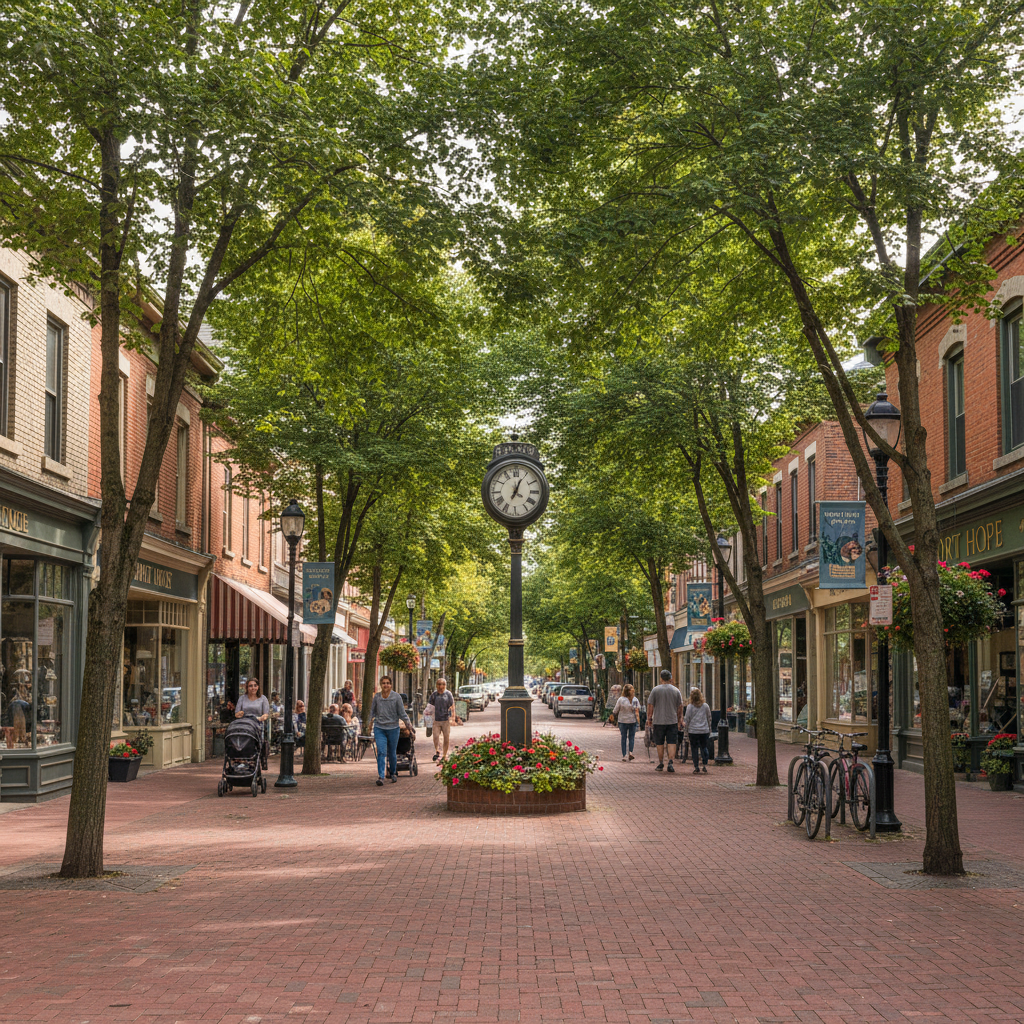
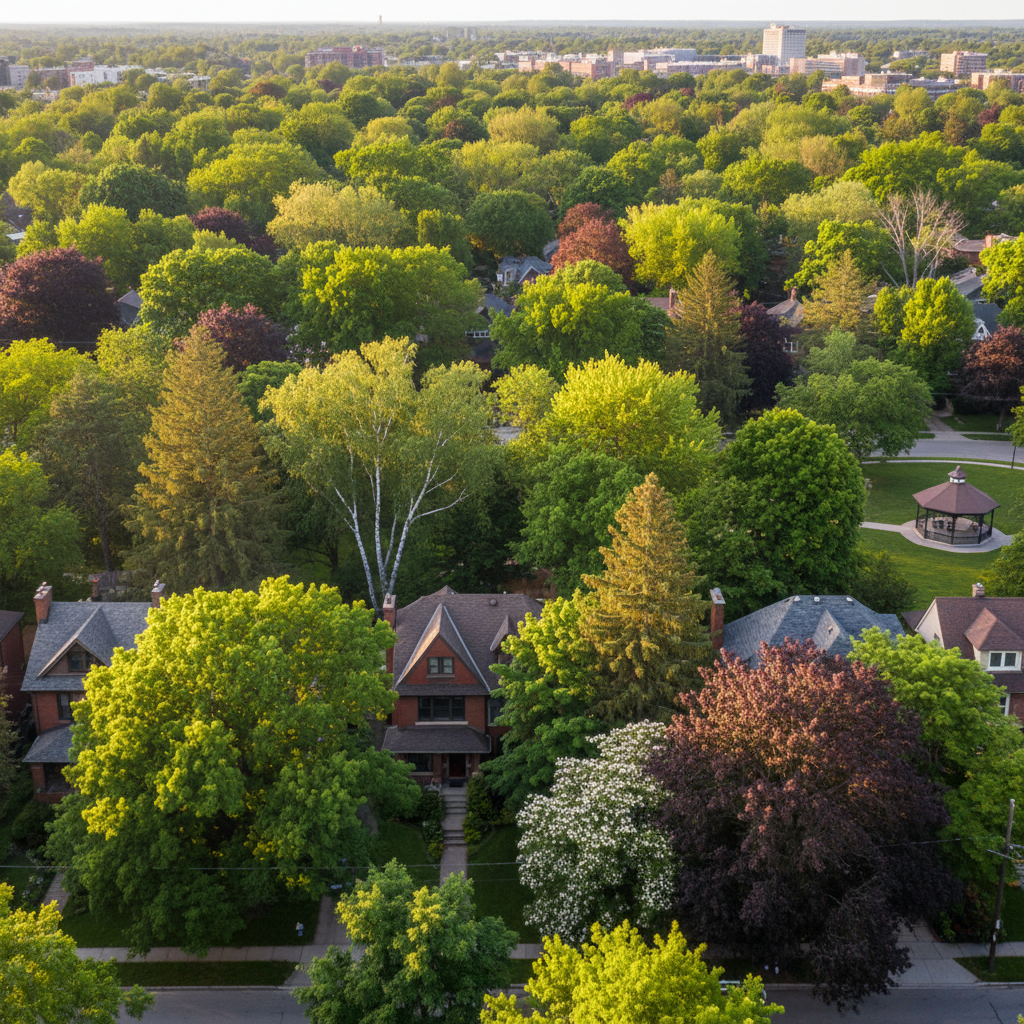
A residential street in an Ontario neighbourhood showing variation in tree cover between blocks

The difference in tree cover between neighbouring blocks often reflects decades of uneven investment rather than climate or soil conditions.

Ottawa's official canopy target is 40 percent. In the diverse downtown Somerset Ward, the actual figure is 22 percent. The city has developed a Tree Equity Score for each neighbourhood, combining canopy data with socio-economic and health indicators to produce a number between 0 and 100. The tool identifies which areas need the most support and provides a framework for directing planting resources toward communities that will benefit most.

Eight Ottawa neighbourhoods were identified as urgently needing more trees based on a combination of low canopy, high heat exposure, and vulnerable populations. These are not random outliers. They are the predictable result of building neighbourhoods without adequate green infrastructure and then not retrofitting them as the evidence about heat, health, and tree cover accumulated.

Programs Working to Close the Gap

The most active organization in this space is LEAF (Local Enhancement and Appreciation of Forests), which has been running targeted planting programs in Toronto's low-canopy Neighbourhood Improvement Areas. Through the Toronto Low-Canopy Neighbourhood Greening Initiative, supported by the Arbor Day Foundation and the City of Toronto, LEAF incentivizes planting in the 23 NIAs that fall below the city's canopy average.

LEAF has also worked with Toronto Community Housing Corporation since 2018, planting native trees and shrubs on social housing properties. In 2025, the TCHC program added over 350 native trees and shrubs to community housing sites. The approach recognizes that many low-canopy neighbourhoods have large concentrations of rental and social housing where individual residents cannot plant trees on their own, making institutional partnerships essential.

Toronto's broader strategy aims to raise citywide canopy from 28 percent to 40 percent by 2050. That is an ambitious target, but the citywide number obscures the real question: where will those trees go? If new planting follows existing patterns, concentrating in wealthier areas where homeowners request and maintain street trees, the equity gap will persist even as the overall number improves. Programs like LEAF's exist specifically to redirect planting toward the communities that need it most.

Why This Matters Beyond Aesthetics

The connection between tree cover and urban heat is direct and well-documented. Toronto neighbourhoods with less than five percent canopy cover make five times as many heat-related ambulance calls as those above five percent. Trees reduce local air temperatures through shade and transpiration, lower energy costs by reducing cooling demand, filter air pollutants, manage stormwater, and provide the mental health benefits associated with green space exposure.

When those benefits are concentrated in wealthy neighbourhoods, the result is a health subsidy for people who already have better health outcomes, paid for by the absence of services in communities that need them more. This framing has gained traction among public health researchers and urban planners in Ontario, and it is beginning to influence how cities allocate their planting budgets.

The practical challenge is time. A tree planted today will not provide meaningful canopy for 15 to 20 years. That makes tree equity a long-term investment that requires sustained commitment across multiple budget cycles and political administrations. The cities that start directing resources toward low-canopy neighbourhoods now will begin to see results in the 2040s. The ones that do not will still be having this conversation then, with the same maps showing the same gaps, and the same heat and health data confirming what the canopy already makes visible from the air.