Research Note

The Urban Heat Island Effect in Ontario Communities

Healthy Landscapes Ontario | November 8, 2025

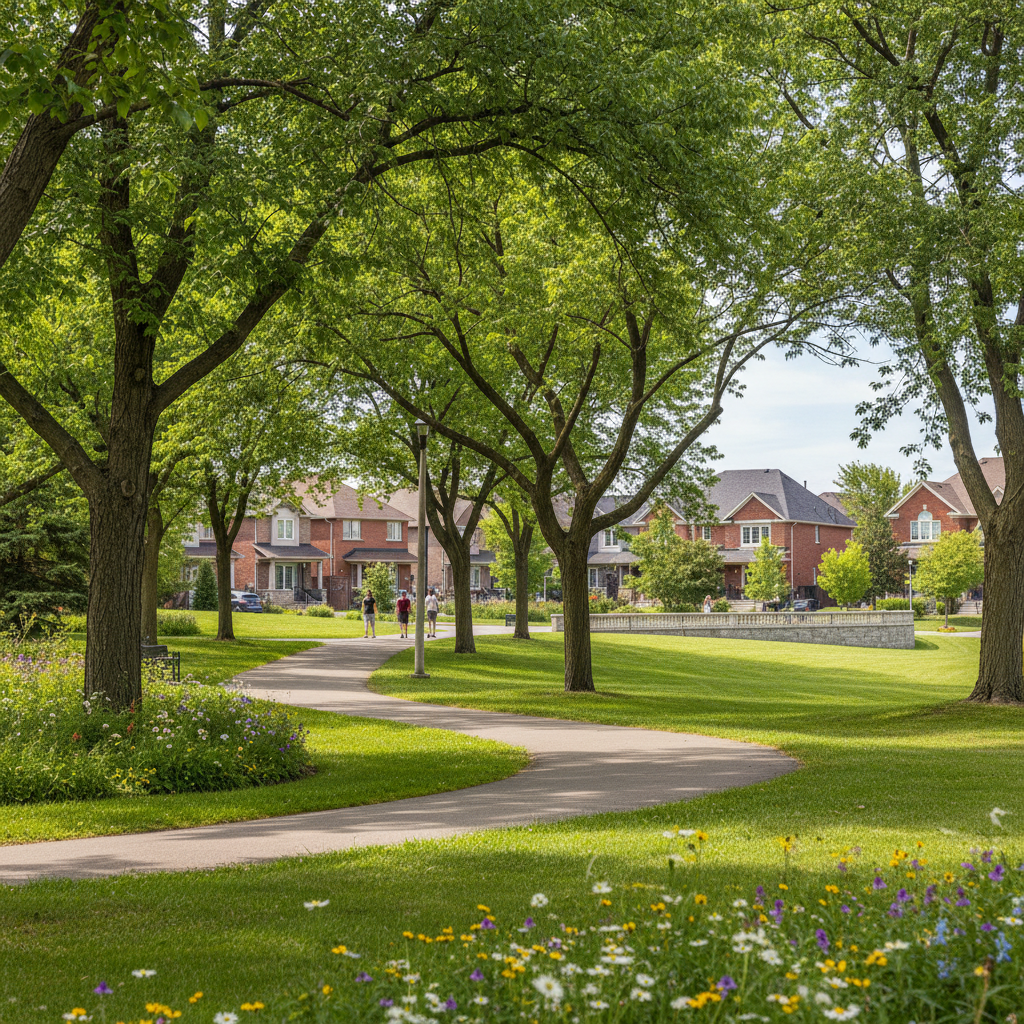
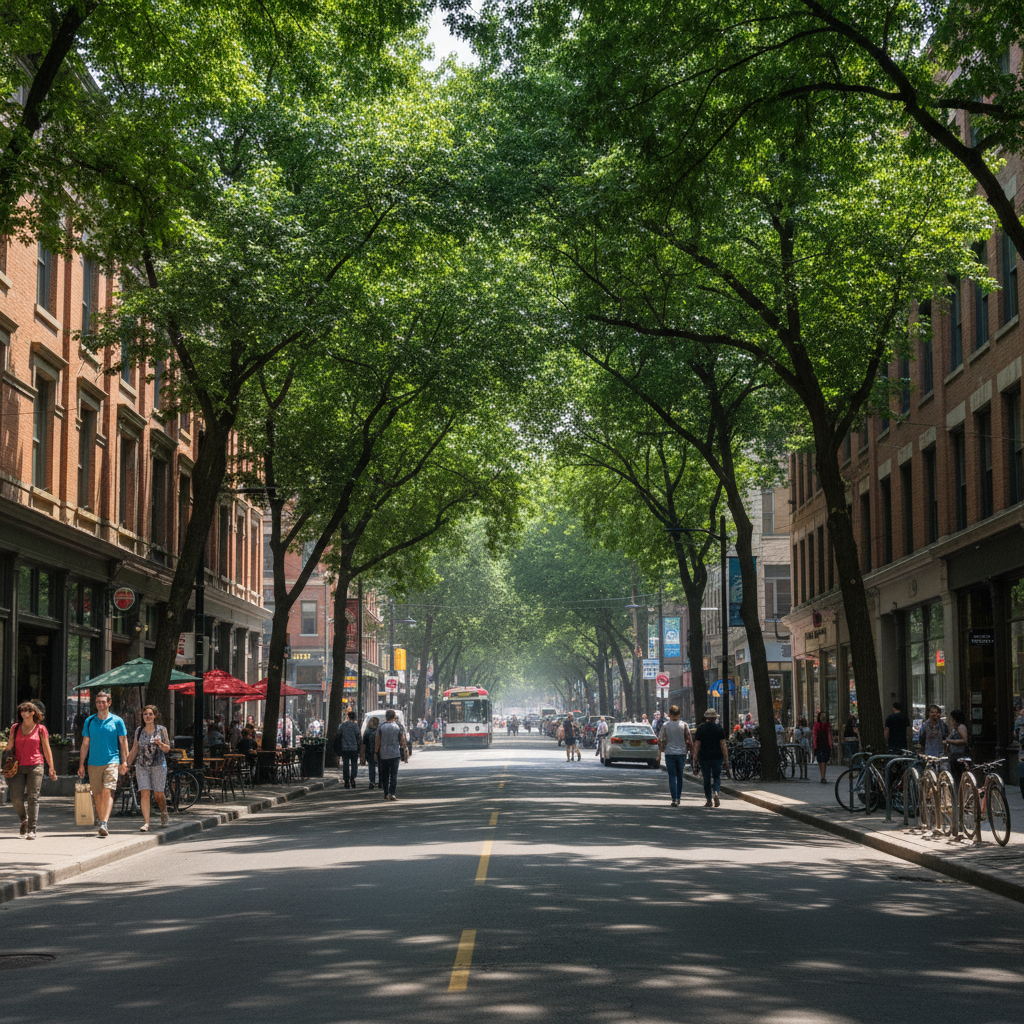
Mature shade trees lining a residential street in an Ontario city, casting deep shade over the road and sidewalk

In Toronto, neighbourhoods with less than five percent tree canopy cover generate five times as many heat-related ambulance calls as those with more than five percent. That is not a general observation about heat and health. It is a specific, measurable threshold below which emergency outcomes spike in a city where summer heat events are increasing in frequency and intensity.

The urban heat island effect is not new, but its severity in Ontario is growing faster than most residents realize. The fundamental mechanics are simple: paved surfaces and buildings absorb solar energy during the day and release it slowly at night, keeping urban areas significantly warmer than surrounding countryside. In a city the size of Toronto, the air temperature difference can reach 12 degrees Celsius on a calm summer evening. What is changing is how often those conditions produce genuinely dangerous heat exposure, and who it harms.

Where the Heat Concentrates

A common assumption is that downtown cores are the hottest parts of a metropolitan area. In the Greater Toronto Area, that turns out to be wrong. Thermal satellite analysis from the University of Toronto found that several of the most intense heat islands were located in suburban areas of Mississauga and Brampton, where large commercial parking lots, industrial zones, and recently developed subdivisions with young or absent tree canopy create vast expanses of heat-absorbing surface.

Commercial and industrial land uses in the GTA averaged surface temperatures of 29.1 degrees Celsius, compared to 25.1 degrees for parks and recreational areas and 23.1 degrees for water bodies. That four-to-six degree spread in surface temperature translates into a noticeably different lived experience on the same summer afternoon, depending on which part of the region you are in.

Hamilton tells a similar story. City staff used socio-economic and environmental mapping to identify Wards 2, 3, and 4, bordering heavy industry on the south shore of Lake Ontario, as the neighbourhoods with populations at greatest risk from extreme heat. These areas combine low canopy cover, older housing stock without air conditioning, higher proportions of elderly residents, and proximity to industrial heat sources.

The Health Toll

Public Health Ontario estimates that extreme heat is responsible for approximately 170 hospitalizations, 6,200 emergency department visits, and 1,500 ambulance transfers each summer across the province. Those figures rise during multi-day heat events, when buildings and pavement that never fully cool overnight create a cumulative heat load on the body.

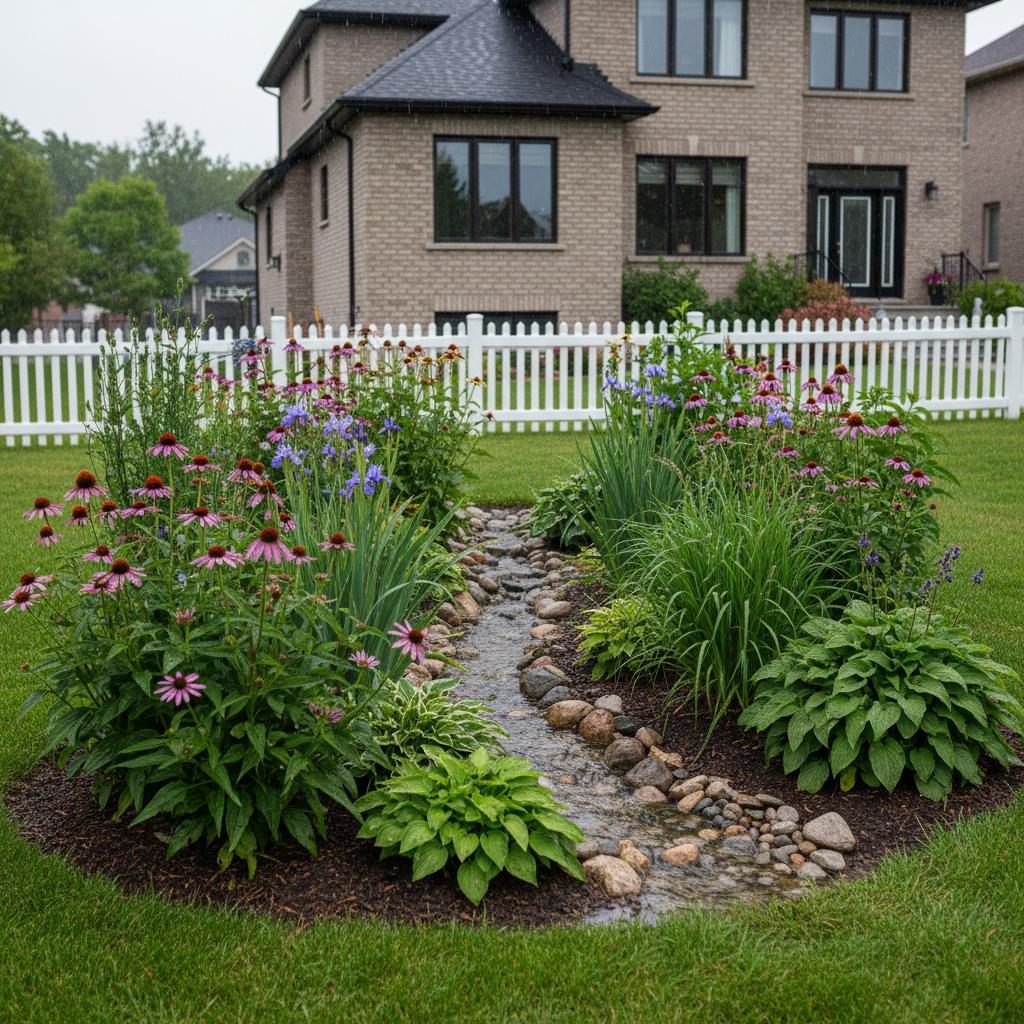
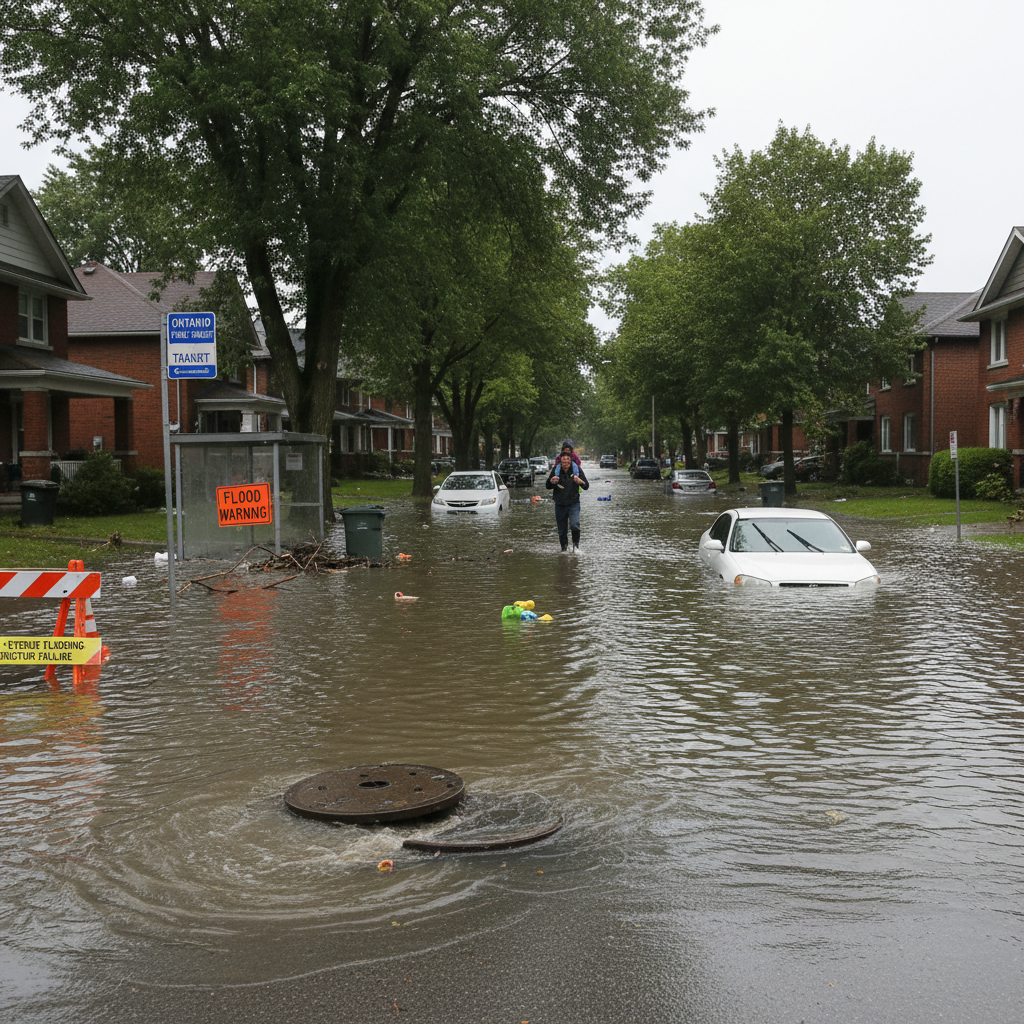
Stormwater runoff on an Ontario street during a summer rain event, showing impervious surface effects

Impervious surfaces contribute to both heat retention and stormwater flooding, two problems that intensify together in Ontario summers.

The burden falls unevenly. Hospitalization rates for heat-related illness are highest among adults over 80, but children are also vulnerable. Research published in 2025 found that extreme heat events increased paediatric emergency visits for heat-related illness by 211 percent, heatstroke by 590 percent, and dehydration by 35 percent. Respiratory admissions among children rose by 26 percent during the same events. These are not small margins.

Hamilton's mean number of days exceeding 30 degrees is projected to climb from 16 (1976 to 2005 baseline) to 37 between 2021 and 2050. Toronto historically saw about 12 days above 30 degrees per year. Both projections suggest that what used to be an occasional extreme is becoming a recurring feature of Ontario summers, and climate-ready landscape planning is no longer optional.

Trees as Infrastructure

The most effective and best-studied countermeasure is also the simplest: tree canopy. Mature trees reduce local air temperatures through transpiration and shading. Toronto's long-term plan targets raising citywide canopy from 28 to 40 percent by 2050, a goal that, if achieved, would meaningfully reduce heat exposure across the city.

But citywide averages obscure the problem. The neighbourhoods with the lowest canopy cover tend to be the ones with the highest heat vulnerability. In Toronto, 23 of 33 Neighbourhood Improvement Areas fall below the city's 26.9 percent canopy average, and the largest gaps are concentrated in North Etobicoke, North York, and central Scarborough, areas where income is lower and housing density is higher. This is not a coincidence. It is the result of decades of development patterns that prioritized density and parking over green infrastructure.

Other mitigation strategies are gaining ground. Toronto has installed over 500 green roofs since its pioneering bylaw took effect, and several Ontario municipalities are experimenting with rain gardens and permeable paving that reduce both heat retention and stormwater runoff. Hamilton has introduced equity-based heat response measures including Cool Kits for vulnerable residents and air conditioning subsidies for low-income households with heat-aggravated medical conditions.

But the structural issue remains: Ontario's urban areas are adding impervious surface faster than they are adding canopy. Until that ratio changes, heat islands will continue to grow, and the people living in them, disproportionately low-income, elderly, and racialized, will continue to absorb the consequences. The distribution of tree cover is, in this context, a public health issue with measurable outcomes in emergency rooms across the province.