Biodiversity and Healthier Communities
Healthy Landscapes Ontario | December 15, 2025
Biodiversity sounds like a concept for ecologists and conservation biologists, something measured in species counts and habitat assessments far from daily life. But in Ontario communities, biodiversity is woven into everyday experience. It is the variety of birds that wake you in the morning, the wildflowers that colour a trail in June, the insects that pollinate backyard gardens, and the trees that cool your street in August. When this diversity diminishes, communities lose more than wildlife. They lose the ecological services that support clean air, clean water, and livable landscapes.
Understanding the connection between biodiversity and community health is increasingly important as Ontario grows. Development pressures, invasive species, and climate change are all reducing the variety of life in many Ontario landscapes. But communities that take deliberate steps to protect and restore biodiversity are finding that these efforts pay off in measurable improvements to environmental quality, public health, and quality of life.
How Does Biodiversity Support Clean Air and Water?
The air and water quality in any Ontario community depends in part on the diversity of its natural systems. A forest with multiple tree species filters pollutants more effectively than a monoculture plantation because different species capture different particle sizes and chemical compounds. A wetland with diverse plant communities processes nutrients and sediments more efficiently than a simple drainage ditch.
Ontario's wetlands are particularly valuable for water quality. Marshes, swamps, and fens along the Great Lakes and across the interior of the province filter agricultural runoff, absorb heavy metals, and break down organic pollutants before they reach drinking water sources. The Ontario Wetland Evaluation System recognizes these functions and provides a framework for protecting the most ecologically significant wetlands.
Native pollinators depend on diverse plantings that provide food sources from early spring through late fall.
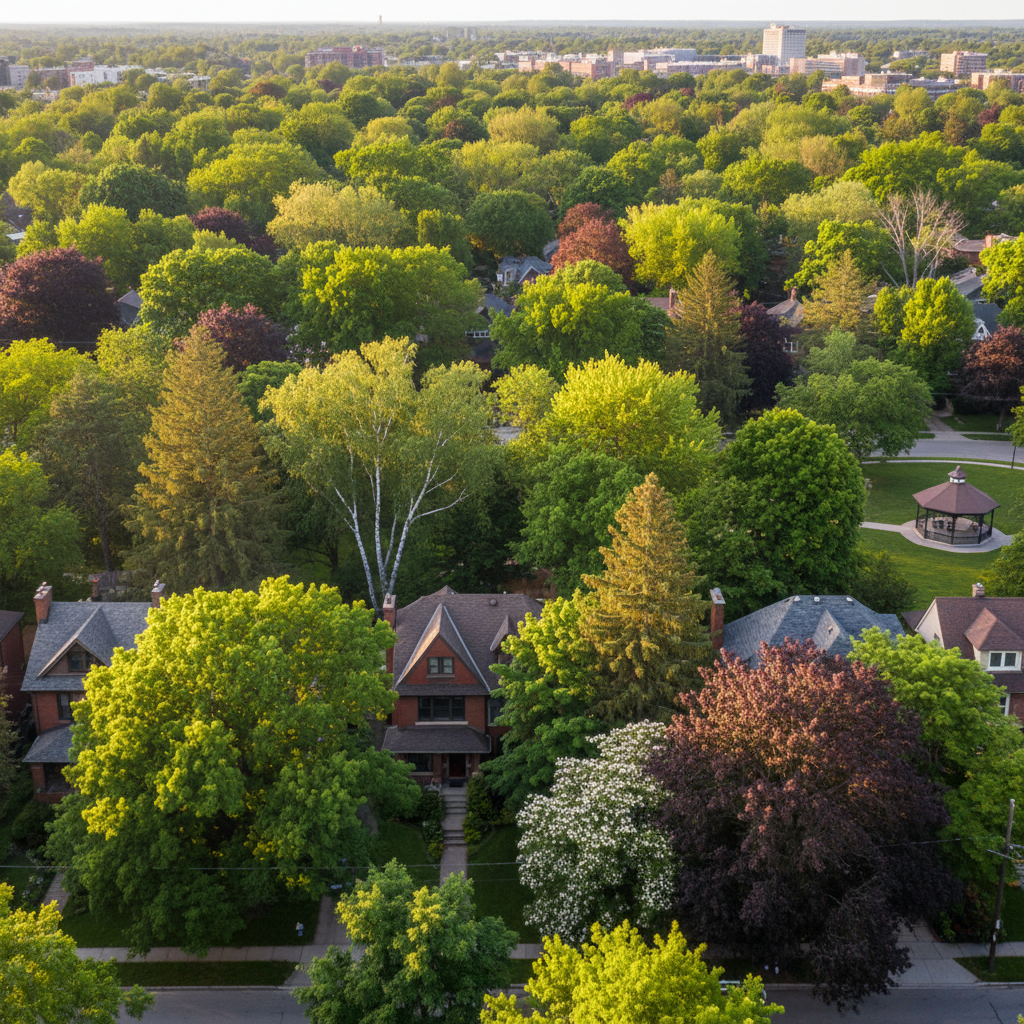
Tree canopy diversity also matters for urban cooling and air quality. Communities that plant a wide range of native tree species create more resilient canopies that continue filtering air and providing shade even when a single species is affected by disease or pests. The loss of ash trees across Ontario demonstrated this vividly: communities with diverse urban forests maintained their canopy, while those heavily dependent on ash lost significant shade and air filtration capacity.
What Is the Connection Between Biodiversity and Food Systems?
Pollinators are the most direct link between biodiversity and food. In Ontario, native bees, butterflies, moths, and other pollinators are essential for the production of apples, blueberries, squash, and dozens of other crops. The economic value of pollination services in Ontario runs into hundreds of millions of dollars annually.
But pollinator populations are declining. Habitat loss, pesticide exposure, and reduced availability of native flowering plants have all contributed to drops in native bee and butterfly populations. Community gardens, pollinator pathways, and naturalized public spaces that include native flowering plants help reverse this decline by providing the food and nesting habitat that pollinators need.
Beyond pollinators, biodiversity supports natural pest control. Birds, bats, dragonflies, and predatory insects help keep mosquitoes, crop pests, and other nuisance species in check. Communities surrounded by diverse natural habitats tend to have fewer pest problems than those in simplified, heavily managed landscapes.
Soil Health and the Hidden Biodiversity Beneath Our Feet
The soil in Ontario's landscapes teems with life that most people never see: fungi, bacteria, earthworms, and countless microorganisms that decompose organic matter, cycle nutrients, and maintain soil structure. This below-ground biodiversity is essential for plant health, carbon storage, and water infiltration.
Healthy soil absorbs more rainfall, reducing the runoff that overwhelms storm sewers and contaminates waterways. It supports healthier plants that require less watering and fertilization. And it stores carbon, contributing to climate change mitigation at the community level. Practices like composting, mulching, and reducing tillage all support soil biodiversity in gardens, parks, and public landscapes.
How Does Biodiversity Affect Mental Health and Wellbeing?
There is growing evidence that exposure to biodiverse environments has stronger mental health benefits than exposure to simple green space. A walk through a diverse meadow with birdsong, butterflies, and varied wildflowers is more restorative than a walk through a mowed lawn, even though both are technically "green." Researchers attribute this to the sensory richness of biodiverse environments, which engages attention gently and promotes the state of mind that psychologists call "soft fascination."
Wetlands are among Ontario's most biodiverse and ecologically valuable landscapes, supporting hundreds of species while filtering water and absorbing floods.
In Ontario, communities that maintain naturalized areas, pollinator gardens, and diverse plantings in their parks are creating spaces that deliver these enhanced wellbeing benefits. The shift away from manicured, monoculture landscapes toward more diverse, naturalized designs reflects both ecological understanding and a recognition that people respond positively to the visual and sensory variety that biodiversity provides.
What Are the Biggest Threats to Biodiversity in Ontario?
Habitat loss remains the primary driver of biodiversity decline in Ontario. As farmland and forests are converted to residential and commercial development, the habitats that native species depend on shrink and fragment. Southern Ontario, which contains the province's greatest biodiversity, has also experienced the most development pressure.
Invasive species are the second major threat. Emerald ash borer, Asian long-horned beetle, phragmites, garlic mustard, and dog-strangling vine are among the invasive species that have significantly altered Ontario's ecosystems. These invaders outcompete native species, reduce habitat quality, and can fundamentally change the character of local landscapes.
Climate change is an emerging threat that interacts with habitat loss and invasive species. As temperatures rise and precipitation patterns shift, some native species are moving northward while southern species are expanding their range. This reshuffling creates uncertainty for conservation planning and makes maintaining diverse, connected natural habitats even more important.
What Can Ontario Communities Do to Protect Biodiversity?
Protecting biodiversity starts with protecting habitat. Municipal official plans, zoning bylaws, and development approval processes all provide opportunities to require natural heritage protection. Ontario's Provincial Policy Statement includes provisions for natural heritage systems, and communities that implement these provisions rigorously tend to maintain healthier, more biodiverse landscapes.
Restoration is equally important. Converting mowed parkland to native meadow, naturalizing stream corridors, planting native trees and shrubs in underused areas, and creating pollinator gardens on public and private land all increase biodiversity in settled landscapes. These projects often qualify for funding through conservation authority programs, the Ontario Trillium Foundation, and municipal community improvement plans.
Individual actions matter too. Every property owner who plants a native garden, reduces pesticide use, or leaves a patch of habitat for wildlife contributes to the collective biodiversity of their community. When these individual choices are multiplied across a neighbourhood, the cumulative effect on bird populations, pollinator health, and ecological function is significant.
Frequently Asked Questions
How does biodiversity benefit community health?
Biodiversity supports cleaner air through diverse tree canopies, better water quality through functional wetlands and riparian areas, pollination of food crops, natural pest control, and access to diverse green spaces that reduce stress and encourage outdoor activity.
What threatens biodiversity in Ontario communities?
Major threats include habitat loss from development, invasive species like emerald ash borer and phragmites, pesticide use, reduced pollinator habitat, climate change, and fragmentation of natural corridors that wildlife needs to move between habitats.
How can residents support biodiversity in their neighbourhoods?
Residents can plant native trees, shrubs, and wildflowers, reduce lawn area, avoid pesticides, create pollinator gardens, install bird and bat boxes, support local conservation organizations, and advocate for natural heritage protection in municipal planning processes.
What role do wetlands play in community health in Ontario?
Wetlands filter water, absorb floodwaters, recharge groundwater, provide habitat for wildlife, sequester carbon, and offer recreational and educational opportunities. They are among the most valuable ecosystems in Ontario for both ecological function and community health.