Designing Better Public Spaces in Small Ontario Towns
Healthy Landscapes Ontario | January 15, 2026
In small Ontario towns, public spaces tell the story of a community. The main street, the town square, the waterfront park, the cenotaph garden. These are the places where residents gather on Saturday mornings, where visitors form their first impressions, and where the daily rhythms of community life play out. When these spaces are well-designed and well-maintained, they signal vitality. When they are neglected, they convey decline, regardless of what is happening in the local economy.
Across Ontario, small municipalities are discovering that investing in public space design does not require big-city budgets. It requires attention: listening to residents, understanding how spaces are used, making thoughtful choices about materials, plantings, and furnishings, and maintaining what exists. The communities that get this right are creating downtown cores and gathering places that draw residents, attract visitors, and build the kind of local pride that makes people want to stay.
What Makes a Small-Town Public Space Work?
The most successful public spaces in small Ontario towns share a few characteristics. They are located where people already go, typically on or near the main street. They provide a reason to stop and linger, whether that is comfortable seating, shade from trees, a view of water, or the activity of a farmers market. And they feel cared for, with clean surfaces, healthy plantings, and amenities that work.
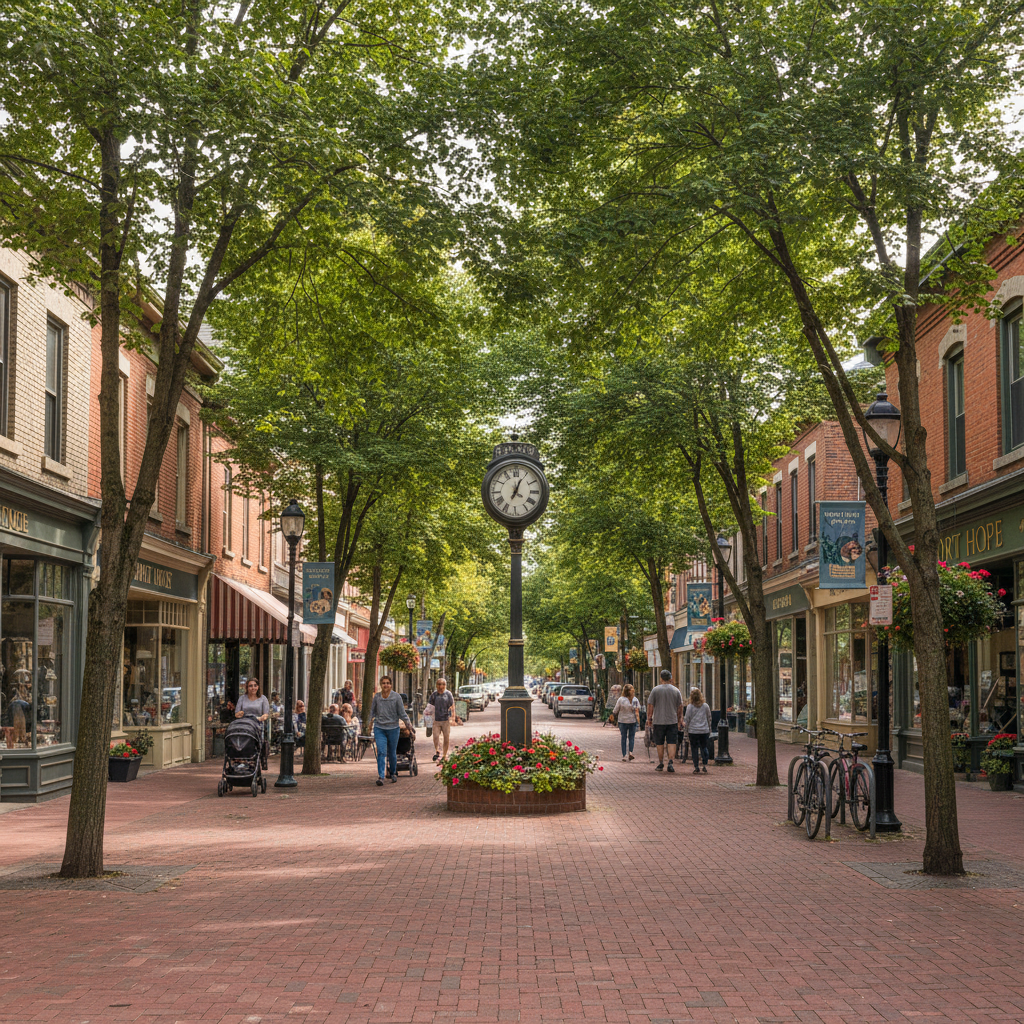
Elora, a village of roughly 5,000 in Wellington County, illustrates these principles. Its downtown centres on a main street that descends to the Grand River gorge, with shops, galleries, and cafes fronting wide sidewalks. Small public spaces, a riverside park, a heritage garden, a well-designed crossroads area, give visitors reasons to walk, explore, and stay longer. The public realm is not grand, but it is coherent, well-maintained, and deeply connected to the natural landscape.
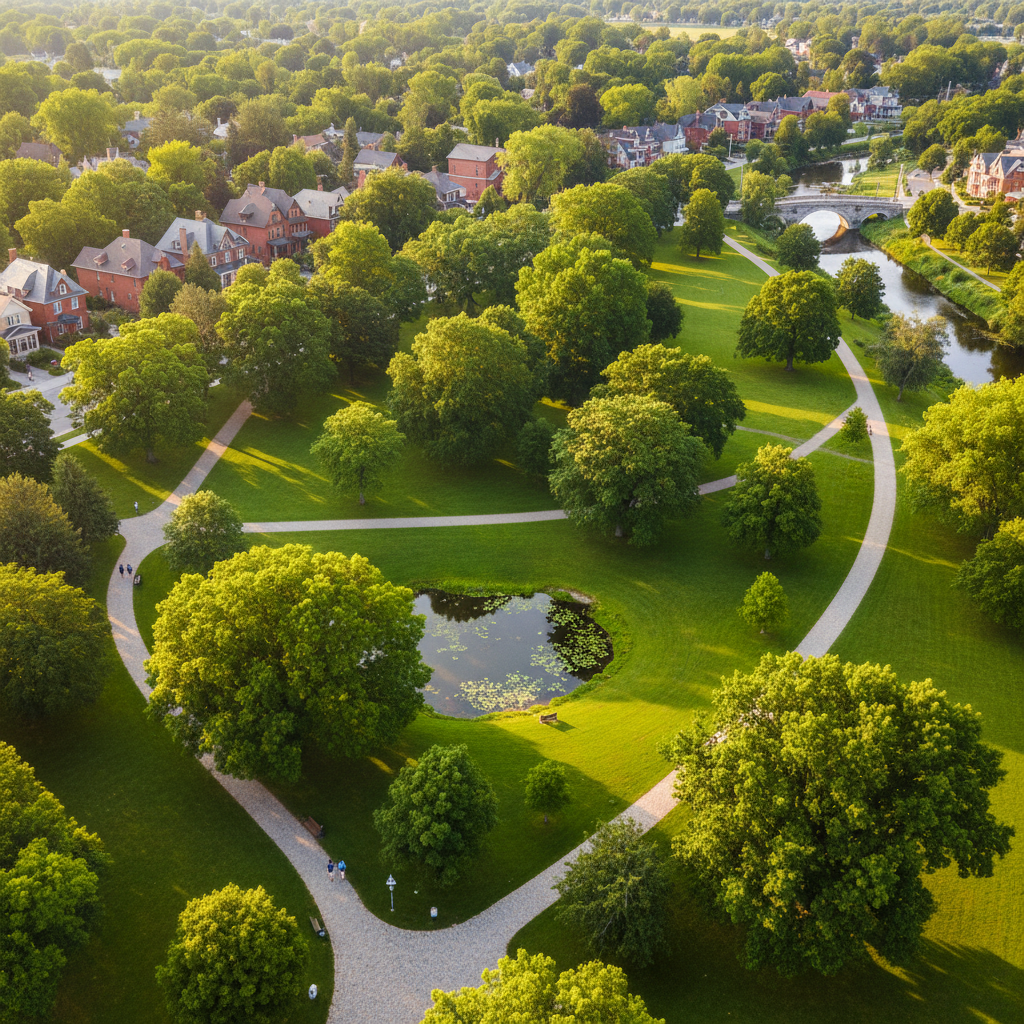
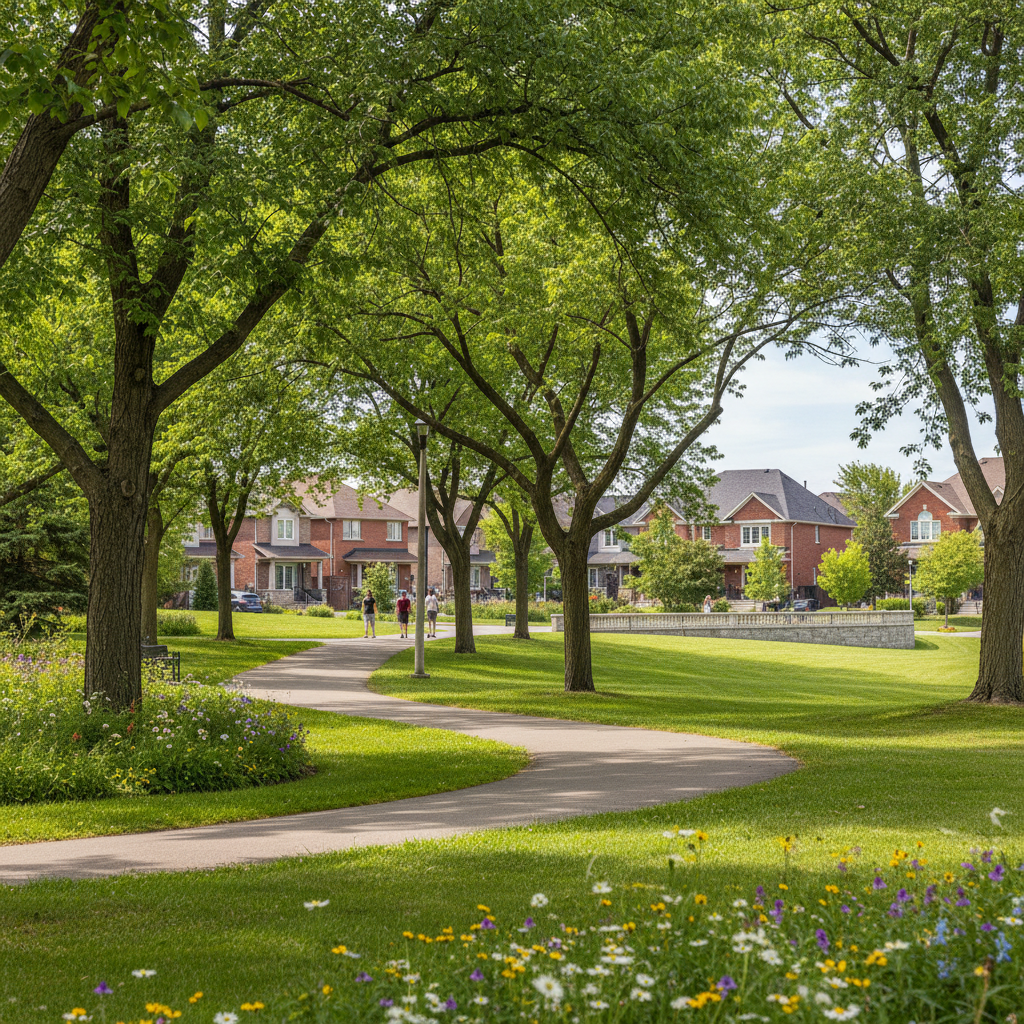
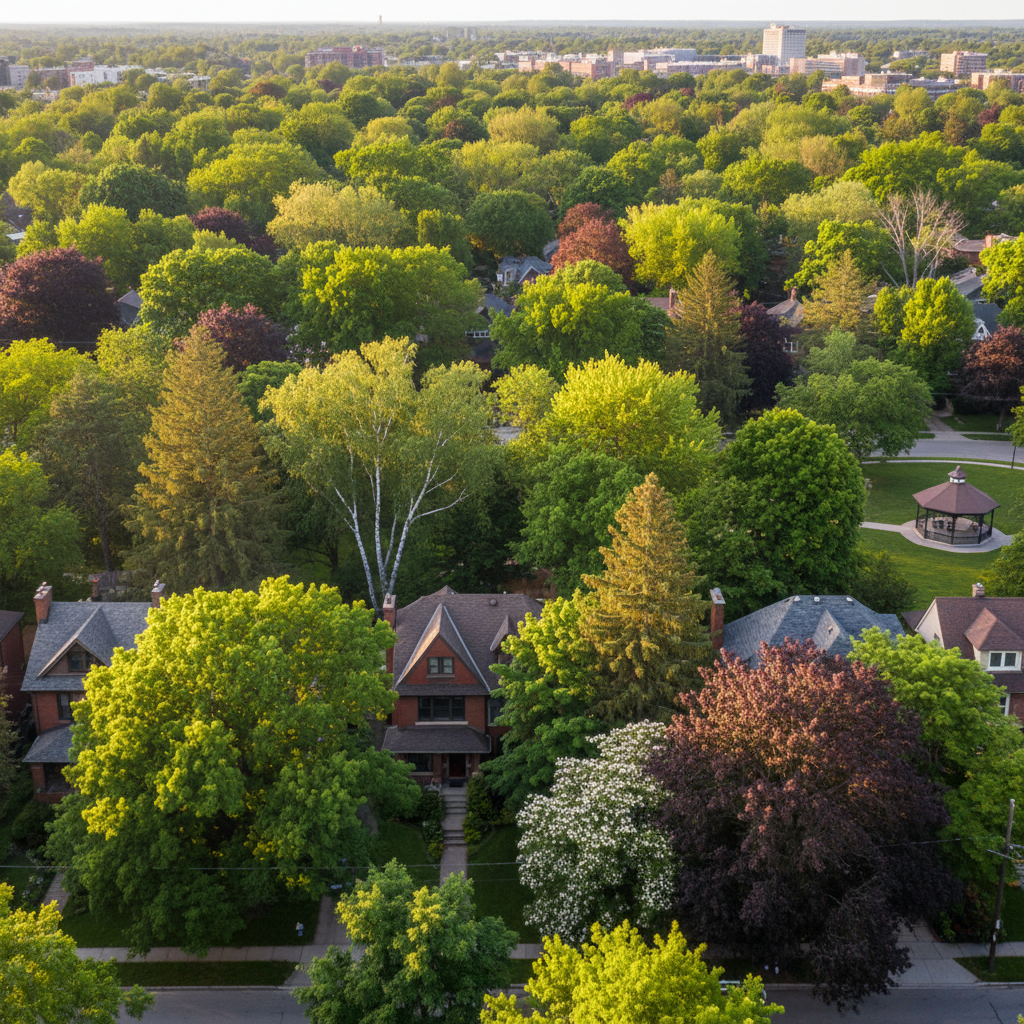
A simple but well-designed park with comfortable seating, shade trees, and native plantings can become the heart of a small community.
Contrast this with towns where the main street lacks trees, benches face away from activity, parking lots dominate the streetscape, and public spaces feel like leftover land rather than intentional gathering places. The difference is not primarily about budget. It is about whether public space is treated as a priority in community planning.
The Importance of Shade and Comfort
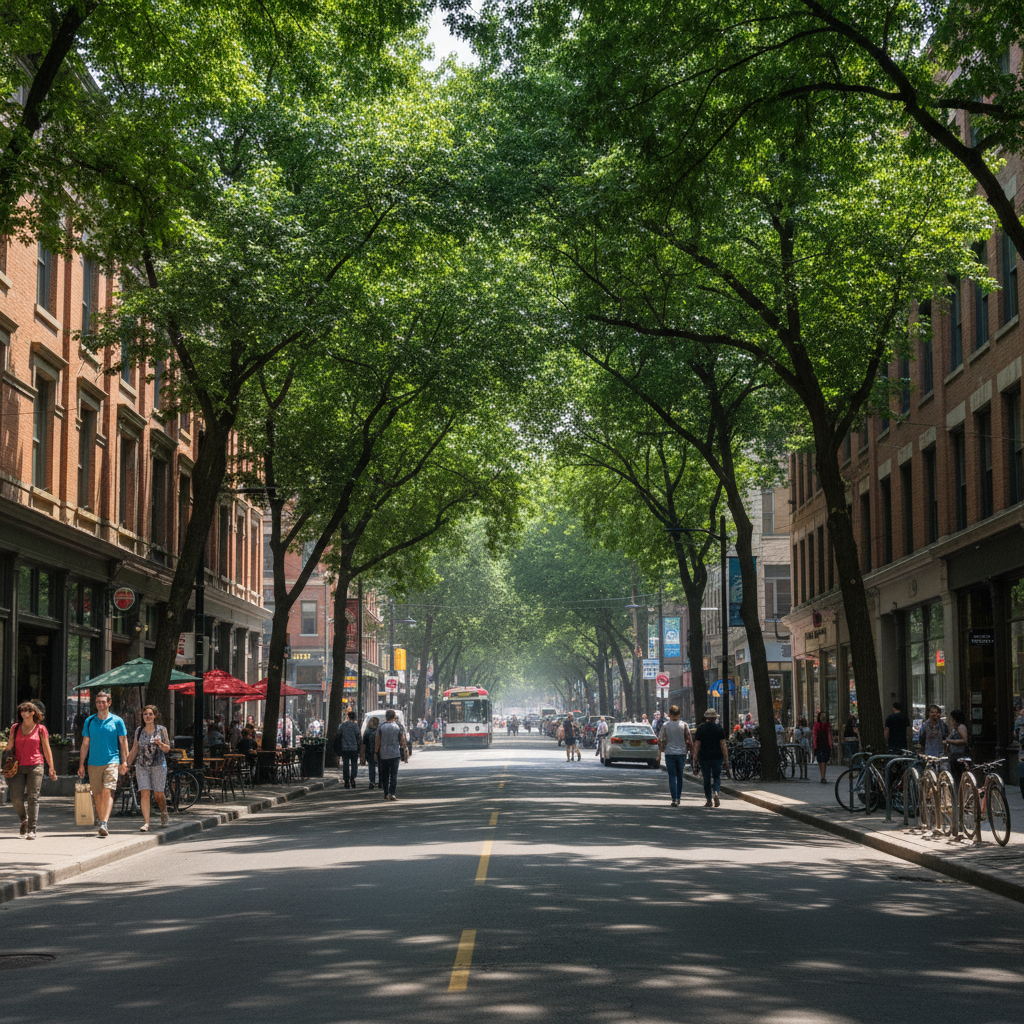
Shade is perhaps the single most important element in small-town public space design. A bench in full sun on a July afternoon sits empty. The same bench under a mature tree attracts users all day. Trees also create a sense of enclosure and intimacy that makes outdoor spaces feel like rooms rather than voids. The cooling benefits of shade are well-documented, and in Ontario's warming summers, they are becoming essential rather than optional.
Beyond shade, comfort includes wind protection, seating variety (benches with backs for older adults, moveable chairs for flexibility, low walls for informal perching), accessible surfaces, and protection from traffic noise. Communities that observe how people actually use their public spaces, rather than guessing, make better design decisions.
How Are Small Ontario Towns Approaching Public Space Design?
Several small Ontario towns offer instructive examples of public space improvement:
Cobourg invested in its waterfront park and beach area, creating a destination that draws visitors from across the GTA. The combination of a sandy beach, well-maintained gardens, a boardwalk, and connections to the downtown has made the waterfront a regional attraction that supports local businesses year-round.
Perth has maintained its heritage streetscape while adding contemporary amenities like improved pedestrian crossings, street trees, and a revitalized town square that hosts community events. The town's approach respects its architectural history while making the public realm more comfortable and functional for current residents.
Meaford transformed its waterfront from an underused industrial edge to a park with trails, gardens, and gathering spaces that connect the downtown to Georgian Bay. The project was completed in phases, allowing the community to spread costs over several budget cycles while building momentum with each completed section.
Community design workshops give residents a voice in shaping the public spaces they will use every day.
What Role Does Community Engagement Play?
The best small-town public spaces reflect the needs and preferences of the people who use them. Community engagement, when done well, ensures that design decisions are grounded in local knowledge rather than generic templates. A park designed through genuine consultation will serve its community better than one imported from a catalogue.
Effective engagement in small towns often works differently than in cities. Formal public meetings may draw only a handful of people, while a conversation at the coffee shop or a booth at the fall fair reaches many more. Walking audits, where residents walk through a space together and point out what works and what does not, are particularly effective because they ground the conversation in shared physical experience.
Youth engagement deserves special attention. Young people use public spaces differently than adults, and their perspectives on what makes a place welcoming, fun, and safe are valuable inputs for design. Communities that involve youth in planning, whether through school partnerships, youth advisory committees, or creative engagement methods like photography projects, end up with spaces that serve a wider range of residents.
How Can Landscaping Transform a Small-Town Streetscape?
Landscaping is the most accessible tool for transforming public spaces on a limited budget. Trees, shrubs, perennials, and groundcovers soften hard surfaces, provide seasonal colour and interest, and create the sense of nature contact that research links to improved wellbeing. In a small-town context, landscaping also communicates care, signalling to residents and visitors that the community values its public realm.
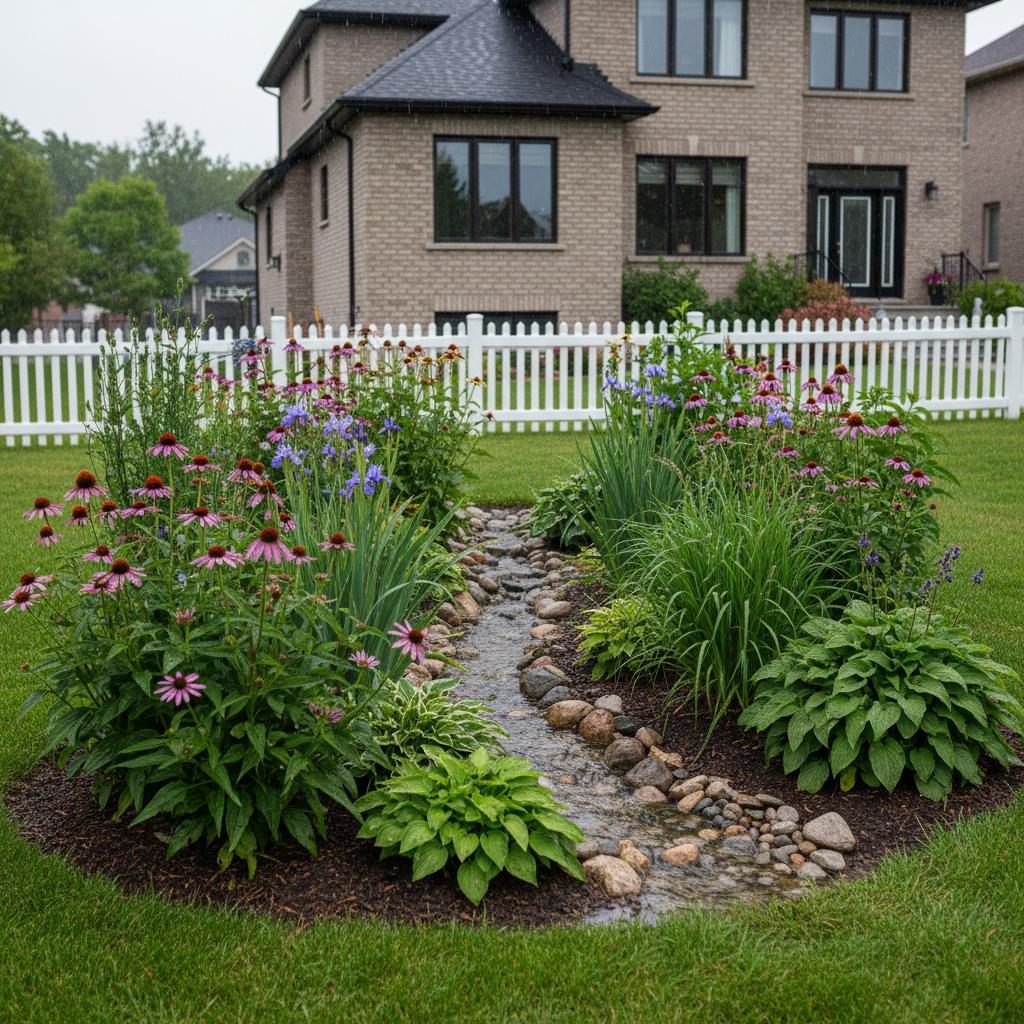
Native plant species are an increasingly popular choice for small-town landscaping. They require less water and maintenance than non-native ornamentals, support local biodiversity, and connect the streetscape to the surrounding natural landscape. A main street planted with native serviceberry, dogwood, and coneflower looks distinctly Ontarian and supports the birds, bees, and butterflies that contribute to a vibrant public realm.
Seasonal interest matters too. Communities that plan plantings for year-round visual appeal, spring bulbs, summer perennials, fall foliage, winter structure from ornamental grasses and evergreens, maintain an attractive public realm throughout the year rather than only during the summer growing season.
How Can Small Towns Fund Public Space Improvements?
Funding is a genuine constraint for small municipalities, but several mechanisms are available:
- Community Improvement Plans (CIPs) allow municipalities to direct resources to specific areas, including streetscape improvements and public space enhancement.
- Ontario Trillium Foundation grants support community-led projects that improve public spaces, trails, and outdoor amenities.
- Federal Economic Development Agency for Southern Ontario (FedDev) funding supports projects that contribute to tourism and economic development.
- Conservation authority partnerships can provide technical expertise and cost-sharing for projects that include stormwater management, naturalization, or waterfront restoration.
- Service club and business partnerships can fund specific elements like benches, trees, or garden installations through sponsorship or donation programs.
Phasing is another important strategy. Breaking a large public space project into manageable phases allows a small municipality to spread costs over multiple budget years while delivering visible progress that builds community support for continued investment.
The small Ontario towns that invest thoughtfully in their public spaces are investing in their future. A welcoming main street, a beautiful waterfront, and comfortable gathering places attract residents, support businesses, and create the quality of life that keeps communities strong for generations.
Frequently Asked Questions
What makes a public space successful in a small town?
Successful small-town public spaces offer comfortable seating, shade, visual interest, and a reason to linger. They are centrally located, well-maintained, and designed to serve multiple uses including farmers markets, community events, and everyday gathering.
How can small Ontario towns afford to redesign their public spaces?
Many small municipalities fund public space improvements through community improvement plans, Ontario Trillium Foundation grants, Federal Economic Development Agency funding, development charges, and partnerships with local service clubs, businesses, and conservation authorities.
What role do trees and landscaping play in small-town public spaces?
Trees and landscaping provide shade, visual beauty, seasonal interest, and a sense of enclosure that makes outdoor spaces feel comfortable. They also manage stormwater, improve air quality, and signal that a community cares about its public realm.
How should small towns engage residents in public space design?
Effective engagement includes community design workshops, walking audits, online surveys, pop-up installations that test ideas temporarily, and conversations with diverse groups including seniors, youth, newcomers, and people with disabilities.