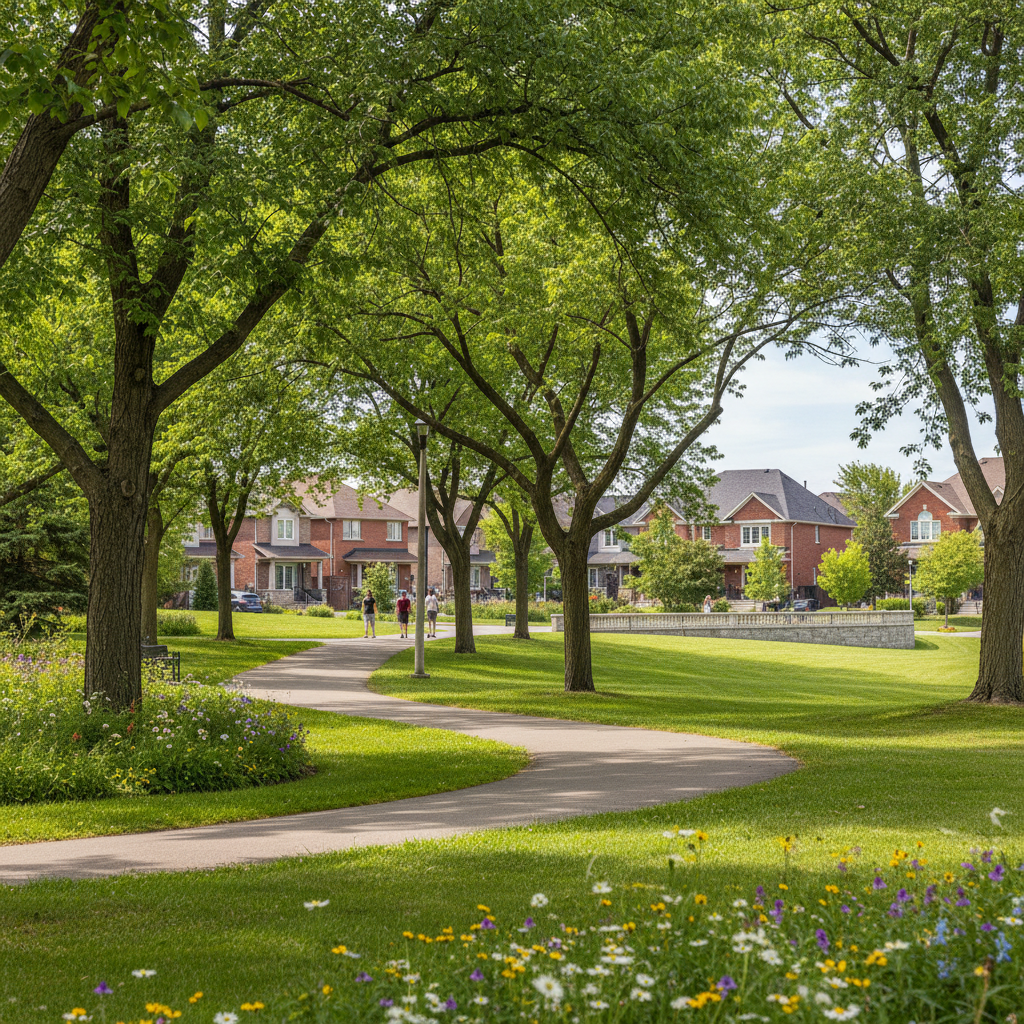
How Trails Support Health, Recreation, and Local Identity
Healthy Landscapes Ontario | December 1, 2025
A trail is a simple thing: a cleared path through landscape. But in Ontario communities, trails do far more than their modest design might suggest. They connect neighbourhoods that were previously divided by geography or infrastructure. They give residents a reason to step outside on a cold morning or a humid afternoon. They bring visitors to small towns that might otherwise be passed by. And they become part of how a community understands itself.
Ontario has invested significantly in trail development over the past three decades, from the Trans Canada Trail corridor that spans the province to local networks maintained by volunteer organizations. The result is a patchwork of paths, rail trails, waterfront boardwalks, and forest routes that serve millions of users each year. Understanding how these trails contribute to health, recreation, and identity helps communities make the case for continued investment and expansion.
What Health Benefits Do Trails Provide?
The health case for trails begins with physical activity. Walking, cycling, running, cross-country skiing, and snowshoeing are among the most accessible forms of exercise, requiring minimal equipment and no membership fees. Trails lower the barrier to activity by providing safe, attractive, and car-free spaces where people can move at their own pace.
Research published in the Canadian Journal of Public Health has found that proximity to trails is one of the strongest predictors of whether adults meet recommended physical activity levels. In Ontario, where chronic diseases linked to sedentary lifestyles account for a significant share of health care spending, trails represent a cost-effective public health intervention.
Volunteer trail maintenance programs build community while keeping trail infrastructure functional and inviting.
But the health benefits extend beyond physical fitness. Trails that pass through natural areas provide what researchers call "restorative environments," landscapes that reduce mental fatigue, lower cortisol levels, and improve mood. A 30-minute walk on a wooded trail provides measurably more stress relief than the same duration of walking on a city sidewalk, according to studies from the Nature Conservancy of Canada.
For older adults, trails offer safe, level surfaces for the daily walking that maintains mobility and independence. For families, they provide a free outdoor activity that gets everyone moving. For people managing mental health challenges, a quiet trail through trees can be more restorative than any indoor setting. The breadth of health benefits makes trails one of the most versatile pieces of community infrastructure available.
How Do Trails Support Year-Round Recreation?
Ontario's four-season climate means that trails serve different recreational purposes throughout the year. Spring and fall bring hikers and cyclists. Summer draws families, joggers, and birders. Winter transforms many trails into cross-country ski routes, snowshoe paths, and fat-bike corridors. Communities that maintain trails year-round see use across all seasons, providing a steady return on their infrastructure investment.
Rail trails are particularly well-suited to four-season use. Their gentle grades, wide surfaces, and linear routes make them accessible in all conditions. Ontario's network of rail trails, built on former railway corridors, includes popular routes like the Cataraqui Trail near Kingston, the Elgin Trail in southwestern Ontario, and the Tay Shore Trail near Midland. These converted corridors connect communities, cross landscapes, and provide the kind of long-distance routes that attract both local users and visitors.
Winter trail use has grown notably in Ontario. Groomed cross-country ski trails in places like the Ganaraska Forest, Algonquin Park, and municipal trail systems in Ottawa, Barrie, and Thunder Bay draw thousands of users who might otherwise spend the cold months indoors. Fat-biking, a newer winter activity, is expanding rapidly on trails designed or adapted for wider tires on snow-packed surfaces.
Trails as Tourism Infrastructure
Trails attract visitors, and visitors spend money. In Ontario, trail-based tourism is a growing economic sector. The Bruce Trail, which follows the Niagara Escarpment for nearly 900 kilometres, draws hikers from across Canada and internationally. Communities along the trail benefit from accommodation bookings, restaurant visits, and retail spending that collectively support local economies.
Winter trail use extends the recreation season and brings activity to communities year-round.
Smaller trail networks generate tourism benefits too. Prince Edward County's Millennium Trail, Parry Sound's Seguin Trail, and the waterfront trails in communities like Brockville and Sault Ste. Marie all contribute to local tourism economies. For small towns, a well-promoted trail can be a reason for visitors to stop, stay, and explore rather than drive through.
How Do Trails Shape Community Identity?
Beyond health and economics, trails contribute something harder to quantify but equally important: a sense of place. A trail along a river, through a forest, or beside a lake gives a community a shared experience of its landscape. It creates a common reference point that residents use to describe where they live and what makes it special.
In many Ontario communities, trails have become signature features. Collingwood is known for its Escarpment trails. Stratford's Avon Trail draws walkers to the river corridor that defines the city. Thunder Bay's waterfront trail system connects residents to Lake Superior in a way that reinforces the city's identity as a gateway to the north.
Trails also connect communities to their history. Rail trails follow routes that carried goods and passengers in previous centuries. Portage routes trace paths used by Indigenous peoples and early settlers. Waterfront trails pass through landscapes that have been gathering places for generations. Walking these routes provides a tangible connection to local heritage that enriches understanding and deepens attachment to place.
What Makes a Trail Network Effective?
Not all trails deliver the same benefits. The most effective trail networks share several characteristics:
- Connectivity: Trails that link neighbourhoods, schools, workplaces, and commercial areas are used far more than isolated loops. A trail that goes somewhere useful becomes part of daily life.
- Accessibility: Surfaces that accommodate walkers, cyclists, strollers, and wheelchair users serve the widest range of residents. Gentle grades and rest areas make trails welcoming for people of all abilities.
- Maintenance: Regular surface repair, vegetation management, and seasonal grooming keep trails safe and inviting. Deferred maintenance leads to declining use.
- Wayfinding: Clear signage, maps, and distance markers help new users feel confident and oriented, encouraging repeat visits.
- Safety: Good sightlines, adequate lighting near urban sections, and emergency access points make trails feel secure for all users.
Communities that invest in these elements see trail use increase steadily over time, which builds the political support needed to sustain and expand trail networks. The cycle is self-reinforcing: better trails attract more users, more users generate more advocacy, and more advocacy leads to better trails.
The Future of Ontario's Trail Networks
Ontario's trail network is extensive but incomplete. Gaps between municipal systems, missing connections across highways and waterways, and sections that lack proper surfaces or maintenance all limit the network's potential. Closing these gaps is a priority for organizations like Ontario Trails Council and the hundreds of local trail associations that maintain the province's path network.
As communities grow, integrating trail corridors into new development plans is essential. Once land is built on, opportunities for trail connections are lost. Municipal planners who reserve trail corridors during the subdivision approval process ensure that future residents have the connected, walkable communities that current research so strongly supports.
The trails that Ontario builds and maintains today will serve communities for decades. They will carry commuters, comfort the stressed, entertain families, attract visitors, and define the character of the places they pass through. Few public investments deliver so many returns for so long.
Frequently Asked Questions
How do trails improve community health in Ontario?
Trails provide free, accessible spaces for walking, cycling, running, and skiing that help residents meet daily physical activity recommendations. Communities with well-connected trail networks report higher rates of active living and lower rates of sedentary-related chronic disease.
What is a rail trail and why are they popular in Ontario?
A rail trail is a multi-use path built on a former railway corridor. Ontario has dozens of rail trails, including portions of the Trans Canada Trail. They are popular because the gentle grades and wide corridors make them accessible to users of all ages and abilities.
How do trails contribute to local identity in Ontario communities?
Trails often become signature features of a community, attracting visitors, inspiring local pride, and providing a shared experience that connects residents to local landscapes, history, and natural heritage.
How can volunteers support trail development in Ontario?
Volunteers can join trail associations, participate in organized maintenance days, help with fundraising, advocate at municipal meetings, and contribute to trail monitoring and reporting through community stewardship programs.