Urban Trees, Shade, and Summer Comfort
Healthy Landscapes Ontario | November 1, 2025
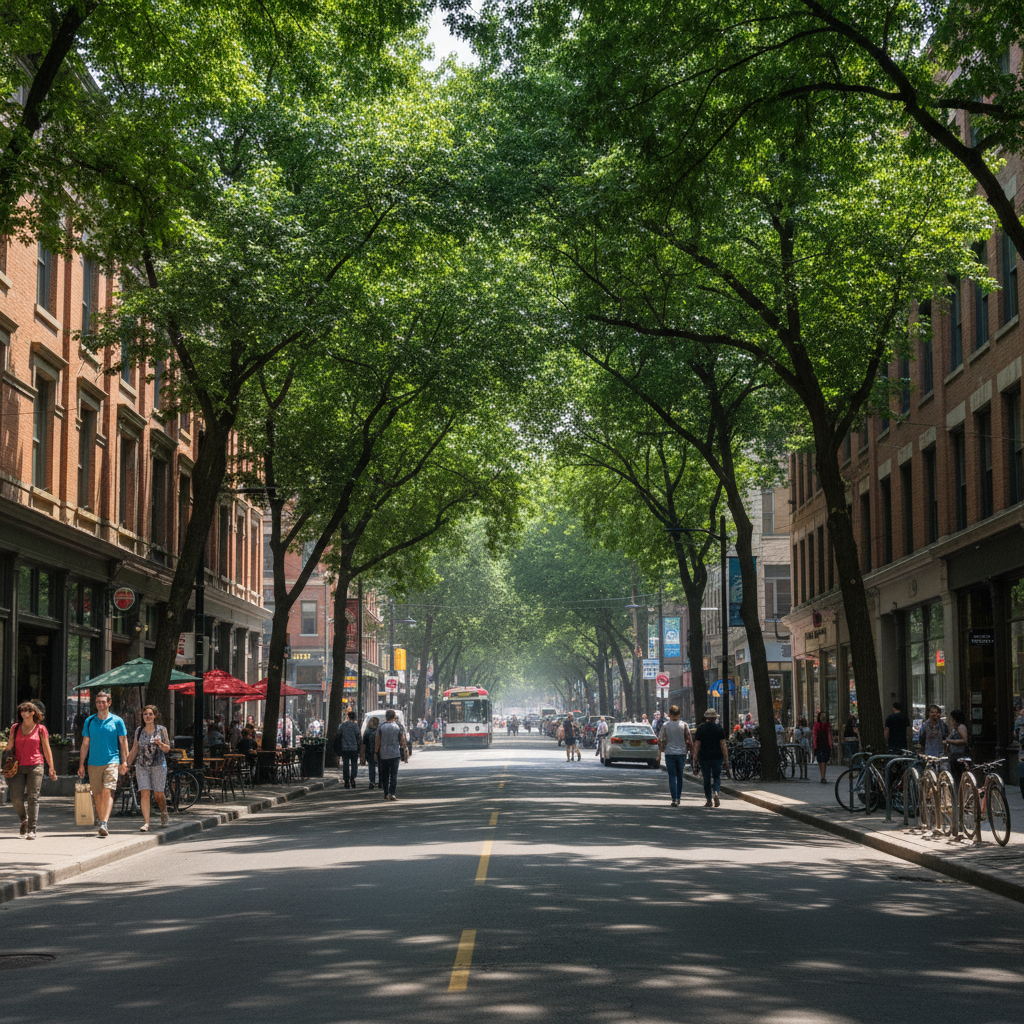
On a hot July afternoon in Ontario, the difference between a tree-lined street and an exposed one is felt immediately. Step from shade into full sun and the temperature change is unmistakable. Surface temperatures on unshaded asphalt can exceed 50 degrees Celsius, while pavement under a mature canopy stays below 35 degrees. This gap is not trivial. It determines whether a walk to the store is pleasant or punishing, whether children can play outside safely, and whether elderly neighbours face heat-related health risks.
Urban trees are among the most cost-effective tools Ontario communities have for adapting to warmer summers. They reduce energy costs, improve air quality, manage stormwater, increase property values, and create the shaded streetscapes that make walking, cycling, and outdoor gathering possible during increasingly hot months. But maintaining and expanding urban tree canopies requires deliberate planning, sustained investment, and a long-term perspective.
Why Are Urban Trees So Effective at Cooling?
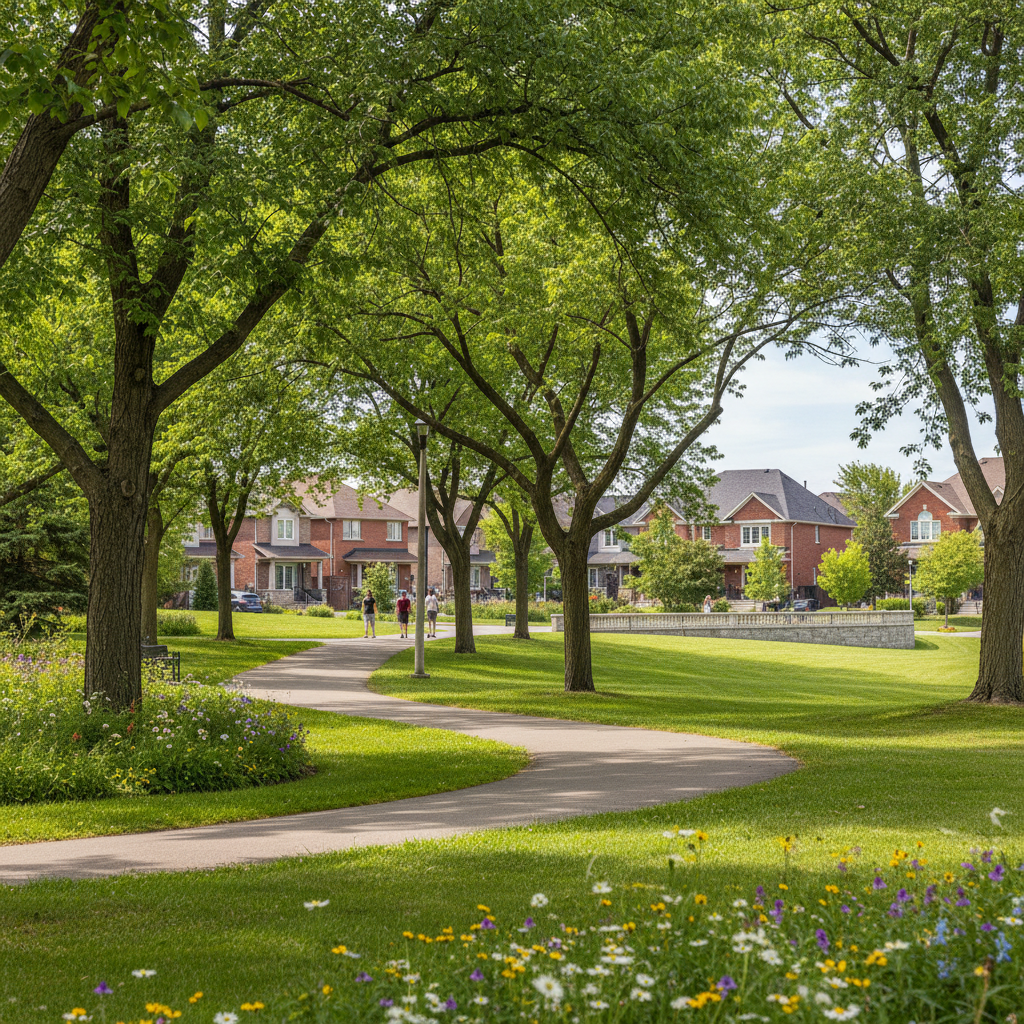
Trees cool their surroundings through two mechanisms. The first is simple shade: a large canopy blocks solar radiation from reaching surfaces below, preventing the heat absorption that makes pavement, buildings, and parked cars so hot. The second is transpiration, the process by which trees release water vapour through their leaves. This evaporative cooling works much like perspiration, lowering air temperatures in the tree's immediate vicinity.
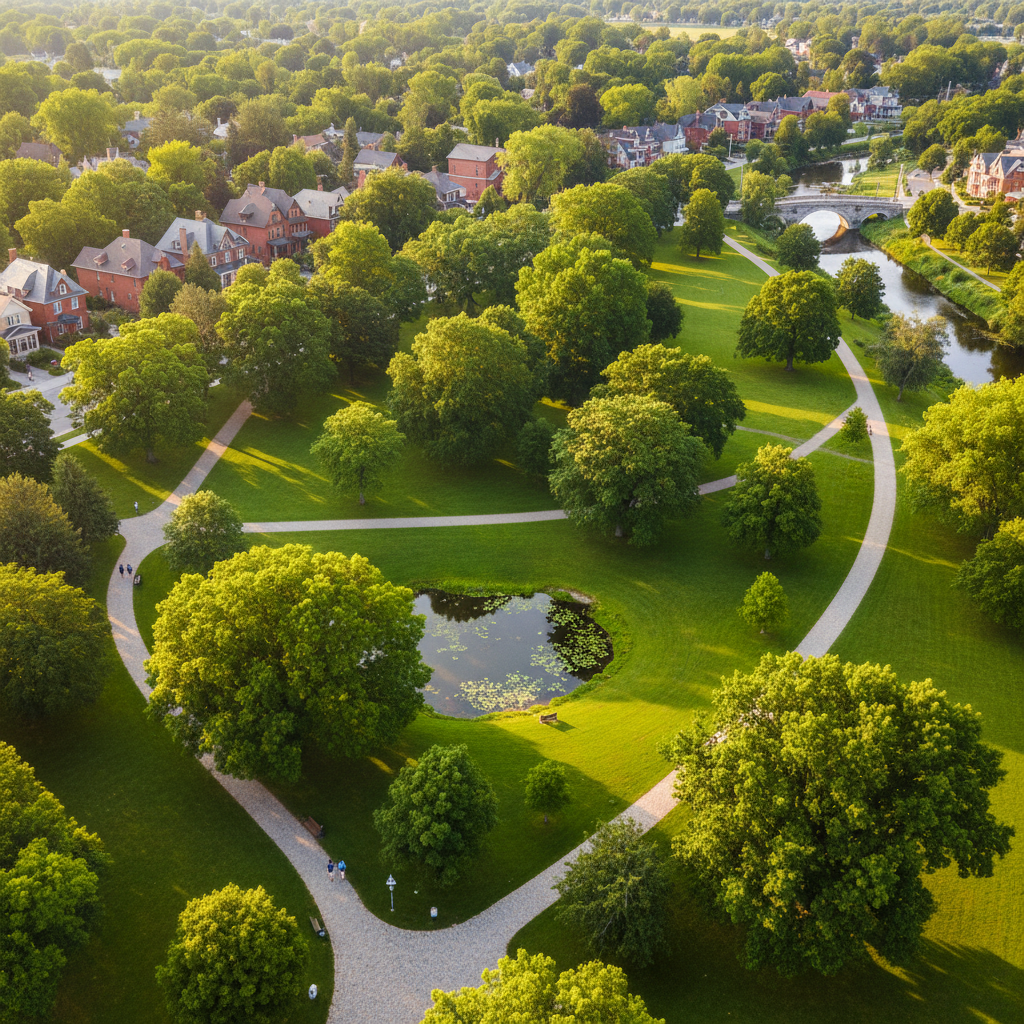
A diverse canopy provides both shade and ecological resilience, reducing risk from species-specific pests and diseases.
A single mature tree can transpire up to 400 litres of water per day, producing a cooling effect equivalent to 10 room-sized air conditioners running for 20 hours. Multiply that by hundreds or thousands of trees across a neighbourhood and the effect on local temperatures is substantial. Research from the University of Toronto has documented temperature differences of 2 to 4 degrees Celsius between high-canopy and low-canopy neighbourhoods on the same summer day.
This cooling effect has direct public health implications. Health Canada reports that extreme heat events are among the leading weather-related causes of death in Canada, and Ontario's aging population is particularly vulnerable. Neighbourhoods with strong canopy cover provide a natural buffer against heat-related illness, reducing ambulance calls and emergency room visits during heat waves.
What Is the State of Ontario's Urban Tree Canopy?
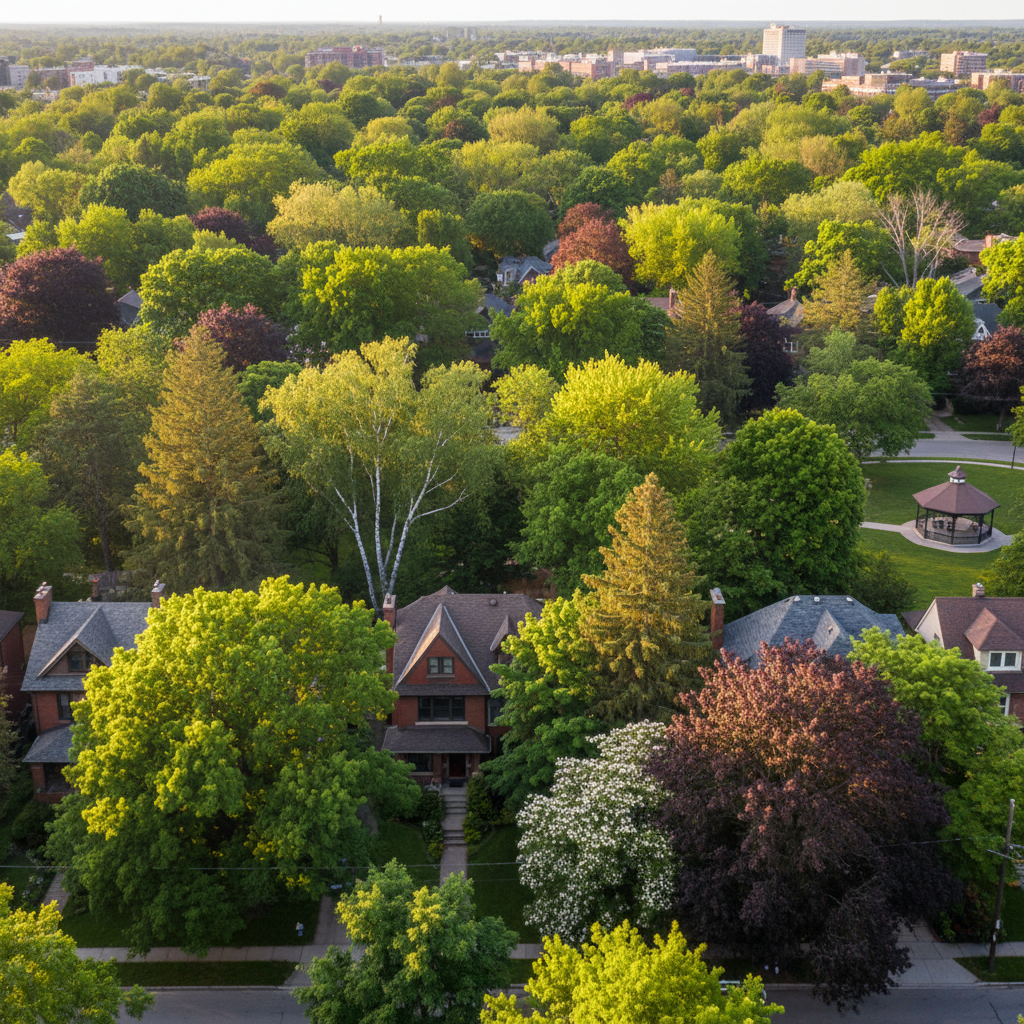
Ontario's urban tree canopy varies considerably by community. Toronto's canopy cover is approximately 28 percent, with a target of 40 percent. London, self-styled as the Forest City, has a canopy of roughly 25 percent, down from historical highs due to the emerald ash borer and development pressures. Smaller cities like Guelph and Kingston fall in similar ranges, while many newer suburban areas have canopy cover below 10 percent.
The loss of ash trees to the emerald ash borer, which arrived in Ontario in the early 2000s, was a wake-up call for many municipalities. Some communities lost 20 to 30 percent of their street trees within a decade, highlighting the danger of relying on a narrow range of species. The lesson has driven a shift toward planting diverse species mixes that spread risk and build a more resilient urban forest.
Which Trees Work Best for Ontario Streets?
Selecting the right trees for street planting in Ontario involves balancing shade potential, salt tolerance, drought resilience, disease resistance, and mature size. Some of the most reliable choices include:
- Sugar maple provides exceptional shade and fall colour but needs protection from road salt in high-traffic areas.
- Red oak is long-lived and tolerant of a wide range of conditions, making it an excellent choice for parks and wide boulevards.
- Bur oak is exceptionally tough, tolerating drought, compacted soil, and some salt exposure, making it one of the best choices for challenging urban sites.
- Hackberry is increasingly popular as a climate-adapted species, tolerating heat, drought, and urban conditions while supporting native wildlife.
- Kentucky coffeetree offers a broad, open canopy and is well-suited to Ontario's warming climate conditions.
Municipalities that plant a diverse mix of species, aiming for no more than 10 percent of any single species in their urban forest, are better protected against future pest outbreaks and shifting climate conditions.
How Are Ontario Communities Investing in Tree Canopy?
Green roofs complement street trees by reducing rooftop heat and managing stormwater in dense urban areas.
Many Ontario municipalities now have formal urban forest management plans that set canopy targets, guide species selection, and plan for maintenance and replacement. Toronto's strategic forest management plan, for instance, includes a target of planting 150,000 trees across the city with the help of partner organizations and resident planting programs.
Guelph's Community Forest Management Plan takes a similar approach, emphasizing species diversity and prioritizing planting in areas with the lowest existing canopy cover. Waterloo Region's urban forests benefit from coordination between the regional government, local municipalities, and organizations like Reep Green Solutions that deliver community-level planting programs.
Beyond municipal programs, conservation authorities and non-profit organizations contribute significantly. Tree planting initiatives run by groups like Forests Ontario and local environmental organizations put thousands of trees in the ground each year, often targeting school grounds, community parks, and riparian corridors where the cooling and stormwater benefits are greatest.
What Can Property Owners Do?
Private property holds a large share of Ontario's potential canopy. Homeowners and businesses can make a meaningful difference by planting shade trees on their properties, particularly on south and west sides of buildings where summer sun is most intense. A well-placed shade tree can reduce home cooling costs by 15 to 35 percent, according to Natural Resources Canada estimates.
Many municipalities offer subsidized or free tree programs for residents. Toronto's Tree for Me program, for example, provides young trees at no cost to homeowners willing to plant and care for them. Similar programs exist in Hamilton, Ottawa, and many smaller Ontario communities.
Caring for existing trees is equally important. Mature trees provide far more cooling than young ones, so protecting large, healthy trees during construction, renovation, and landscaping projects preserves cooling capacity that would take decades to replace.
Shade as a Foundation for Walkable Communities
There is a direct connection between tree canopy and walkability. People are more likely to walk in neighbourhoods where shade makes the journey comfortable. A study from the University of Waterloo found that pedestrian activity increases measurably on shaded streets compared to exposed ones, even when the destinations are identical.
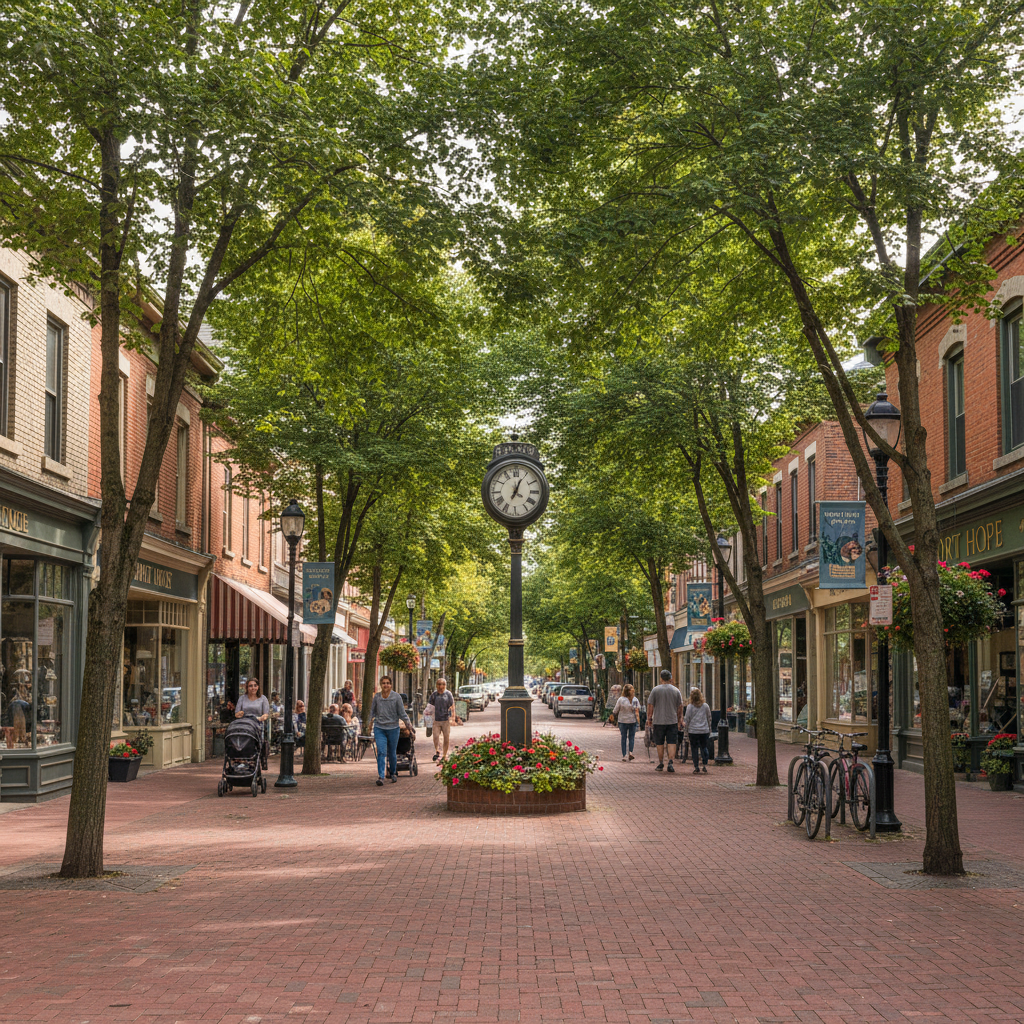
This matters for active transportation goals, public health, local commerce, and the social life of neighbourhoods. A tree-shaded main street invites lingering, browsing, and conversation. An exposed one encourages people to drive through rather than stop. For Ontario communities that want to support walkability, investing in street trees is one of the most effective long-term strategies available.
The trees planted today will define the comfort and character of Ontario's streets for the rest of the century. Investing in shade now is an investment in communities that remain livable, healthy, and welcoming as summers continue to warm.
Frequently Asked Questions
How much cooler are tree-shaded streets compared to unshaded ones?
Surface temperatures on tree-shaded streets in Ontario can be 10 to 15 degrees Celsius cooler than unshaded pavement. Air temperatures under a mature tree canopy are typically 2 to 4 degrees cooler than surrounding exposed areas.
What are the best shade trees for Ontario streets?
Good shade tree choices for Ontario include sugar maple, red oak, bur oak, hackberry, Kentucky coffeetree, and native basswood. Selecting a diverse mix of species helps protect against losses from pests and disease.
How long does it take for a newly planted street tree to provide meaningful shade?
Most street trees begin providing noticeable shade within 8 to 12 years of planting, depending on species and growing conditions. Full canopy maturity typically takes 20 to 40 years, which is why planting now is so important for future comfort.